
Rye Harbour Nature Reserve sightings in July 2026
David Bentley
Much of the landscape around Rye is now parched and brown, the result of months of low rainfall and record high temperatures that continued, unrelenting, throughout the month of July.
July is considered a quiet month by many birders. The dawn chorus has dried up and many birds become unobtrusive as they start their moult. But, it is also the month when 'autumn' migration kicks off and birds that just a few weeks ago were heading north are now streaming south.
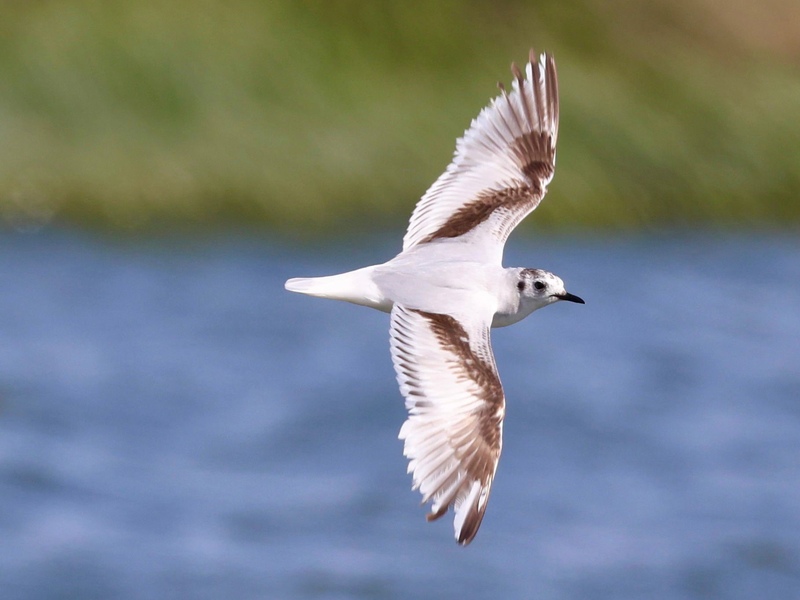
Two Little Gull were seen at Salt Pool from 18th until at least 23rd, but other sightings at Long Pit and Flat Beach suggested that there may have been more around. Little Gulls are elegant birds. With a graceful, buoyant flight they hover and dip over the water, picking out morsels.
A Yellow-legged Gull was spotted at Ternery Pool on 17th and a count of tern chicks at Flat Beach on 5th logged 92 Sandwich, 48 Common and 2 Little Tern.
There were at least two Black Tern, first seen from the Denny Hide on 15th, with one juvenile frequenting Salt Pool up until at least 26th. A Roseate Tern was reported feeding offshore on 22nd.
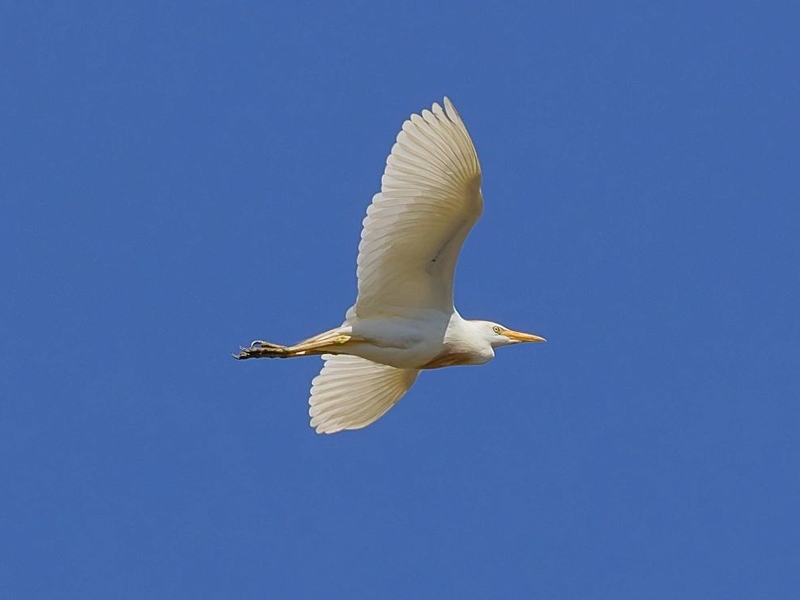
July provided high counts of five Spoonbill, five Great White Egret and lots of Little and Cattle Egret coming and going at Castle Water and elsewhere. Not so long ago sightings of all of these large, white water-birds would have existed only in birders' imaginations.
Return wader migration was in full flow by the end of the month, but started as early as 1st, with three Black-tailed Godwit at Flat Beach.
Greenshank were present throughout the month and peaked with seven at Salt Pool on 11th and a whopping 13 at Castle Water on 30th. There should be plenty of opportunities in coming weeks to see why this alluring bird is known as the 'Queen of the Waders'.
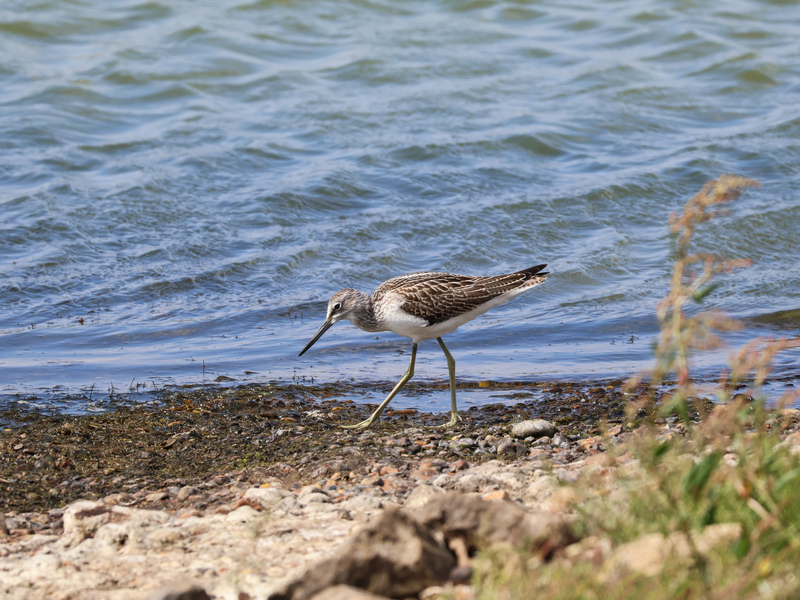
There were good numbers of Green and Common Sandpiper all month and two Wood Sandpipers at Castle Water on 27th. Curlew Sandpiper is always a delight to see; there was one at Flat Beach on 18th and a Little Stint at the Wader Pool on 19th.
Chats are always much easier to find on autumn migration when they are not rushing to establish a breeding territory. The first Whinchat, two in fact, were seen near Camber Castle on 24th and the first Wheatear, again two, were near the river mouth on 29th.
Willow Warbler is no longer a regular breeding bird in the Rye area, but at least they can be enjoyed in numbers on autumn migration. The first was noted at Narrow Pit on 28th. Listen out for their sweet, rising 'hoo-weet' call.
A much-photographed Little Owl was frequently seen towards the end of the month on Camber Castle, usually perched on the central keep.
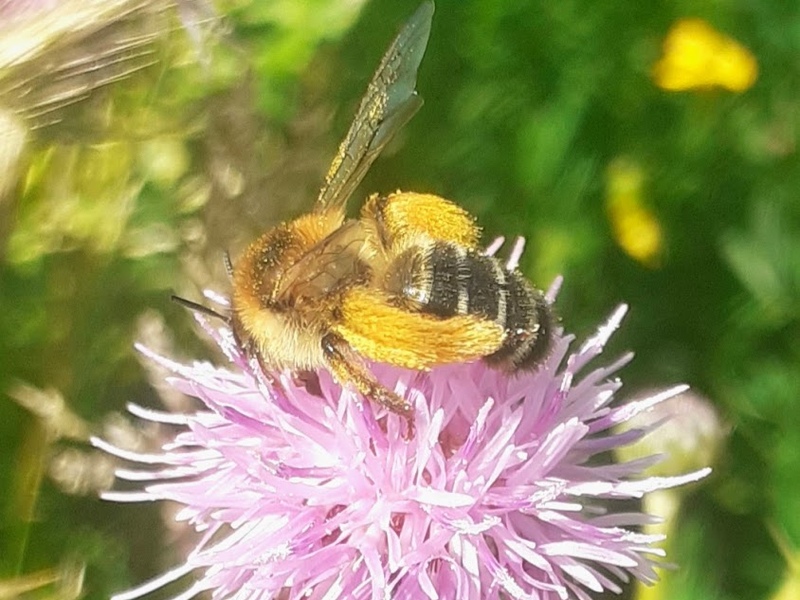
There were plenty of Hairy-legged 'Pantaloon' Bees at the north end of Castle Water at the start of the month. It's the female who wears the pantaloons!
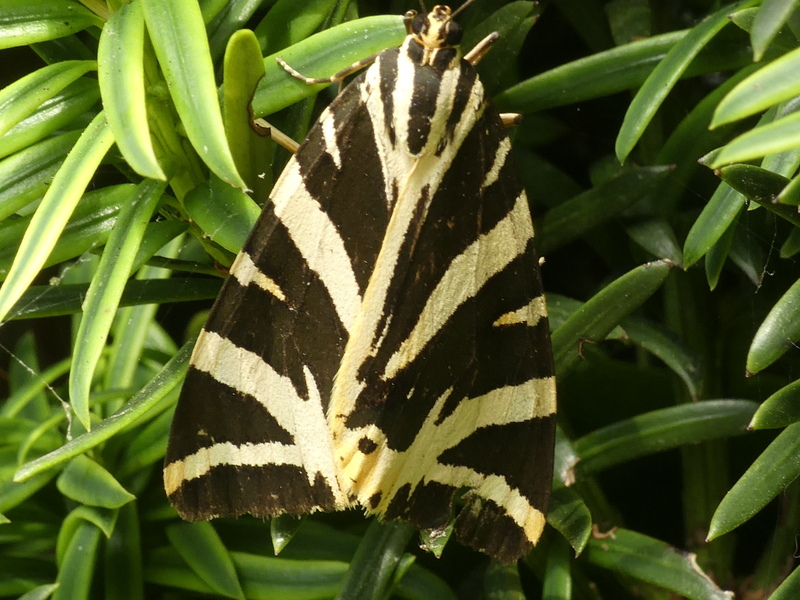
A Striped Hawk-moth caterpillar, an excellent find, was photographed by a visitor on the Beach Reserve on 3rd. A Bright Wave moth was found by Nook Drain on 6th; this is only its 3rd sighting on the reserve. It is a rare immigrant and resident of vegetated shingle beaches. There were lots of sightings of Jersey Tiger moths in the second half of the month.
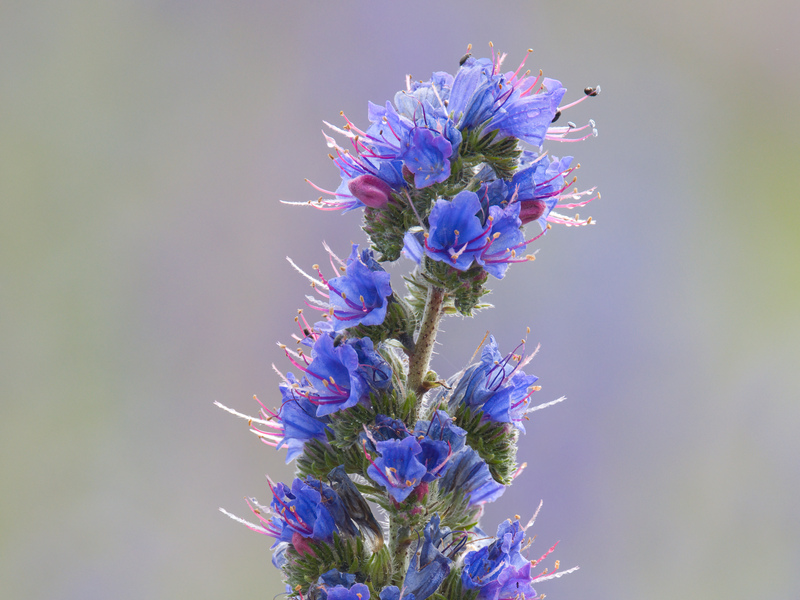
Plants in flower include Meadow Vetchling, Wild Carrot, Sea Heath and Viper's Bugloss.