
Rye Harbour Nature Reserve History Group Talks
On Saturday November 19th, the Rye Harbour Nature Reserve History Group held its first round of talks given by members, who have been researching aspects of Rye Harbour’s physical, social, industrial and natural history.
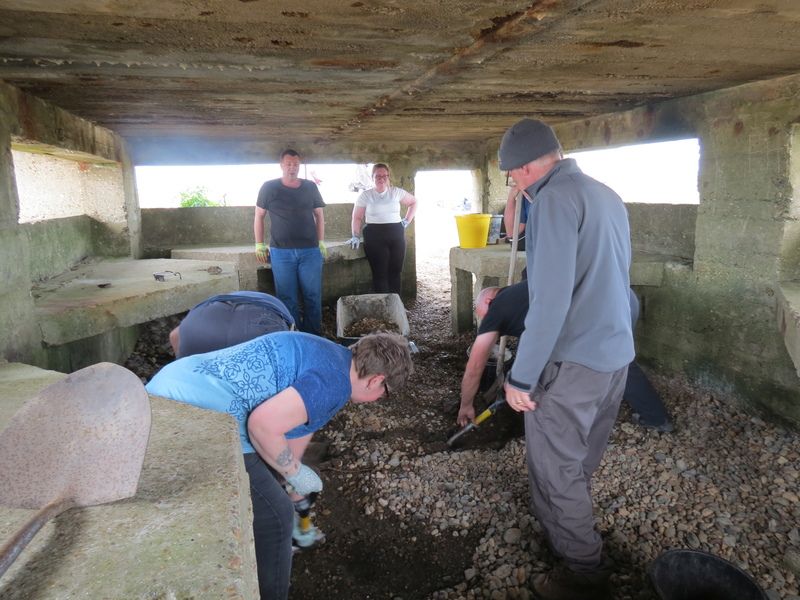
Many of the volunteers have been involved with specific Rye Harbour Nature Reserve projects, including conservation tasks, information sharing and awareness raising about the historic structures on the reserve, such as the pillboxes and Camber Castle. Whilst also researching reserve-related topics and exploring photo and map archives, the volunteers have also been delving into their own areas of interest. As a result, for the group’s November meeting, five volunteers shared their research in a morning of talks to an audience of approximately 30 in the Discovery Centre's classroom.
Rye Harbour Branch Line and Tramways
First, Chris Offen gave the audience a tour around the old train tracks of the reserve, with slides of the local area, maps and images of the historic routes and some fascinating ‘then’ and ‘now’ images, showing just how much the industrial infrastructure of the harbour has changed over the years. This immersive talk meant there was not enough time to hear all about the tram side of the harbour’s history, which instead means a further talk to look forward to from Chris.
A Journey Through Rye Harbour and its Buildings
Next, Jeff Pope, resident of Rye Harbour village, took everyone on a tour of notable village buildings and listed properties. This informative and interesting talk included many old photos and maps, as well as comparison photos showing the development of the village as a community hub. Highlights included this history of Ship Cottage, the first inn in the village; the Watch House which accommodated the original lifeboat and rescue service for the area; Harbour Lights, an 18th Century fisherman’s cottage once the home of a famous movie actor; the William the Conqueror property and the intrigue around its name; the Martello Tower and its wartime and smuggler history, plus the railway carriage which is still in place yet which was built in 1888, with its links to Chris Offen’s talk, art and the community.
The Destruction of Old Winchelsea
The destructive history of the sea was the topic of the next talk by David Dennis, who explored the loss of Old Winchelsea to the sea in the 13th Century. David’s talk discussed not only the historical, geological and political backdrop leading to the destruction of Old Winchelsea in the Great Storm of 1287, but also recognised links with the ruin of Dunwich in Suffolk which was taken by the sea around the same time. David shared and inspired insights into the role of geological activity, such as volcanoes, and their contribution to climate events which continue to this day. There were lots of interesting points of relevance, including the longshore drift which is the reason we see the Environment Agency’s shingle shifting trucks each year, which meant David’s talk inspired lots of debate and interest in the short refreshment break which followed.
Rye Harbour, the Grand Prix and Formula 1
Then, it was the turn of Mike Camier, who introduced the audience to the story of Harry Weslake, world-famous engineer behind the development of the carburettor and the name behind the Weslake Industrial Park which we all pass on our way to the Rye Harbour Discovery Centre. After partnering with American Dan Gurney in the 1950s and 1960s, Weslake became involved in the Anglo-American Racers quest to develop the optimum racing engine in the 1960s, which he achieved from the Rye Harbour Road premises. The engine resulted in victories at both Brands Hatch and the Belgian Grand Prix for Dan Gurney in 1967.
The Extraordinary Tale of William Colebrooke
The final talk was from volunteer Angie Perkins who shared that, in the progress of her own family research, old newspapers have been an interesting and useful source. In an old copy of the Dublin Courier from 1763, Angie was delighted to find the strange-but-true tale of bygone medical interventions at Rye Harbour, for seventeen-year-old William Colebrooke in 1761. Angie’s reading of the article contained some amazing – if not alarming – details about contemporary medical approaches of the 18th Century, including ‘bleeding and blistering’ to remove toxins from the body. We won’t ‘spoiler’ the outcome of William’s medical journey, as there will be a separate blog on this, thanks to Angie and this fascinating find relating to Rye Harbour.
Let's talk about it ...
On this occasion, these talks were delivered to a closed group of other group members and invited community guests. The talks were very well received and brought the added bonus that, due to the highly interactive nature of some of the presentations, mature members of the local community were able to contribute additional information about how some buildings and structures were used ‘back in the day.’
Following this success, it’s hoped that these inspiring group talks may progress to public talks held at the Discovery Centre or with our volunteers visiting community venues to speak and share, so if you would like to know more about this, please contact us.
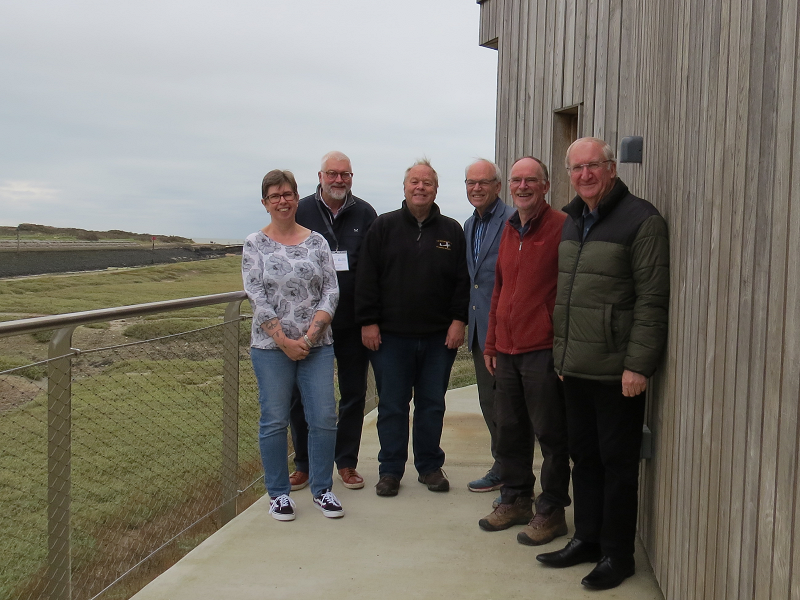
Thanks to all who attended these first talks and especially to our speakers Chris Offen, Jeff Pope, David Dennis, Mike Camier and Angie Perkins (pictured with reserve manager, Barry Yates).
The History Group meets on the 3rd Saturday of each month and is part of our #discoverryeharbour activity plan, supported by National Lottery Heritage Fund.