
Rudolph the female reindeer
By Charlotte Owen
WildCall Officer
Reindeer have been woven into the festive fabric of Christmas for nearly two centuries. It all began in 1823 with A Visit from Saint Nicholas, the poem better known today as Twas the Night Before Christmas. This was the first ever mention of eight flying reindeer drawing a sleigh, and they sprang from the (then anonymous) author’s imagination straight into the hearts of the New York public – and beyond. And there they remain, largely unchanged, alongside the later addition of Rudolph the ninth and most famous reindeer, who was created in 1939.
Bizarrely, Rudolph’s unusual nose might actually be more fact than fiction. Some reindeer do indeed have a red nose due to an exceptionally high concentration of blood vessels, giving their velvety muzzles a distinctive pink tinge. This dense capillary network helps regulate body temperature, warming each breath of freezing Arctic air as it enters the nostrils and helping a hot reindeer cool down after strenuous exercise – and pulling a sleigh would certainly qualify. Of course they can’t really fly but there’s one other glaring error with our concept of Christmas reindeer. Uniquely, both male (bull) and female (cow) reindeer have antlers but the males shed theirs at the end of the mating season, in early December. Their heads are bare by Christmas, so all of Santa’s antlered reindeer must in fact be female.

Fallow deer © Dave Kilbey
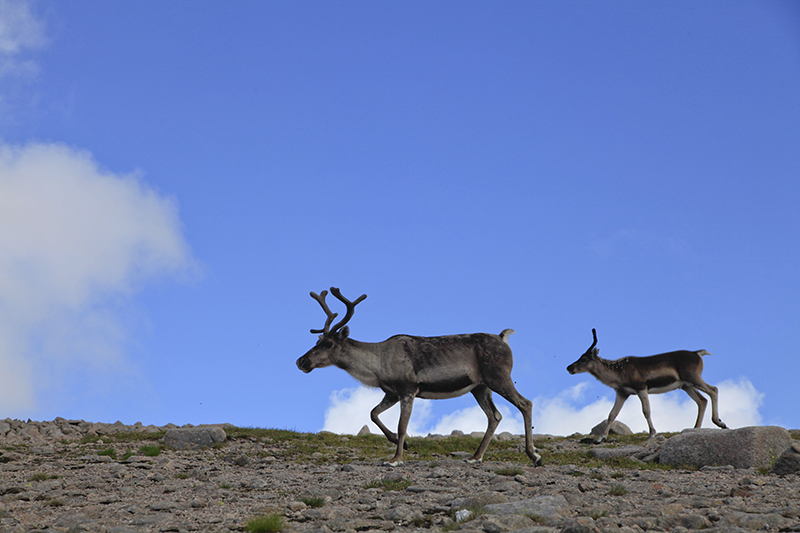
You won’t find any wild reindeer in Sussex, nor at the North Pole – which is on the constantly-shifting sea ice of the Arctic Ocean – but the nearest herd is closer than you might think. British reindeer were hunted to extinction some 800 years ago but were reintroduced to the Cairngorms in 1952, and 150 of them still roam the Scottish mountainsides today.
Closer to home, fallow deer are the next best thing. The males (bucks) sport impressive antlers at this time of year, which have a distinctive palmate shape - like a hand with the fingers extended. With the rush of the autumn rut now over, bucks will spend the winter in small bachelor herds of five to ten deer, which just happens to be about the right number to pull a sleigh.