
Ranger Day at Seven Sisters
Dav Bridger
Ranger - West
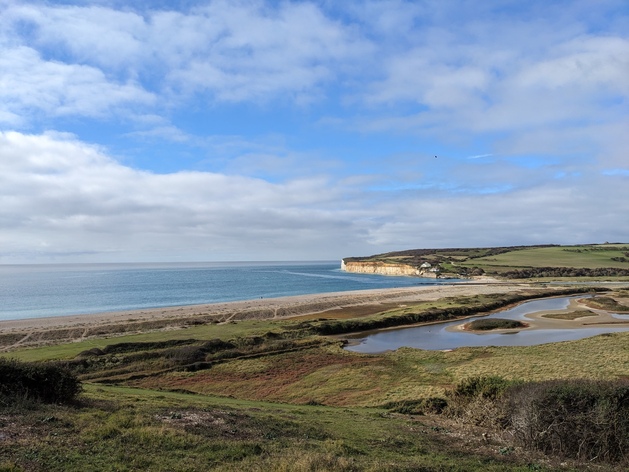
Rangers Rosie Hutchings, Clive Dunny and myself, along with our two Leysdown Trainees, Anya and Callum, joined a Ranger Day at Seven Sisters Country Park, organised by the South Downs National Park. We got kitted up, ready for some scrub clearance on Haven Brow, the eighth of the ‘Seven Sisters’, which features stunning views of Cuckmere Haven, and our own Seaford Head Nature Reserve.
The work site at Haven Brow was an area of chalk grassland smothered in a dense blanket of tall scrub, Bramble and Old Man’s Beard (a type of clematis frequently seen winding through hedgerows). Whilst scrub can be very beneficial for wildlife, providing a thorny, protective habitat for small mammals, invertebrates and nesting birds, too much dense and sprawling scrub can encroach upon and outcompete other species in a chalk grassland habitat.
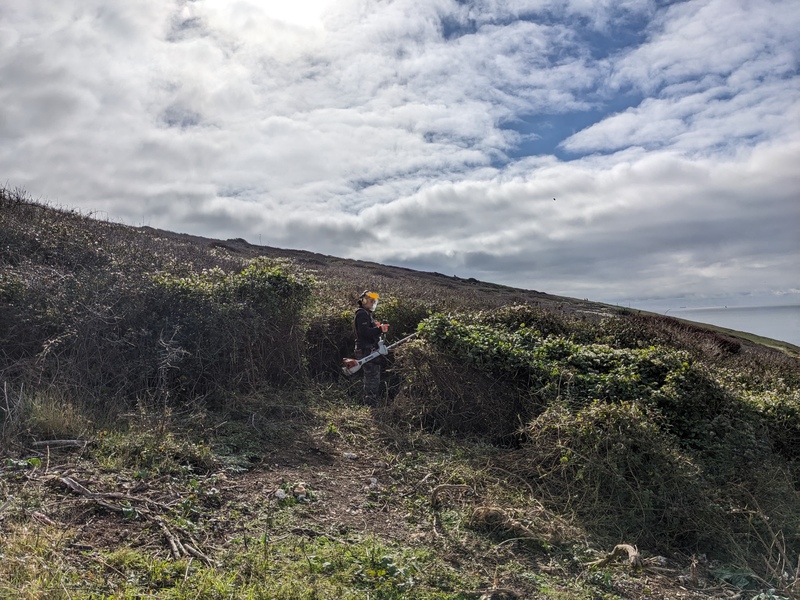
A wide view glance of the Seven Sisters and you could be forgiven for thinking that the environment is fairly bare – just sheep, green grass and ramblers. Take a closer look though, and a one metre square of chalk grassland can contain over 30 different species of flora and fauna, making it an incredibly biodiverse habitat, but also one that is delicate and can easily be swallowed up and lost by fast-growing, sprawling Bramble and clematis.
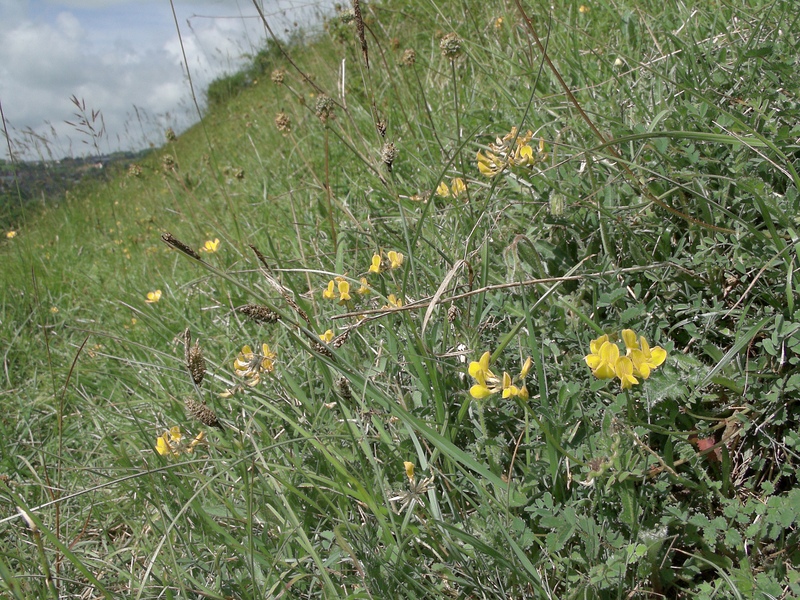
Plant species typical of chalk grasslands on the South Downs include the Round-headed Rampion, Bee, Musk and Pyramidal Orchids, Marjoram and Horseshoe Vetch, which all thrive on low-nutrient soils. Chalk grassland habitat management often incorporates grazing animals, such as sheep or cattle, as by feeding and trampling on grasses, thatch and coarse vegetation, they naturally help prevent rarer and more delicate chalk grassland flora being outcompeted for space and light, and the soils becoming too nutrient rich.
Sometimes though, livestock grazing is not always possible or impactful enough, and a band of Rangers and their machinery is needed to clear the scrub, and give the habitat a bit of a reset.
As Rangers from Natural England, East Sussex County Council, the SDNPA and even a couple from the Norfolk Broads here on an exchange programme set to work alongside us, so Rosie, Anya and Clive started clearing the scrub with brush cutters. I tackled a girthy Sycamore coppice, with Callum cross-cutting what I felled.
It was fantastic to connect with and network with Rangers from other organisations, and a testament to how much can be achieved when like-minded people from different organisations take the time to come together, to collaborate and work towards a common goal.
Comments
Love this collaborate approach. Hopefully more of this ( plus including volunteers from the various organisations) across the extended NNR around Lullington Heath
02 Dec 2025 16:53:00