
Ponds and scrapes with the Sussex Flow Initiative
By Sam Buckland
Project Officer, Sussex Flow Initiative
I don’t know when my love of ponds started, maybe it stems from the complete immersion when my older brother pushed me into our grandparents’ ponds when we were little. Whatever the cause of my passion, I am hugely privileged that their creation and restoration forms part of my role on the Sussex Flow Initiative (SFI) project.
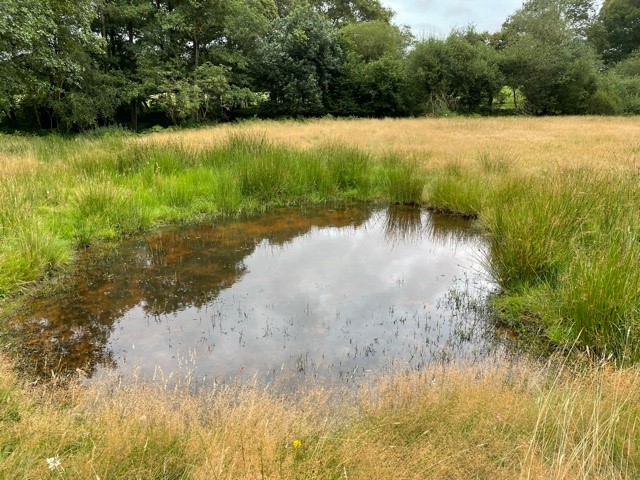
Working across the Ouse Catchment, I get to restore natural processes, like creating leaky dams to slow the flow in the absence of the beavers that our waterways are missing, to reconnecting rivers to their floodplains. Making space for water, over the last five years, SFI has created the equivalent area of open water habitats as about 71 tennis courts (19,200m2). I find it intoxicating revisiting these ponds and scrapes to see what vegetation has naturally colonised or what species have turned up.
I have been fortunate to have worked with farmers near Lindfield to reconnect a floodplain, create riparian woodland and increase water storage through the creation of a series of ponds and scrapes. High flows in the river are now able to spill out onto the floodplain, filling up these new scrapes, instead of being confined to the river and funneled downstream to properties. Visiting the site following one of the many named storms we had in 2019/20, my breath was taken away to witness this nature process in full flow.
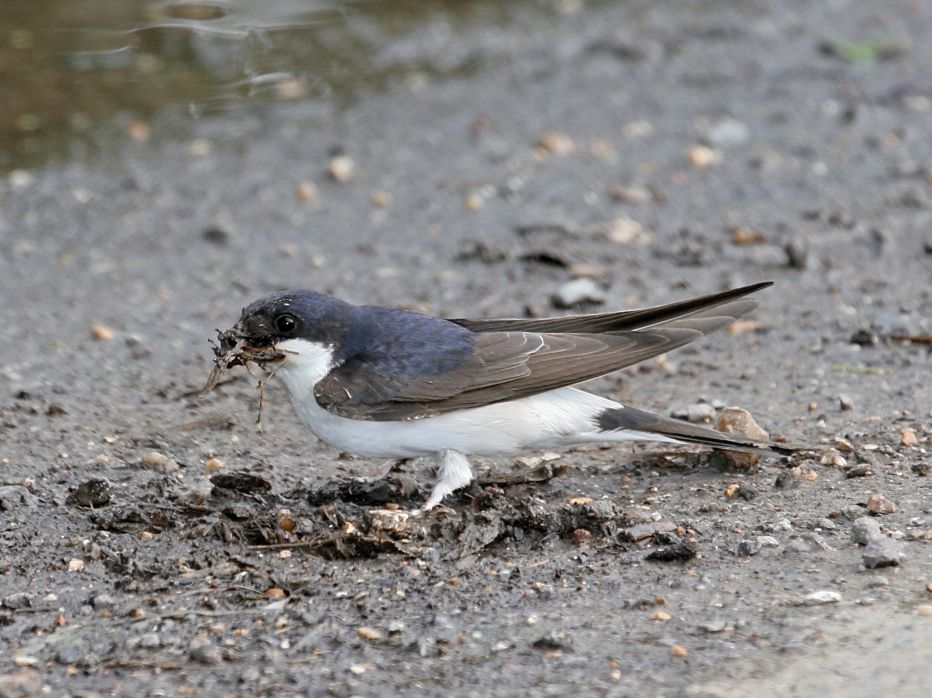
Subsequent visits of the farm continue to give a glimpse into value of these new freshwater habitats. Whilst on a spring visit I was joined by a handful of House Martins collecting mud from the edges of scrapes to repair winter damage to the nest cups constructed under the eaves of the farm house a few fields away. Returning towards the end of summer, I witness the House Martins again, now numbering a hundred or so, as they swoop down to drink from the water’s surface and feed on emerging insects that were rising from the water late in the day. The other scrape only a 100m upstream was drying out, having not had any rain for it to collect for a number of weeks. In the shallow waters, a Greenshank feds feet away from where a cluster of Sharp-collared Furrow Bee burrows were the previous year in the sun baked clay edge of the scrape.
The wildlife wonders extend beneath the mirrored surface of the network of ponds that have been created across the catchment. At a site in the Ashdown Forest I watch a Great Diving Beetle disappear from view as it descends into the depths of the pond after replenishing its air supply at the surface. Out the corner of my eye I notice the straight edge of the normally oblong green leaf of a Water Forget-me-not, most likely swaddling a single egg of one of three newt species. Ponds to me are magical, restoring my mental health, I’m fascinated with the mysterious hidden world beneath the surface and their importance in creating resilient landscapes for people and wildlife.
Comments
Great article, wonderful work!!
26 Apr 2022 07:34:00
Very similar to our FLOW project HLF south of Chichester
26 Apr 2022 23:14:00
Lovely!
28 Apr 2022 12:01:00