
Pond patrol
By entomologist Ben Keywood
One of the most impactful ways to support wildlife in a garden is to create a pond.
Ponds provide a valuable source of drinking water for birds, Hedgehogs and other wildlife, as well as a home for a large range of aquatic invertebrates.
A good wildlife pond needs to have a deeper middle and shallow sides; you can even create a pebble beach along one edge for insects to safely wade and drink. It's also important to make sure that there are safe places around the edges of the pond for wildlife to hide. You can add logs or large stones, or let native grasses and marginal plants grow. Frogs and newts can shelter here when they leave the pond but have quick access back into the water when needed.
The great thing about creating a pond is that you don't need to release wildlife into it - an incredible variety of species will find your pond by themselves. As well as frogs, toads and newts you may be surprised at which invertebrates will also take up residence!
Broad-bodied Chaser
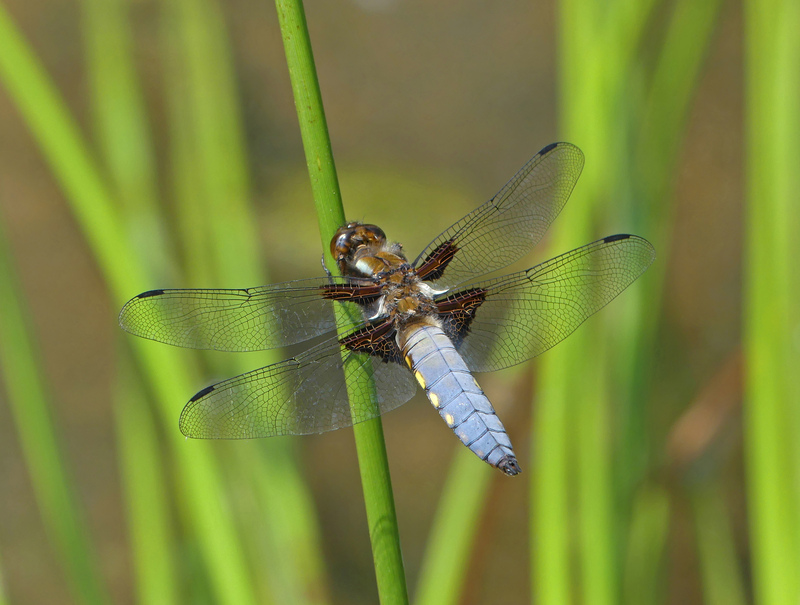
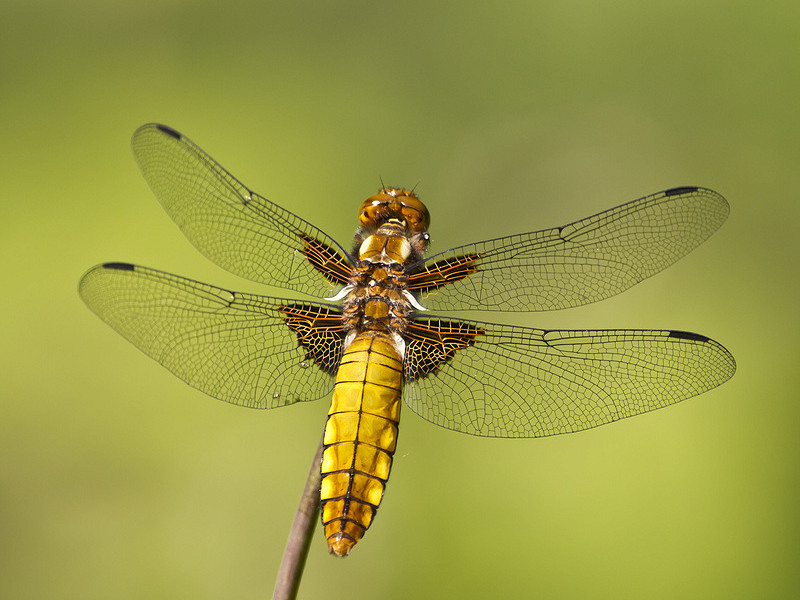
The Broad-bodied Chaser (Libellula depressa) is one of several dragonflies that breed in smaller garden ponds. It is often one of the first colonists of a new pond. The male dragonflies are recognisable by their broad, bright blue abdomen, whilst the females are a more subtle yellow-brown colour. After pairing, the females lay their eggs below the water’s surface and their young (known as nymphs) live in the pond for up to four years, feeding on other pond creatures. Eventually, when fully grown, the nymphs climb out of the water, split their skins and transform into adult dragonflies. This process can take several hours, so their bright colours don't form straight away to keep them hidden from predators until their wings harden and they are ready to fly.
Greater Water Boatman
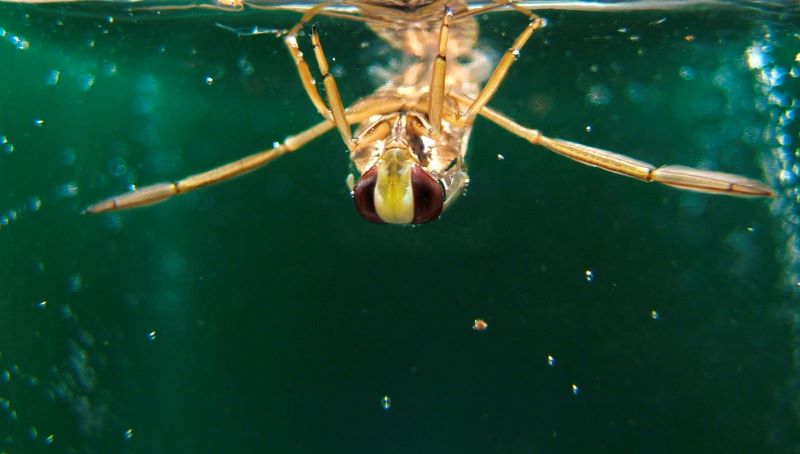
Also known as the backswimmer, the Greater Water Boatman (Notonecta glauca) flies at night and is adapted to spot the reflective surface of the water from the air. When it spies the familiar sheen, it flies down and spends the rest of its life under the water, preying on other aquatic insects and tadpoles.
Pond skaters
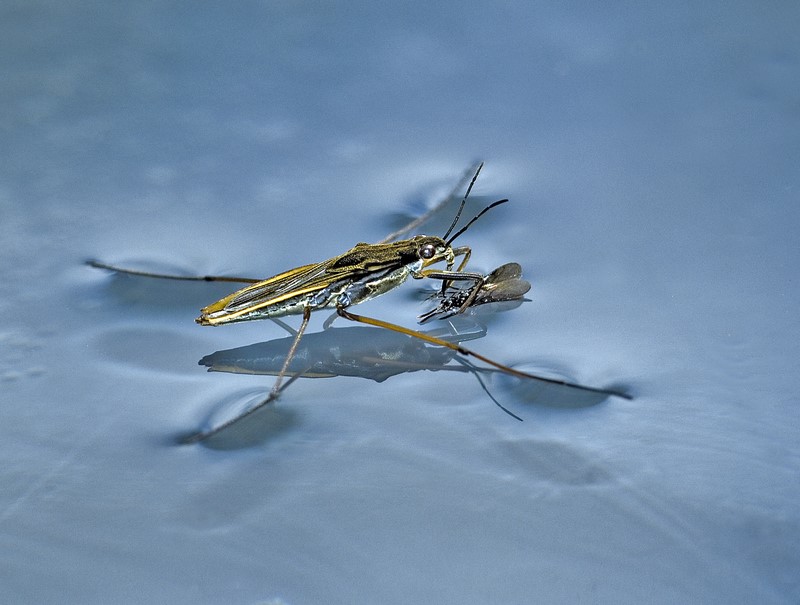
Similarly, your pond may also attract pond skaters. As their name suggests, they skate across the water’s surface, preying on any small insect that is unfortunate enough to fall in. Their gracefulness belies a darker side; they detect the vibrations of struggling prey, pounce on them and suck them dry using their piercing mouthparts. There are nine species of pond skater found in the UK, but the most common is Gerris lacustris.
Freshwater snails
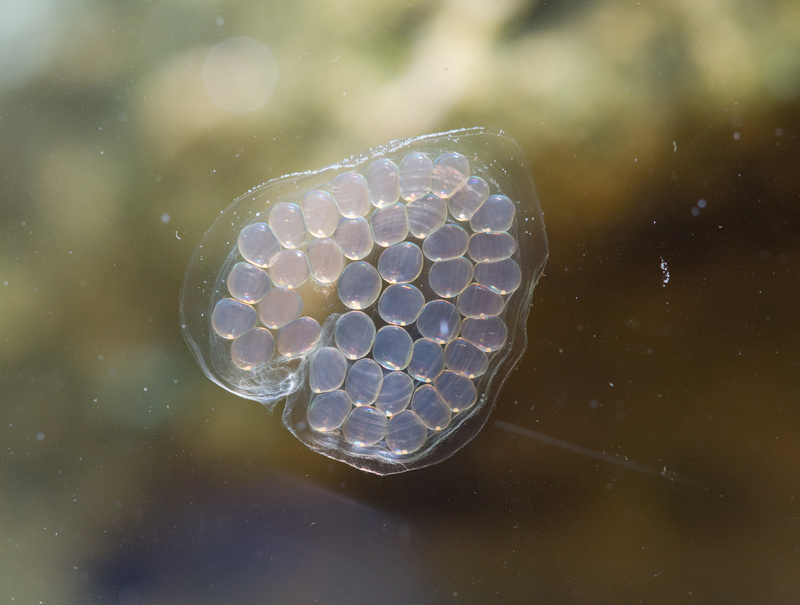
The UK is home to 30-40 species of freshwater snail. They come in two distinct types: the ramshorn snails, which have a round but flat appearance; and the conical snails, with a shell like an ice cream cone. The most common of these two types are the Great Ramshorn (Planorbarius corneus) and the Wandering Snail (Lymnaea peregra).
The Great Ramshorn grazes on algae by scraping rocks with its radula - a special tongue with embedded teeth. The Wandering Snail, as its name suggests, will sometimes wander short distances out of the pond to feed in wet areas close-by. Both species lay their eggs in a protective mass of jelly on plants or any other underwater structure.
Water Stick Insect
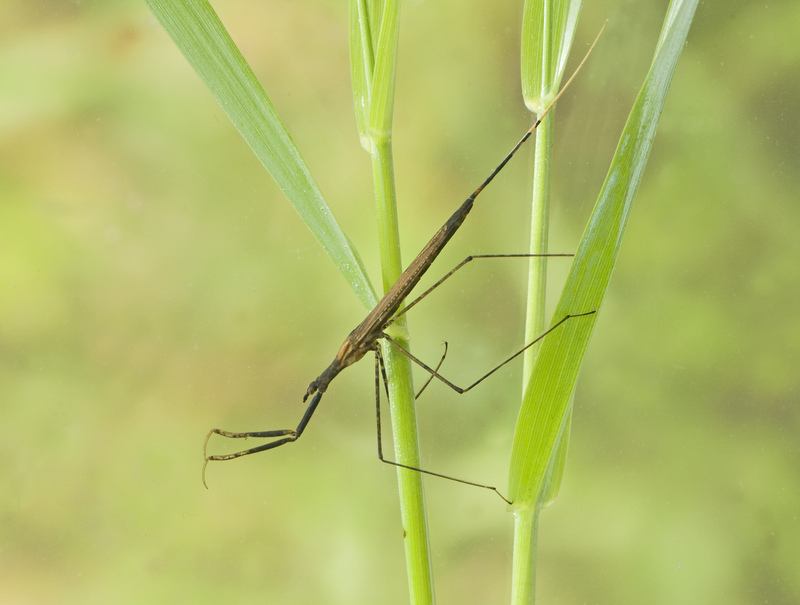
The Water Stick Insect (Ranatra linearis) is another predator that may be lurking in your pond. It usually sits motionless, head downwards, on a reed or other aquatic plant, waiting for a passing tadpole to grab and consume. Its pointed 'tail' acts like a snorkel so it can stay underwater for longer. If the pond dries up or prey is scarce, the water stick insect can leave the pond and fly to find a new one.
Comments
Very interesting. My newish pond (19 months old) has developed blanket weed, what can I do about it? I’ve tried clearing it my skimming the surface with a net, but it seems to go deeper. As I have at least 3 newts, and lots of Dragonfly nymphs I’m worried about disturbing them too much. I’ve put the blanket weed on the edge and let the nymphs crawl back in.
09 Apr 2026 10:53:00
Sussex Wildlife Trust:
KW on
Really appreciated this email, thanks. I created a large pond in our woods, which has all these species except the stick insect. Next time I’d appreciate more detail on each species, scientific and/or behavioural. Keep up the good work!
09 Apr 2026 10:57:00
We put in a pond here in my garden at Little Bayham last year, it’s about 15’ diameter with small rocks at the side for access for wildlife and has all the right levels for attracting different species but as yet there’s not a lot of activity, a few Skaters and flying insects that come for a drink – I was wondering how long it will be before frogs, newts etc find it and settle there.
09 Apr 2026 11:03:00
Sussex Wildlife Trust:
Hi Trish, it can take a while for these ecosystems to develop, so don't worry about this. Focus on making sure access is good for amphibians and other wildlife - cut a hole in your fence if you have one, make sure there is lots of other wild areas in the garden to provide shelter for wildlife from predators, and include a small ramp of stones or sticks so wildlife can access and get out of the pond. Reduce pesticides in the garden to encourage more insects, which will in turn encourage other species. It can take patience but you should hopefully start to see more life in the pond soon!
This year, for the first time, no frogspawn. We have dragon and damselflies and newts. I’ve been told if you have newts you won’t get frogspawn but have had both in the past. Have we become predator heavy?
09 Apr 2026 11:44:00
Sussex Wildlife Trust:
Hi Lesley, newts do predate frogspawn and tadpoles, so this could be the reason, but they can coexist. Spawn is so numerous as it is often taken by predators, and a small percentage of the spawn usually make it to adulthood. There may be other reasons for the decline in spawn this year - it could be due to water quality, temperature, or a lack of access for the frogs to get to the pond to spawn. This might not be in your garden, but habitat could have been fragmented elsewhere which causes issues for the migration of frogs and toads back to breeding grounds. Just becuase there is none this year doesn't mean there won't be again next year!
There was an old pond in our garden which was recently completely renovated – refilled and planted with a varying assortment of plants. So far I have seen a few newts but I mostly watch a whole variety of birds coming down to bathe and splash about in the more shallow section. I look forward to seeing a bigger variety of creatures but it is still fascinating to watch the birds. Thank you for all the photos and information.
09 Apr 2026 11:58:00
Loved this and I was happily watching the Great Crested Newts (males) defending their territory to other males or defending the females that were around.
I’ve seen a lot of skaters and broad bodied chasers, but no water stick insects… I’ll look harder!
09 Apr 2026 13:04:00
Should I remove pond weed?
My frogspawn never seen to be successfull lately.
09 Apr 2026 15:22:00
Sussex Wildlife Trust:
Hi Carol, pond weed can provide shelter and food for frogspawn and tadpoles, and other wildlife. If you find the weed is covering the pond, and stopping sunlight getting in, you could remove some, but leave it on the edge of the pond so that any wildlife living in the pond weed can escape back into the water.
In the last two years the frogs have disappeared from our small pond. It seems the newts have gained the upper hand and usurped them – is this a fair assumption?
We still have a fair populace of insects, flying and aquatic (and larval) so things seem well balanced, but the frog disappearance is a mystery.
09 Apr 2026 17:47:00
Sussex Wildlife Trust:
Hi Les, it might be that the newts have affected the frogs prescence as you mention, but there could also be other reasons - sometimes migration routes for frogs can become blocked or disturbed, and this habitat fragmentation can upset the frogs ability to return to the pond to spawn. There could also be other new predators around - neighbourhood cats can be a problem sometimes when it comes to frogs. It might just have been a few odd years where none appear for various reasons - this doesn't mean they won't come back next year!
Last year I saw my first chaser in the garden – yellow bodied so I assume she was female? But fewer traditional dragonflies. Is it likely that the chaser young will eat other dragon fly species? I had a green “traditional “ dragonfly as well but just the one. A great relief to me because they devour the midges after the swifts leave!
09 Apr 2026 20:50:00
Sussex Wildlife Trust:
Hi Elizabeth, Broad-bodied chaser females and young males have yellow bodies, so it could have been one of these. You can see a video of them here which you may find helpful to identify yours - Broad-bodied Chaser - British Dragonfly Society. Dragonfly larvae are voracious predators, and will predate other dragonfly larvae.
I dug a pond last May and saw numerous pond skaters, greater Water Boatmen and small snails, plus dragonflies and other winged insects. Today I have just spotted a newt! – and 4 very large snails. I am so happy.
17 Apr 2026 16:52:00
How to have a pond that can be viewed and enjoyed by all the family, but be safe with small children and a mobility-impaired elderly grandparent?
21 Apr 2026 11:51:00
Sussex Wildlife Trust:
Hi Louisa. There are a few things you can do to increase pond safety - never leave young children unsupervised around the open water, put a fence around the pond (leaving small gaps for wildlife), install a pond grill, or increase gently sloping sides in the pond. This last one will also help wildlife enter and exit the pond! You can find further details on these options at Amphibian and Reptile Conservation - Pond FAQs | Amphibian and Reptile Conservation