
Peter Hodge - Sussex Coleoptera Recorder

Peter Hodge has been a member of Sussex Wildlife Trust since 1987, and Volunteer Reserve Manager at Malling Down nature reserve since 1995.
What we met him to talk about his area of specialised knowledge, the beetles of Sussex
Where did you grow up?
In Uckfield. Our house backed onto a meadow and I began to notice the variety of insects and used my Observer's book to discover what they were. I'd explore a forest five miles away with a friend, which was an amazingly rich habitat, although at the time we were not aware it hosted the only known British colony of the Lewes Wave moth. Unfortunately, it became extinct after the site was destroyed around 1960.
Where did your interest in beetles begin?
By chance, I met another young Sussex entomologist, Roger Dumbrell, and for a while we compiled lists of moths found in our local area. From about 1971 we turned our attention to recording beetles in Sussex and this began a lifelong interest. Everything had to be written by hand and I compiled species lists in hardback notebooks. Learning to recognise all 4000 odd species of British beetles involved a lot of hard work (there are c3000 varieties of beetle in Sussex). Nevertheless a small group of us set out to compile an up-to-date inventory of beetles living in the county.
What was your first significant beetle encounter?
By pure luck, only three months after I started learning to identify beetles, I found the weevil Magdalis memnonia, a first for Britain (weevils are a kind of beetle with a snout). This was in Friston Forest in June 1971. We took it up to London and knocked on the door of a reclusive beetle expert (many people didn't have phones back then). He confirmed the identity of the black weevil and we became friends for life.
Have any of your discoveries been hard to believe?
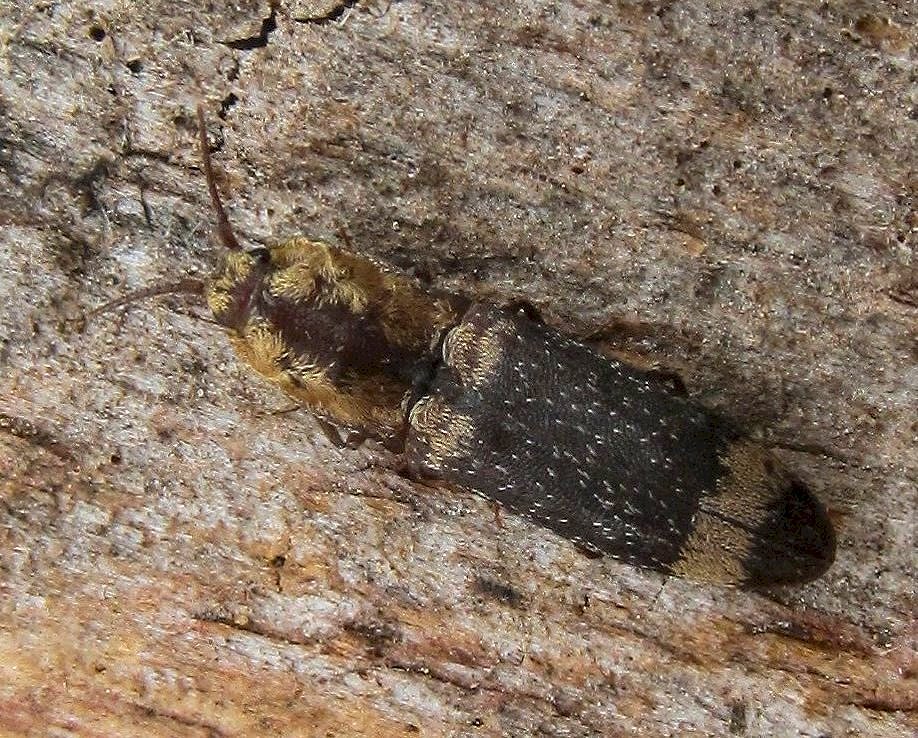
Yes, I have occasionally found species that are far from their known habitat and others may have reason to doubt my record. An example was the striking click beetle Lacon querceus discovered on the morning of 14th August 2020 resting beneath my garden moth trap at Ringmer. It breeds in the decaying heartwood of ancient oak trees and in Britain has only been recorded on rare occasions near Windsor, Berkshire. There are more than 70 kinds of click beetle in the British Isles, so called because the articulation between thorax and abdomen has a peg-like structure enabling it to leap off the ground to right itself, should it fall and land upside down.
You are Sussex's beetle recorder?
For more than 20 years I have been Sussex Coleoptera Recorder for the Biodiversity Records Centre. My role is to maintain an accurate list of species in East and West Sussex and verify any doubtful species others have recorded.
If someone wanted to get into entomology, what advice can you give?
It was a long learning curve for me though, and identifying specimens as a beginner was not easy. Most beginners use English names and most beetles only have Latin names. It's better to do it with other people. I would apply to join the Beetles of Britain and Ireland Facebook Group, there are 5500 members and you can get a lot of help with identification there.
Has this piqued your interest in beetles? To find out about subscribing to The Coleopterist magazine follow this link
Comments
This was all new to me Peter. Just been reading it to Alex who is very impressed x
30 Nov 2025 11:23:00