
Of Moths and Marsh Mallow

By Dav Bridger
Discover Rye Harbour Heritage Trainee
On a moonlit night in early September, I headed out with a small group of volunteers and our torches to the Castle Water side of Rye Harbour Nature Reserve, searching for the rare Marsh Mallow Moth. This survey was headed by Rebecca Levey of Butterfly Conservation, whose expertise and keen eye were certainly put to good use. After over an hour of fruitless searching, we gathered around the light trap to see if we’d managed to lure in any moths. There, to our amazement, was a Marsh Mallow Moth!
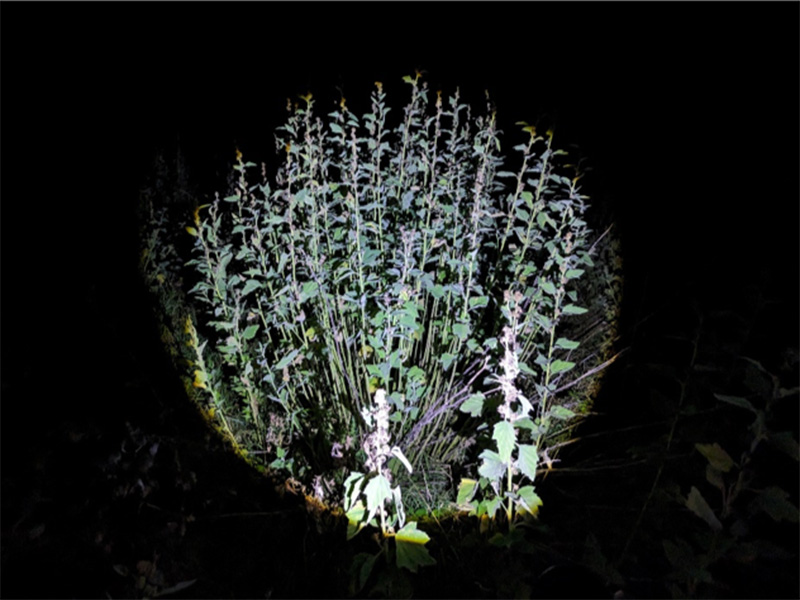
This medium-sized, bone-coloured moth must have felt like quite the celebrity, as we gazed and gawked at it whilst snapping away with our cameras. The next survey site was close by and this time we were spoilt by, not one, but two Marsh Mallow Moths - giving us a grand total of three Marsh Mallow Moths found that evening. There were times when I thought I wouldn’t see one, so I feel very lucky to have seen three.
The larvae, or caterpillars, of this moth feed only on the roots of the Marsh Mallow plant, so are quite fussy eaters. Luckily there is a bountiful supply of this plant, due to the hard work and community action from volunteers, local people and schools in the 2000s and 2010s to grow Marsh Mallow in pots from seed. These young plants were then planted out in Castle Water in order to establish a large and dense population of Marsh Mallow, which in turn could support the Marsh Mallow Moths throughout their life cycle. The first sighting of this moth at Rye Harbour Nature Reserve was in 2014, so it’s reassuring to know that after almost ten years on, the moths are still out there. A true testament to the phrase, ‘if you build it, they will come’!
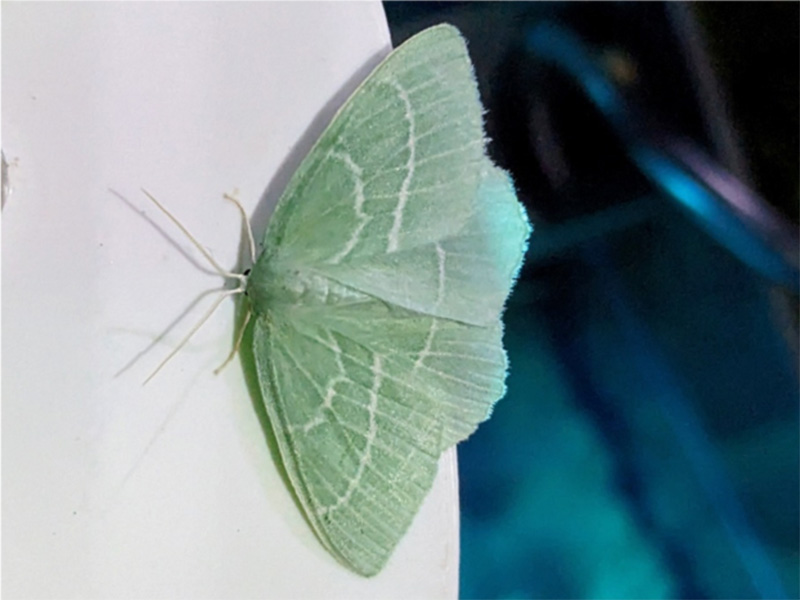
However, it wasn’t just Marsh Mallow Moths that made a notable appearance that night - a Small Emerald Moth was also attracted to the light trap. A real wildlife highlight, with its beautiful green wings and white cross-lines.
Comments
Thank you so much for pointing out what you have seen, and giving us photos. Often I visit the Rye Centre without apparently seeing anything of note, but that is because I do not know what I am looking at. It is so helpful to go there and know what has been around.
02 Oct 2023 08:43:00
An interesting and heartening report; I’m glad the survey proved fruitful.
Marshmallow plant is one of our BAP species and during our annual maintenance (weed cutting) we do our best to avoid cutting the marshmallow that grows above the floodline for the benefit of the MM moth. The abundance and distribution of the plant is increasing year on year with the most notable gains out in Walland Marsh.
We provided seed to the Butterfly Conservation for a schools project in 2018 (i think) but the lady running the project left the organisation so I never found out whether any plants were successfully grown and transplanted. I like to think that they were.
02 Oct 2023 09:16:00
Great news… just shows that if the habitat is created nature way..congratulations on all your hard work
04 Oct 2023 07:23:00
Great news… just shows that if the habitat is created nature way..congratulations on all your hard work
04 Oct 2023 07:23:00
Well done on the Marsh Mallows. But the photo shows a Small Emerald, confirmed correctly in the text, but the photo caption wrongly says Sussex Emerald!
04 Oct 2023 11:46:00
Sussex Wildlife Trust:
Thanks so much Pat - will correct immediately!
It was a really great evening, my first marsh mallow moths and capped off by meeting a badger on the walk home!
05 Oct 2023 08:07:00