
October 2016: Rye Harbour Nature Reserve Sightings
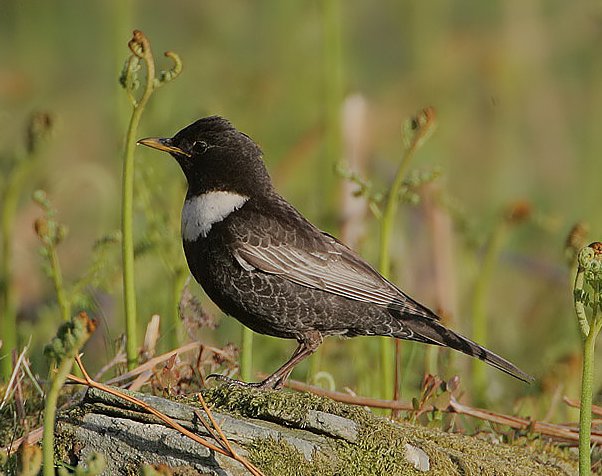
This month saw a major influx of ring ouzel, with six on Harbour Farm the 8th, three on Harbour Farm on the 10th and an amazing 85 at Castle Water on the 13th, by far the largest number ever recorded on the nature reserve (before this year the maximum was two!). This relative of the blackbird is a boreal and montane species (i.e. occurring at high latitudes and/or altitudes) and in the UK around 7000 pairs breed in upland areas from Dartmoor to north-west Scotland. Unlike blackbird, ring ouzel is a summer visitor, birds wintering in south-west Spain and north-west Africa, mainly the area around the Atlas Mountains in Morocco, Tunisia and Algeria. The name is derived from ‘ouzel’, the old name for blackbird (apparently still used in some parts of the country), while ‘ringed’ refers to the white gorget of the adult and indeed the scientific name Turdus torquatus loosely translates as ‘thrush with a necklace’!

Numbers of typically ‘winter’ waders crept up during the month, with maxima of 280 curlew and golden plover and, 239 lapwing (above). The highlight was a grey phalarope on the Beach Reserve on the 1st, while jack snipe at Castle Water on the 10th (four) and 22nd and a count of 99 redshank on 16th were also notable. Notable waterfowl records include 1250 wigeon at Castle Water on the 22nd, spoonbill on Flat Beach on the 1st and 5th (four) up to six pintail at Castle Water and a red-breasted merganser on Flat Beach late in the month, while 160 brent goose on Flat Beach on the 5th was the highest count of the season so far. Offshore notable records included 55 common scoter and a razorbill on the 31st, two great skua on the 8th and 70+ gannet on the 21st. Raptors during October included regular marsh harrier, buzzard at Castle Water on the 1th and 22nd (two) and a merlin on the Beach Reserve on the 1st, while a short-eared owl was present over Flat Beach on the 5th. In addition to the ring ouzels there was a good selection of passerines during October. The first half of the month saw yet more hirundines passing through, with maxima of 150 swallow, 100+ house martin and 40 sand martin over harbour farm on the 1st, while good numbers of meadow pipit included at least 100 on the Beach Reserve on the same date. At Castle Water small numbers of redwing and fieldfare were present mid-month, two firecrest were recorded on the 14th and a grey wagtail and 24 bearded tit (below) on the 11th. On the Beach Reserve migrants included 30 siskin and six brambling on the 11th.

Image:Vogelartinfo
As might be expected, insect sightings trailed off considerably as the colder, damper weather crept in during the month. The Lime Kiln moth trap caught a range of late season species including lunar underwing, large wainscot, black rustic and feathered brindle, with a few potential migrants such as rush-veneer, rusty-dot pearl and angle shades thrown in for good measure. Still a few common darter (below) around during October (they will get into November in a good year) while butterflies were represented by the occasional red admiral, peacock and small tortoiseshell. In addition, two slow-worm on Harbour Farm on the 5th were something of a surprise! Plants in flower included viper’s bugloss, bristly oxtongue, nipplewort and a very late salsify.
