
Nuts for Dormice

By Laurie Jackson
Guest blog
When I say the word Dormouse what springs to mind? Perhaps a snoozing guest at the Mad Tea Party? It is true the Germans call it the Schlafmaus (sleeping mouse) and its name is derived from the Latin word dormio (to sleep), but surely a Dormouse does more than just sleep?
Yes! Despite its annual hibernation, which can last six months, the Dormouse is a busy woodland mammal. Its large eyes, sensitive whiskers and agile feet equip it for life as a nocturnal tree-dweller. Dormice move around their small home range eating a variety of seeds, fruits, and nuts. Plants such as bramble, honeysuckle and hazel are particularly important as they help sustain them when little other food is around.
The West Weald, with its ancient woodlands linked by hedgerows, provides a perfect landscape for Dormice.
As you may imagine you are unlikely to stumble across a small mammal that rarely comes to the ground and is mostly active at night. Luckily, many West Weald woodlands contain lots of Hazel, which was previously managed by traditional coppicing. It just so happens that Hazel is very important to a dormouse; the calorie-packed nuts appearing just as their thoughts turn once again to hibernation.
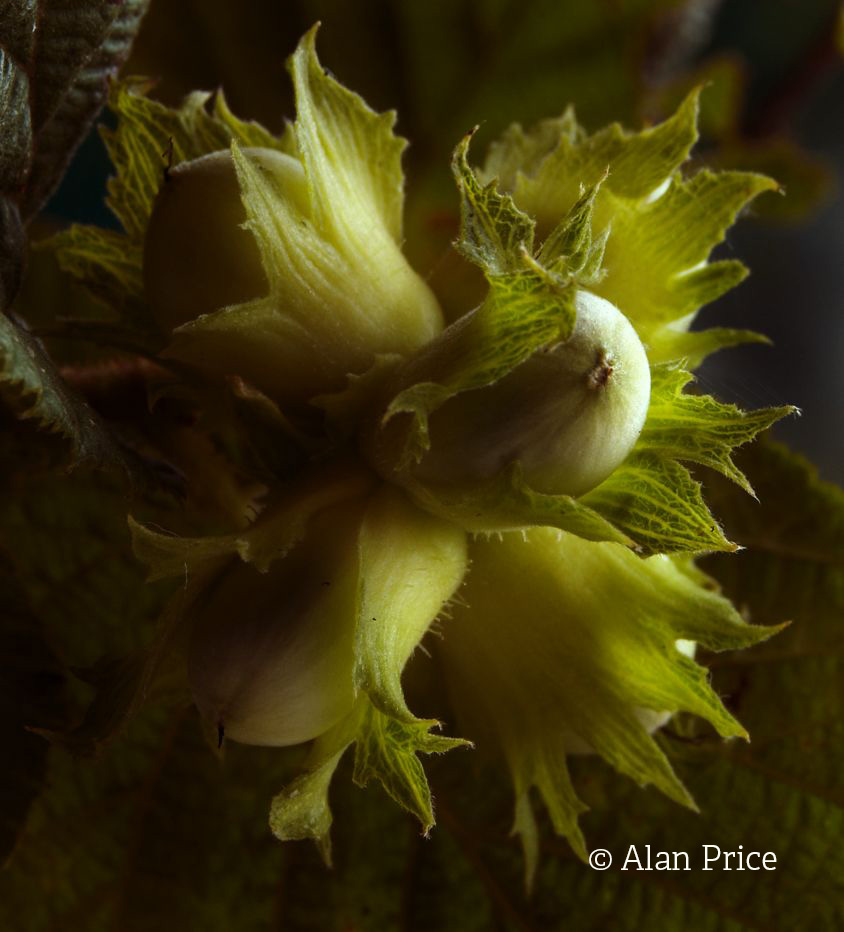
And Dormice have a very particular way of eating hazelnuts that helps us to distinguish them from those nibbled by other woodland mammals such as mice and voles.
Comments
Captivating Photo and interesting summary. I have always wondered what dormice eat up there in the canopy or in the brambles before fruiting/ harvest time. Can they find seeds or do they turn to leaves and young buds?
16 Sep 2021 10:46:00
About three years ago I attended a Dormouse Event, as part of my learning course to pass on to children I am involved with at Woods Mill. Despite all that I learnt over those couple of days I did not hear about the way to recognise how to distinguish them from other woodland animals. Can you enlighten me Laurie? Thank you for this fascinating blog..
ANSWER: Key features are:16 Sep 2021 11:46:00
You say that they nibble a hazelnut in a particular way. What way?
ANSWER: They make a circular hole which often passes through the nut scar. The hole inner edge is smooth with circular marks. There are gnaw marks on the outer edge of the hole.16 Sep 2021 13:09:00
In my earlier comment, I failed miserably to say in what way do they nibble a hazelnut, in a particular way. Thank you for the answer.
16 Sep 2021 17:16:00
They are adorable. I found one one morning curled up and asleep in my slipper. I would love to have kept it but I resisted the temptation and put it outside, where it happily scurried off.
16 Sep 2021 17:58:00
Whenever we talk about Hibernation Dormouse is always mentioned, but I never knew how this small creature prepares itself to survive during hibernation.Thanks Laurie for very informative summary and beautiful nature photography.
16 Sep 2021 22:03:00
Certainly a very interesting article, I’ve never seen a Dormouse
and don’t expect to given their nocturnal lifestyle and fondness for arboreal feeding locations. I assume “ Western Weald” equates to the Sussex, Surrey and Hampshire border areas?
23 Sep 2021 12:09:00