
November 2015: Rye Harbour Nature Reserve Sightings
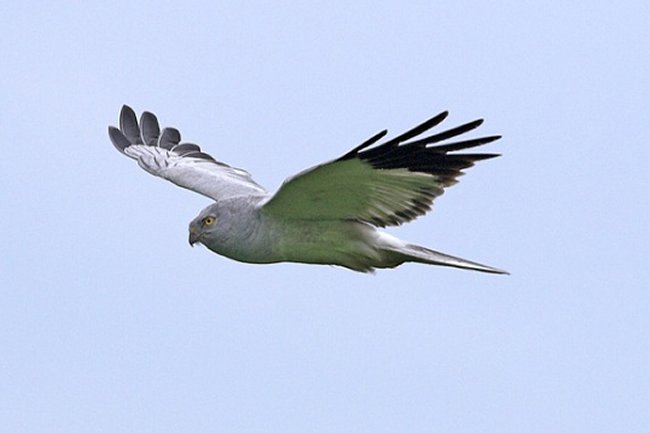
One bird which has become increasingly scarce on the reserve in the last 15 years is the hen harrier. During the summer, this species breeds on upland areas in Britain, mainly heather moorland, feeding largely on small birds and mammals, with individuals moving to lower levels during the winter months. There is also an influx of birds from the continent at this time of year, mainly in the south and east of the country. While the species has a white rump at all stages, males have a striking pale grey plumage with black wingtips, making them virtually unmistakable. Females and immatures, on the other hand, are a much duller brown with a barred tail and are usually referred to as ‘ringtails’ as a consequence. Unfortunately breeding numbers of hen harrier have dropped in the UK over the last few years as a consequence of persecution in their upland breeding habitats and in England the species is close to extinction, with less than 10 pairs in 2015.

Golden plover numbers continued to increase during November, with flocks of over 1000 regularly present on the Beach Reserve and with a maximum of 3000 on the 20th. Lapwing numbers peaked at 730 on the 15th, while 290 curlew were present on Harbour Farm on the 20th. In addition, 95 dunlin were on Flat Beach Level on the 17th, 42 snipe on Harbour Farm on the 16th and two ruff at Castle Water on the 12th, while the wader highlight was a spotted redshank which was present on Flat Beach Level on the 16th. Wildfowl numbers during November continued to rise as we head towards the end of the year, with notably high counts during the month including 1162 wigeon on Harbour Farm and the Beach Reserve on the 15th, including 1043 on Flat Beach alone, and 123 shoveler at Castle Water on the 12th. Other notable wildfowl sightings included a bittern (above) at Castle Water on the 21st and several reports of Slavonian grebe and black-necked grebe on Long Pit and/or at Castle Water. Passerines included a very late wheatear at Ternery Pool on the 20th, a chiffchaff at Castle Water on the 21st and small groups of corn bunting on the new saltmarsh on the 19th (three) and 21st (two). In addition, a goldcrest (below) at Lime Kiln Cottage on the 20th was unexpected and there were regular sightings of kingfisher throughout the month. Raptors included regular marsh harrier, with three at Castle Water at dusk on the 15th, merlin on Harbour Farm and the Beach Reserve on several dates and peregrine over the Beach Reserve on the 16th and 19th, while the highlight was a ‘ringtail’ hen harrier near Camber Castle on the 10th.

Image: Francis C. Franklin