
Movements under the water
By Ella Garrud
Living Seas Officer
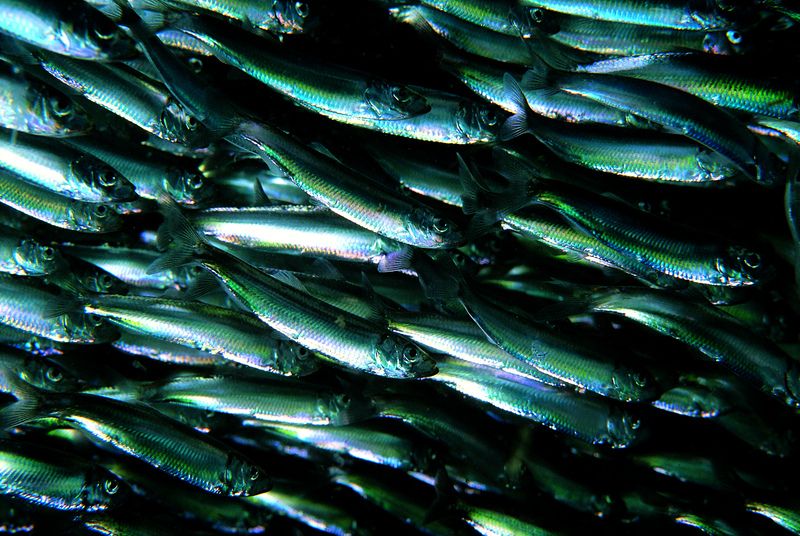
Shoals
Did you know? A shoal of fish is a group of fish swimming in a loose cluster, unorganised and moving in different directions. A school of fish is a synchronised group of the same species, all swimming in the same direction. Amazingly, a school of fish does not have a leader. They self-organise, by co-ordinating with their direct neighbours, using sight and their lateral line – an organ along the side of a fish’s body which can sense very subtle water pressure changes. If a neighbouring fish changes direction or speeds up, their lateral line will feel it and they can adapt their movement to that of their neighbour. In this way, a school of thousands of fish can move in a mesmerising, synchronised display.
Fishy tails
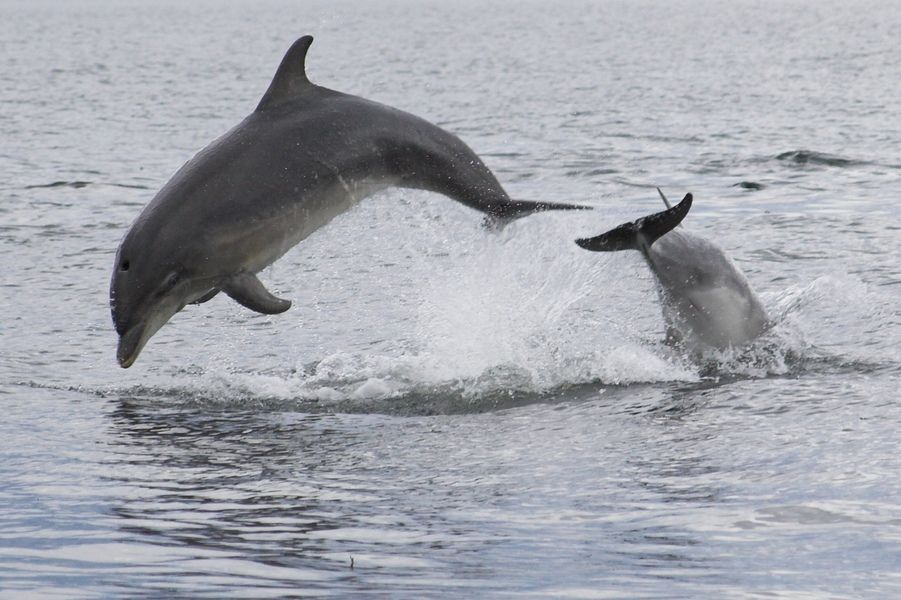
Have you ever wondered why the tails of fish and cetaceans (dolphins and whales) move differently? Whales and dolphins evolved from terrestrial mammals which walked on four legs positioned underneath their bodies, which meant their backbones bent up and down. As they evolved, whales and dolphins retained this motion, resulting in their flukes (tail fins) being positioned horizontally, propelling them through the water by moving up and down. This is called dorsoventral undulation. Fun fact: Whales and dolphins still actually have pelvic (hip) bones, despite no longer having back legs.
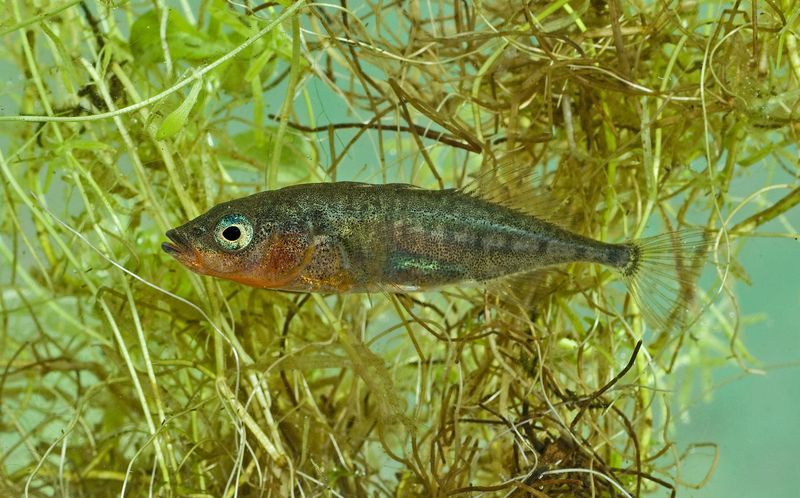
The ancestors of fish on the other hand, never walked on land on four legs, so their spines did not evolve to move up and down, but side to side. This means that fish have vertical tail fins that move from side to side, a movement called lateral undulation.