
Merry Marine Christmas
Ella Garrud, Living Seas Officer, shares some facts on festive marine wildlife
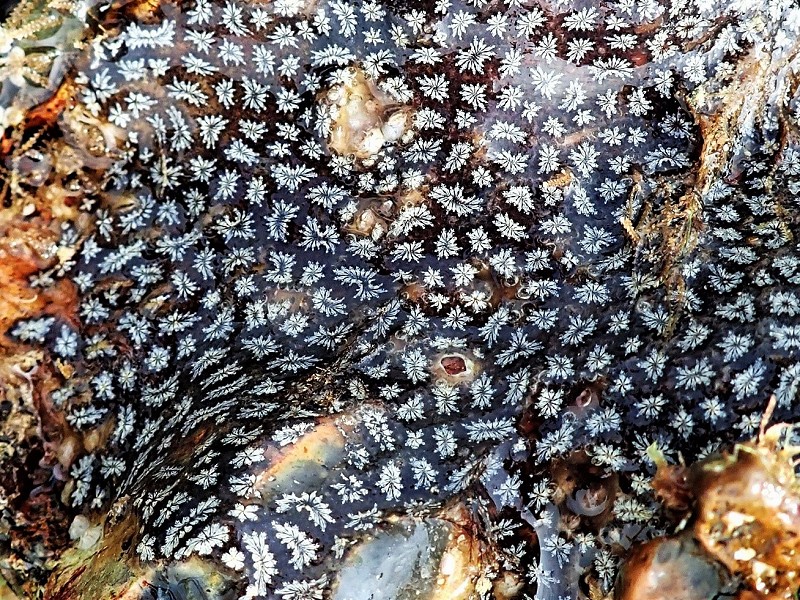
Star Ascidian
These colonial sea squirts grow encrusting on rocks and create amazing star-like patterns like those seen on a clear Christmas night. Each ‘star’ is made up of 3 – 12 individual animals, and the whole colony can reach up 20cm across. Each individual has their own siphon which takes in nutrients and oxygen from the water, but they share an outflow at the centre of each star.
Find out more here.
Light Bulb Sea Squirt
Light bulb sea squirt (Clavelina lepadiformis)
These lightbulb sea squirts don’t actually emit any light but they certainly look a bit like festive Christmas fairy lights. These sea squirts live in a colony and actually tend to die back over the winter and re-grow in spring. However some colonies found living in harbours remain there all year round.

Christmas Tree Sea Slug
But the marine creature that we find in Sussex with the most festive name is probably the Christmas tree sea slug. The Dendronotus frondosus has branch-like cerata or gills along its back which, you guessed it, resemble the branches of a Christmas tree. It also has branched rhinophores which are the organs which seaslugs use to sense their surroundings. Not only are they branched like a tree, the end of the rhinophores are shaped like little pinecones!
