
Meet the Marvellous Super Slugs and Snails

I have to admit how little I knew about slugs and snails before reading the latest Wild About Gardens guide. The RHS and The Wildlife Trusts have given these incredible creatures a reputation makeover. Discover for yourself these magnificent molluscs and the benefits they bring to our gardens.
For something that is so soft and squidgy, especially when it gets stuck between your bare toes on a summer evening, the garden slug or snail holds much menace for gardeners. Described as a tough-skinned terrestrial mollusc which secretes a film of mucus, it sounds more like a superhero. Marvel may have missed an opportunity when they didn’t create slug man or snail woman.
Afterall the great gastropods have one super strength muscular foot which means they can cling to solid surfaces and climb walls just like spider man. They also utilise a foot-mounted mucus producer for protection. I don’t even know what this means but it sounds incredible. These super snails have a hard shell, which they retract into like a contortionist for protection and last but not least their blood is a pale blue grey.
With absolute perfect equilibrium between both sexes, slugs and most snails are hermaphrodites, meaning they have both male and female reproductive organs. While most species can self-fertilise, if necessary, two snails mating is a more common sight in gardens.
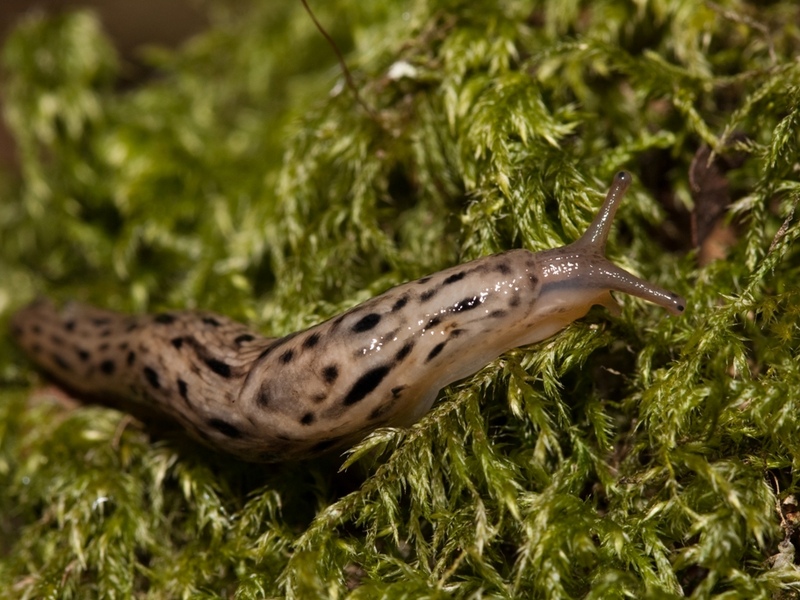
Among their super powers to help fight against daily garden grime, is their ability to break down anything from plant and leaf litter to mushrooms, dead animals, algae and poo! Leopard Slugs are territorial and ward off other species of slug too.
But if you are trying to grow tender plants they love to devour, remember they are a food source for other animals too. Slugs and snails are a snack hack for Hedgehogs and Song Thrushes to Frogs, Toads and newts too. We think of pond wildlife as water-loving, but adults spend a lot of their time on land. Here they hunt a wide variety of invertebrates, including slugs and snails. Newts have even been discovered climbing plants on the hunt for them.
If you want to help provide a tasty meal for birds, make sure there’s at least one nice flat stone in your garden that Song Thrushes can use to give the snails a good bashing. There are also plenty of ground beetles that feast on slugs and snails – also known as Carabid beetles. One of these beetles pokes the front of its head into a snail’s shell and uses its mandibles to tear out chunks, another follows trails of slug slime to find its prey.
But if you want to deter them from feasting on your prize plants try growing alliums, such as, onions, shallots, leeks and garlic. Their strong smell is a great deterrent for slugs and snails. Other useful ways to avoid gastropod gastronomy is to grow seedlings to a larger size indoors before planting out, protect vulnerable produce in a glasshouse or cover with a cloche. Otherwise, venture out into the night if you dare to pick slugs off plants and move them to the compost bin.
Slugs and snails are endlessly weird and wonderful. There are lots more fascinating facts in the Wild About Gardens booklet – they have squeezed in as many as they could! Such as most slugs having a very small shell which means they can squeeze through tiny gaps. So that explains how they travel at night and have appeared in my downstairs bathroom and shower tray.
To download the new Wild About Gardens booklet on slugs and snails visit www.wildaboutgardens.org.uk
Comments
Spotted slugs aren’t all leopard slugs. I’ve been told that they’re often cellar slugs. Either way they’re not a threat to my lettuce. Can you confirm please?
29 Mar 2024 07:52:00
Sussex Wildlife Trust:
Cellar Slugs do have a similar appearance to Leopard Slugs. Cellar slugs are detritivores, feeding on decaying plant material in gardens. They are not considered plant pests as they do not feed on live plant material. Leopard Slugs eat fungi, rotting plants and even other slugs.
Really appreciate this kind of information.my husband and I love bird watching but really value the these short fact items to broaden our knowledge
30 Mar 2024 09:52:00
Excellent article which I found most interesting & informative
30 Mar 2024 18:44:00
Fascinating article. It’s interesting to find alliums deter molluscs. Occasionally, I’ve planted out sprouting cloves of a forgotten garlic head, so there are little clumps of the plants around the garden (a companion planting option?). Also, that the newts in the pond (as well as the frogs) eat slugs.
01 Apr 2024 16:25:00
Fascinating article thank you.Learnt respect for these overlooked creatures.
Toni
03 Apr 2024 18:36:00
Very useful information which I shall pass on to others who value our beautiful countryside and all its wildlife.
08 Apr 2024 23:58:00