
Meet the longhorn beetle
By Matt Rich
Ranger, Rye Harbour Nature Reserve
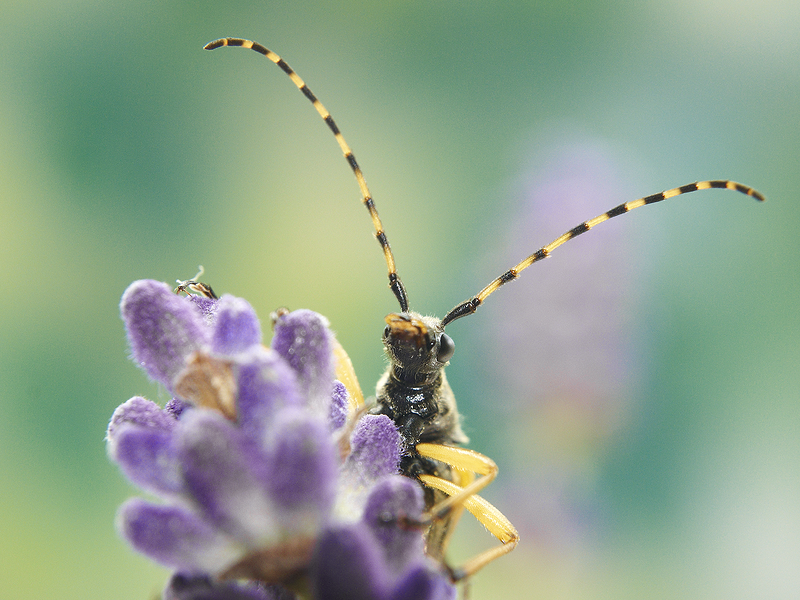
Longhorn beetles (Cerambycidae) are some of the UK’s most striking, but overlooked, insects. Named for their long, sweeping antennae - often longer than their bodies - these beetles are mostly found in woodlands, hedgerows and even gardens. The UK is home to around 60 different species, from the delicate Musk beetle (Aromia moschata) with its metallic green sheen, to the more common Black-spotted Longhorn beetle (Rhagium mordax), seen on logs in spring.
Most longhorn beetles begin life as wood-boring larvae, feeding on decaying or sometimes living trees. This makes them essential decomposers, helping to break down deadwood and return nutrients to the ecosystem. Some species spend years hidden inside wood before emerging as adults.

Longhorns are excellent indicator species, signalling the health of woodland habitats. However, modern land management and the removal of deadwood have made life harder for them. Several species are now rare or in decline.
Despite this, they’re not hard to spot—especially in warmer months. Adults are often seen on flowers like Hogweed or Cow Parsley or basking on tree trunks. If you find small holes or piles of sawdust at the base of deadwood, you might be looking at signs of larvae.
Want to help? Leave deadwood in your garden or take part in citizen science projects like the National Longhorn Beetle Recording Scheme, which tracks species distribution and is really easy to do from your mobile phone.
Though small and often hidden, longhorn beetles are a vivid reminder of how even the quietest corners of nature are full of life and colour. Next time you’re in the woods, keep an eye out—you might just spot one of Britain’s most elegant beetles.