
Meet the food producers: Pevensey Cheese Company
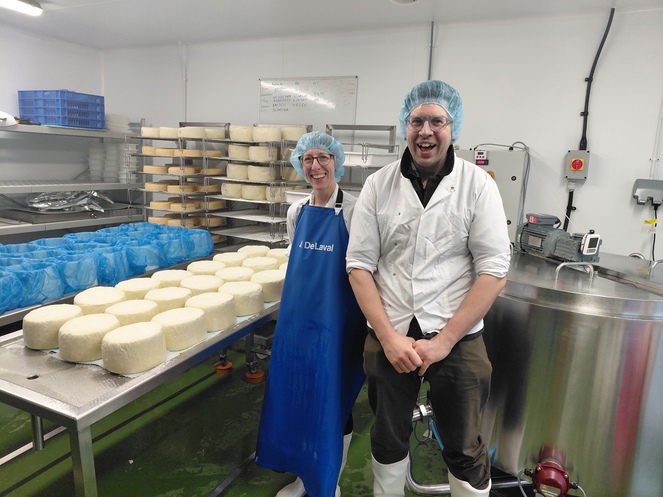
Despite beginning with all of us wearing blue hairnets reminiscent of Hilda Ogden, sometimes you know that a work day is going to be brilliant. I'd headed to Pevensey to interview local food producers and first port of call was the Pevensey Cheese Company to meet makers (and inventors) Martin and Hazel Tkalez, plus their employee, Tim. The dairy and everything in it smells fresh and is meticulously clean.
They are best known for creating the multi-award winning Pevensey Blue, but they now also make two other kinds of hard cheeses, Tilley Lane and Foxearle (all named for local places). All are made made with milk from the Court Lodge Organics herd, which conservation grazes the ancient Pevensey Levels marshland in summer. The milk is collected fresh on every cheese-making day (usually three or four days a week), still warm, from just up the road. I was fascinated to learn that milk isn't a consistent product, because it changes seasonally, according to the kind of grasses the cows are grazing on, the weather, all kinds of factors. "It gives us a wild ride in summer!" says Martin. They could choose to make the milk consistent, but that doesn't fit with their ethos. "We want our cheese to have the taste of where it's made," Martin explains. "And we've learned to develop tactics to deal with it!"
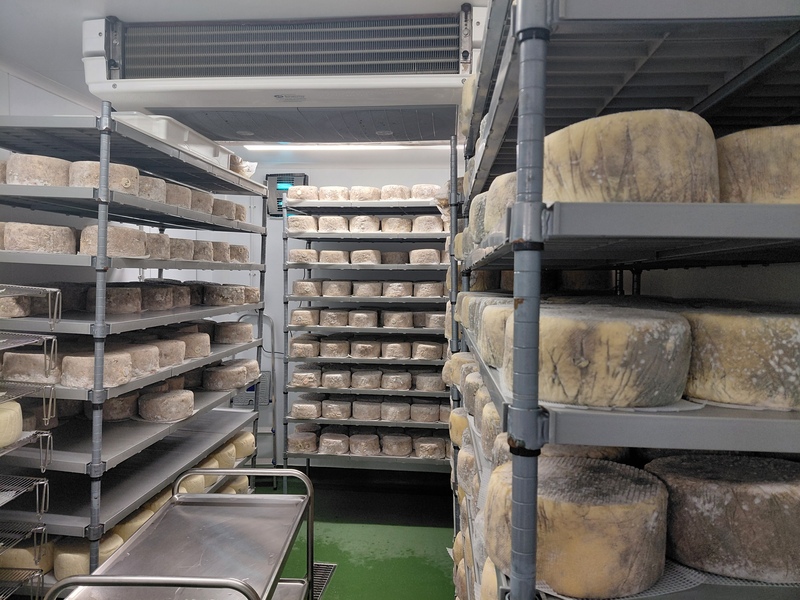
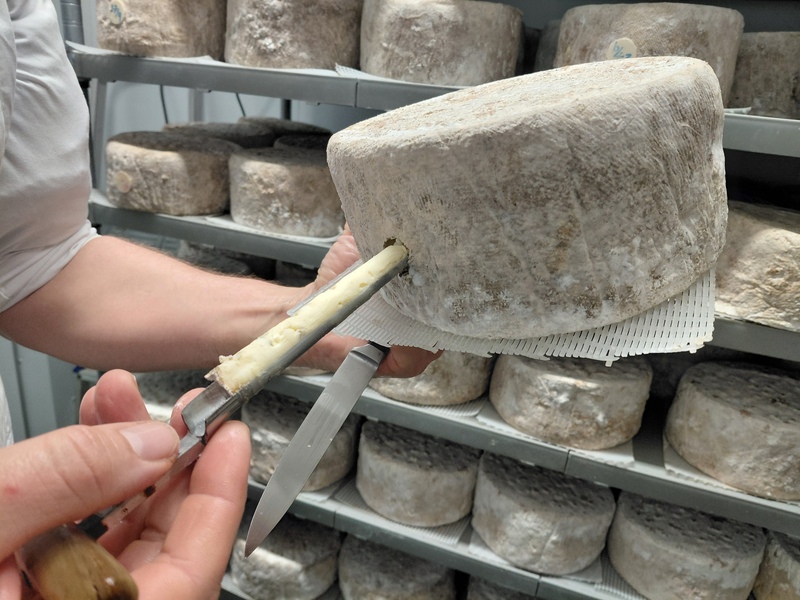
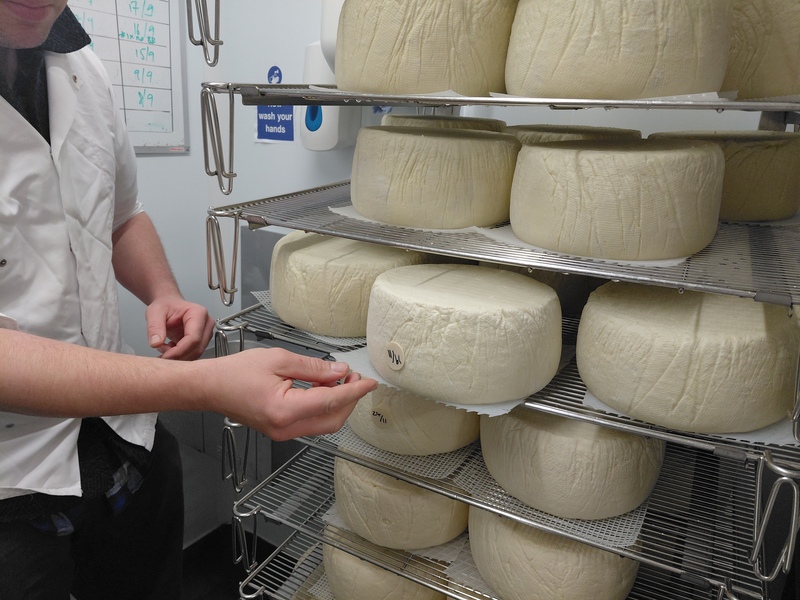
Once they've brought the milk to the dairy, they pasteurise it. Then it's cooled for the cultures to begin fermenting the milk, rennet is added then left to solidify the milk. The curd is cut, stirred gently for a few hours, then scooped into circular cheese forms. The cheeses are turned every 20 minutes to make sure they have an even shape, then left to drain overnight. The next day they salt the cheese and drain again. They pierce each cheese at the end of the first and second weeks and keep it for 12 weeks in the maturing room to develop a rind, encourage blue mould to grow and for the ripening yeasts, moulds and bacteria to do their work. The whey from making the cheeses goes to local pig farmers.
After all that, any cheese that isn't quite perfect, they sell locally for the price of the milk. Martin offers me a taste, and I have to say, even when not 'perfect' I'd imagine these would be the best 'seconds' you can imagine. It's absolutely delicious.
Hazel is from a local farming family and she and Martin met in London in 2016. Martin was a cheesemonger at Neal's Yard Dairy in Covent Garden. Their first date was at foody paradise Borough Market when Martin brought Hazel (Montgomery) cheese instead of flowers. Their fate was sealed and they married in 2019 and moved to Sussex. In 2020, they had their first child and created Pevensey Blue. Quite a productive year!
I asked what their biggest challenges are, and they mention the milk variability, as well as supply and demand - because blue cheese is so seasonal. It's much more popular in the winter than spring or summer, hence the creation of their other two cheeses.
My final question to Hazel was - what do you love most about your work? She said: "The privilege of working with my husband and partner Martin. We feel very lucky to work with each other and experience the highs (and lows) and trials and tribulations of building a business together. Also, sampling the cheese and selling at our farm gate sales once a month. It’s a great opportunity to enjoy it with our local customers and community that we feel so part of. Many of our customers are our friends now because when we sell the cheese we also get to chat with them and get to know what’s going on in their lives too. So it’s always a highlight of our month!
Comments
Do you produce a vegetarian cheese?
21 Jan 2026 11:16:00
Sussex Wildlife Trust:
They tell us: "Unfortunately we don't! There are a few technical reasons; but traditional animal rennet is a superior coagulant and a change to our recipe would be difficult to overcome. Animal derived rennet is a by-product of the meat and dairy industry, so it's making use of what some would consider a waste by-product that is already available through existing meat and dairy consumption."