
Managing water at Wilderness Wood
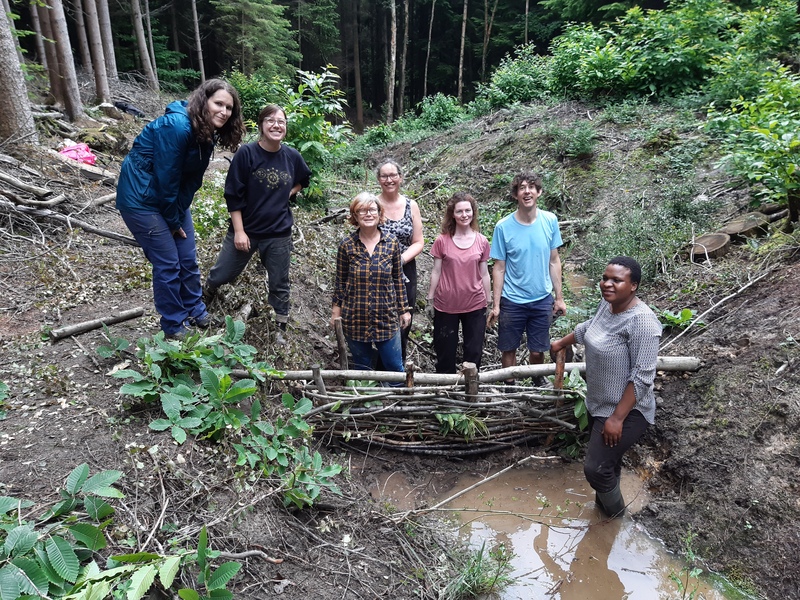
David Horne has worked as an environmental educator for numerous wildlife trusts and environmental education centres. He now works as a volunteer at Wilderness Wood, Hadlow Down, in the High Weald.
He has kindly guest contributed this blog to chime with our ongoing theme of 'water' (and all photos are by him).
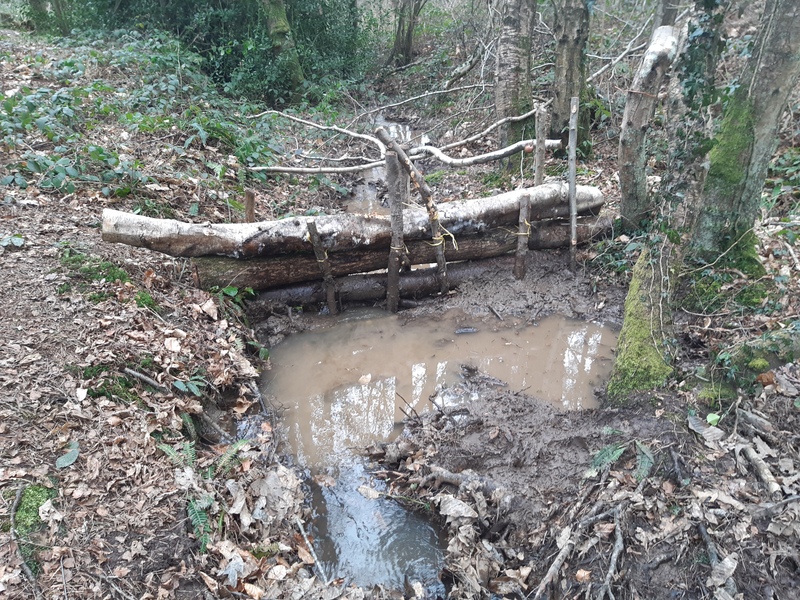
The Wilderness Stream running through Wilderness Wood is very full (winter) or dry (summer). It's a typical ‘flashy’ High Weald stream.
Winter rain storms fill the stream channel to overflowing and along with several hundreds of local streams quickly fill downstream rivers to cause flooding (Lewes and Uckfield in 2020)
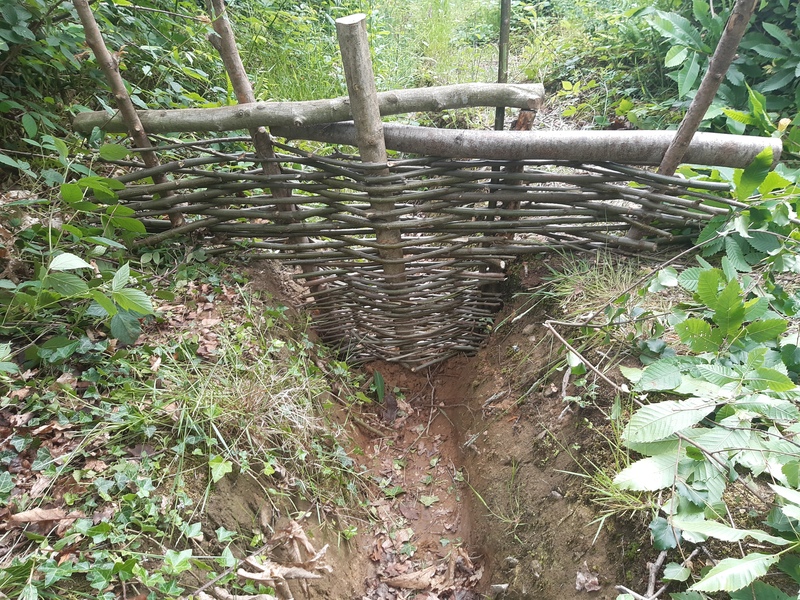
Increasingly dry summers caused by climate change leave the wood devoid of wetland habitats. I wondered what could be done to address these problems. The answer goes by the oddly named Leaky Dam.
We've probably all heard about Beavers, which are now being reintroduced into the UK after several centuries of absence. They build Beaver dams using tree trunks felled with their bare teeth and masses of tree branches. These hold back ponds full of rainwater, releasing it gradually afterwards. This reduces downstream flooding in winter and increases wetland areas to the benefit of wildlife in summer droughts.
With the help of numerous volunteers and guidance from staff from the Sussex Wildlife Trust Wilder Ouse team, we've built no fewer than 106 leaky dams over the last five years in a 30 hectare woodland. Volunteers have come from as far away as Iceland to build them, whilst even local primary schools have added their own ‘Beaver dams’.
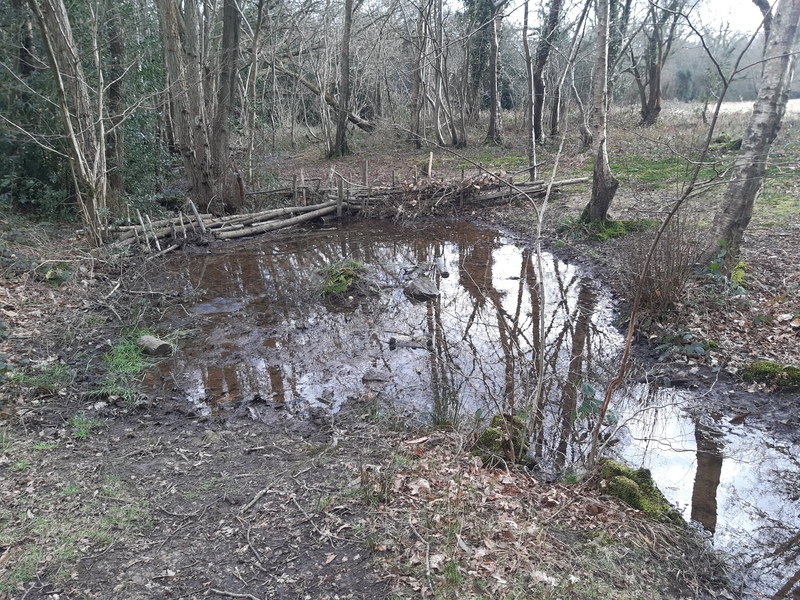
Each dam traps water and sediment, to the benefit of birds, wildflowers, amphibians and wetland invertebrates and cost us nothing to build, using Wilderness Wood coppiced materials.
Of course we need hundreds of other local landowners to emulated our activity. Alternatively, has anyone by chance got a spare Beaver?
Read more about water management at Wildness Woods