
Lord of the skies
By Mike Russell
The swift epitomises how creatures adapt to the world they live in and exploit any advantage they can that provide opportunities for them to survive in a competitive, crowded and increasingly hostile environment.
Most of you have seen a swift even if you are not aware that you have. Their screeching calls as they scythe through the towns and villages of Sussex are one of the sounds of summer.
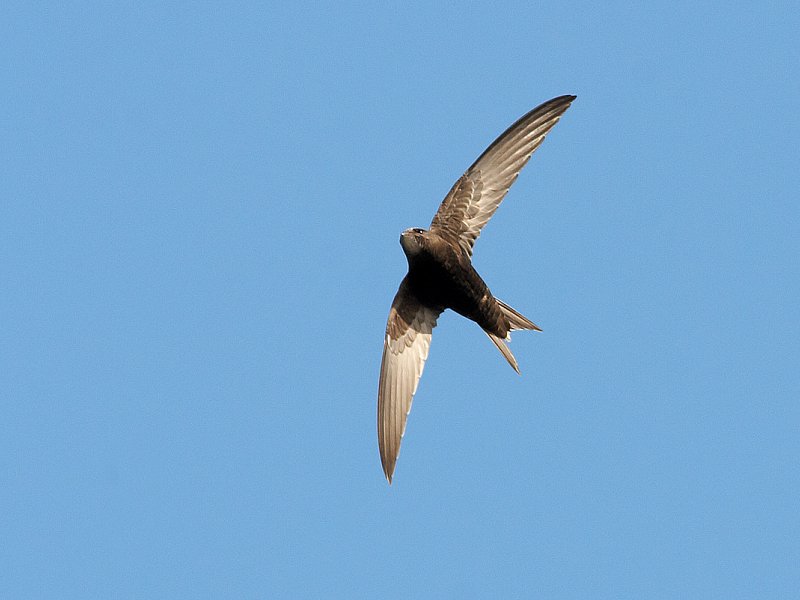
If you are not sure what they look like, turn your gaze upwards on a warm summer evening and you may well see what resembles a small flying anchor darting round the rooftops at great speed. Essentially they are all wing; the wingspan reaches 40cms (16ins) which is over twice the length of the body.
Once they leave the nest a swift spends the next three years of its life in the air; never landing anywhere. In this time it migrates back and forth to
When swifts want to go to sleep, they go higher and higher in the air until they become invisible to the naked eye, then cruise around at high altitude taking short ‘cat naps’. Feeding is all done in the air with the birds able to collect up to 400 insects in one ball as they are able to extend their gape like a net, catching their prey at great speed.
Sadly swift numbers are declining in the south east of England, mainly due to a fall in the number of insects and a loss of breeding sites. Around