
Living on the edge: Vegetated Shingle
By Laura Brook
Conservation Officer
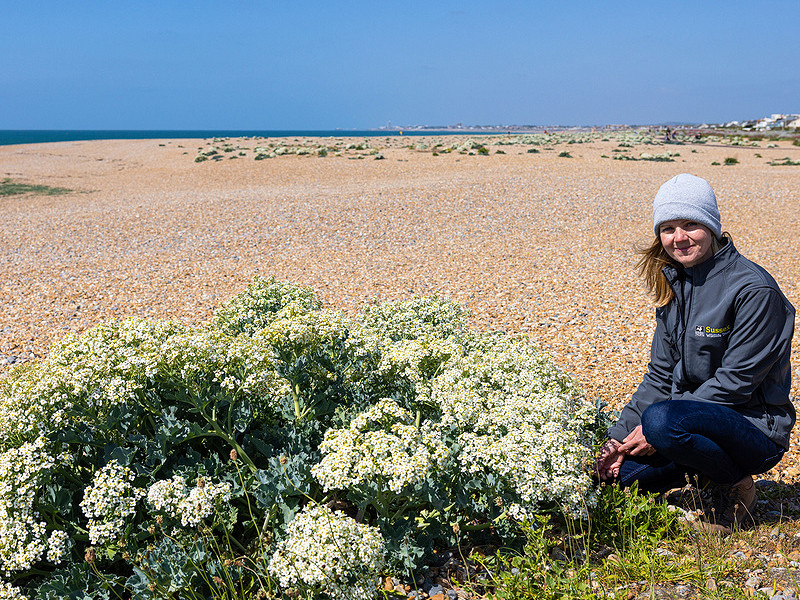
Shingle beaches are often depicted as cold, windy, grey and desolate places with banks of shingle that stretch on for miles. But in the spring months these stretches of beach come to life with plants punching their way through the shingle and showing us just how special the habitat of vegetated shingle can be.
In Sussex vegetated shingle can be found peppered along our coastline from Chichester through to Rye but sometimes people’s eagerness to rush to get to the water means they can miss the beauty and sheer resourcefulness of the plants that have adapted to live in these special places.
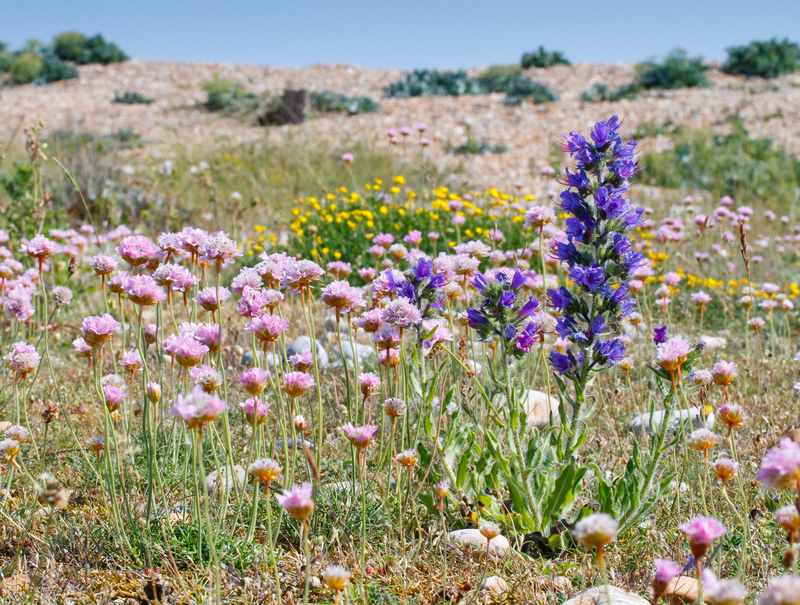
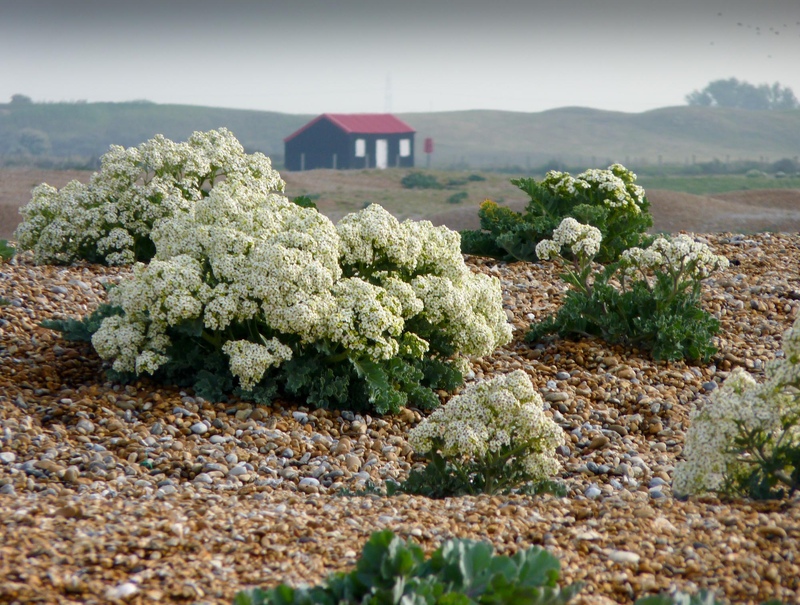
Heralding the start of spring is Sea Thrift. This delicate pink flower disguises itself as little clumps of grass before beautiful pompom flower heads emerge to provide valuable nectar resources at the start of the season. This is followed by Sea Kale. In the winter, this robust plant dies back to its long tap root that is anchored in the shingle and goes in search of fresh water. This perennial approach to growth enables Sea Kale to hide itself in the shingle during the winter when it is most vulnerable to damage. In spring, it first shows purple curled up leaves before these unfurl into huge waxy, undulating leaves designed to capture as much fresh water as possible. Its throngs of white flowers release the scent of honey, but their presence feels fleeting before they are replaced with beautiful emerald green seed heads that harbour the next generation of plants.
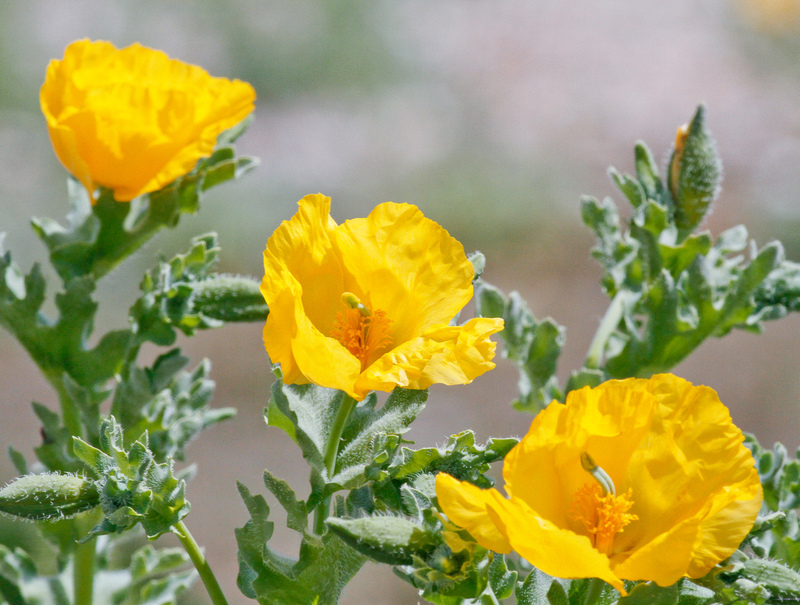
Yellow Horned-poppy is another plant to catch your eye. Their mute green jagged leaves are present throughout the year, but it is in the summer months we see this plant grow in stature and proudly display beautiful, delicate yellow flower heads that flutter like flags in the coastal breeze. It is named for the impressively long, horned seedpods that can dangle up to 30cm in length from the plant, making them one of the longest seed pods of our native plants. Vipers Bugloss is also present - a striking plant boasting purple flowers, found towering above its counterparts seeking pollinators. 'Bugloss' comes from the Greek meaning 'ox's tongue' and refers to the rough, tongue-shaped leaves.
Vegetated shingle plants on the coastal strip offer vital food and shelter for a range of wildlife from insects to birds and this habitat can often be the first stopping point for hungry, tired wildlife that has had a long journey across the Channel.
So, what are you waiting for – join in with 30 Days Wild with a walk on the beach and enjoy the beauty that thrives even in the harshest of environments.
Comments
My favourite place is Tide Mills on the shingle beach between Newhaven & Seaford. Definitely worth a visit & a very interesting history. The ruins are still there with explanation notices.Gardeners World visited last year to see the shingle plants.
22 Jun 2023 10:41:00
Vegetation and shingle in and around shoreham by sea.
Beautiful and a lovely place to chill for just being alive..x
22 Jun 2023 10:46:00
I live close to Hurst Spit (Hampshire) and see many of the wildflowers shown in your article growing on it. Do you actively encourage the spread of flowers or just allow nature to take its course? I would like to encourage Vipers Bugloss. Any thoughts on how?
22 Jun 2023 11:09:00
Sussex Wildlife Trust:
I am afraid I have not grown it yet, but planning o give it a try as I am creating a gravel garden. I have heard it is better to direct sow as it has a long tap root but I am going to try both methods. It likes sunny spots and prefers poor well drained soils. Given its love of harsh conditions I doubt it will require a lot of care. I am hoping it will then self seed all around my garden!
What a beautifully written piece; informative whilst avoiding being educational in tone.
A wonderful reminder of what a Spring/Summer transformation takes place on the often perceived “ wasteland of shingle”
. Thankyou so much for the reminder of the glories unfolding. Time to visit again soon.
22 Jun 2023 12:03:00
Thank you Laura for a very well written and inspiring article
22 Jun 2023 12:26:00
I live in Shoreham-by-Sea- at this time of year the beach is magical . The plants attract all sorts of wildlife including the spectacular hummingbird hawk moth
22 Jun 2023 13:03:00
Sea Kale is my favourite. I don’t know why – I just love it.
22 Jun 2023 13:30:00
I live in Selsey and am lucky enough to have a garden which backs onto the shingle beach. It is currently relatively sparse, but there are clumps of sea kale and lots of invasive whitetop. I harvested a number of sea kale seeds last autumn, planting some directly onto compost on/in the shingle, plus some in flower pots on my patio. They’ve done fairly well and planted a number of them out as I intend to populate the shingle as much as can with a variety of coastal wildflowers over the coming years. Thanks for the article, I will add these into the mix!
22 Jun 2023 13:33:00
Enchanting flowers, enchanting account, enchanting environment – what more can anyone ask
22 Jun 2023 15:39:00
Lovely article about a lovely habitat. Thank you.
22 Jun 2023 17:36:00
A fabulously well written article, thank you Laura for inspiring us to visit places like Shoreham Beach Local Nature Reserve. And when the flowers turn to seed, birds like Goldfinch, Greenfinch, and House Sparrow, all enjoy a feeding bonanza.
22 Jun 2023 19:43:00
I live in Selsey and am lucky enough to have a garden which backs onto the shingle beach. It is currently relatively sparse, but there are clumps of sea kale and lots of invasive whitetop. I harvested a number of sea kale seeds last autumn, planting some directly onto compost on/in the shingle, plus some in flower pots on my patio. They’ve done fairly well and planted a number of them out as I intend to populate the shingle as much as can with a variety of coastal wildflowers over the coming years. Thanks for the article, I will add these into the mix!
23 Jun 2023 02:16:00
You don’t have to convince me of the beauty of shingle and pebble beaches …I know Rye Harbour very well and the above photo is so iconic …I just love the variety of plants around that area…and all along to Pett Level the beach is full of all the species you have highlighted…. I also grew up near Seasalter with a real shingle, as in shells, beach. Learnt to walk with bare feet on those beaches as a child…. 😂
23 Jun 2023 09:12:00
Beautifully written article about one of my favourite landscapes- The vegetated shingle. Thank you
24 Jun 2023 05:31:00
Such an interesting article – thank you. Shoreham beach is an amazing sight in the Spring.
24 Jun 2023 10:45:00
Visited Normans Bay in the week and the vegetated shingle was spectacular!Yellow stonecrop and horned poppy sea kale and much more!
24 Jun 2023 12:43:00
We are lucky in Sussex to have many sites to admire these incredible plants, my favourite being Pevensey Bay. It’s also well worth a visit to the recently planted shingle beach near Brighton Marina.
25 Jun 2023 07:22:00
Very good article capturing the beauty, interest and value of this habitat. Thank you.
25 Jun 2023 13:32:00
In Felpham we have few shoreline plants but not far East is Middleton and West is Pagham where there is more to see.
25 Jun 2023 15:59:00
Yes. Beautiful and resourceful. I’ll certainly be more watchful and appreciative in future. Thank you.
08 Jul 2023 15:11:00
Beautiful photos and clear interesting information. Thankyou.
13 Jul 2023 07:36:00
We live in Crawley but walk along Shoreham beach in all seasons. The plants that seem to appear out of nowhere are quite amazing! A great place to be.
05 Aug 2023 08:28:00
Hi, we live near the coast locally and works like to try native coastal plants in front of our garden. Do you know where you can get these to try? Usually garden centre varieties seem much more over the top.
12 Jun 2024 17:47:00
Sussex Wildlife Trust:
Most vegetated shingle plants are best grown from seed, which can be bought from a reputable supplier: try Yellow Horned-poppy, Sea Kale, Viper’s Bugloss. Sea Campion and Sea Holly may also be as plugs or plants. Search online for ‘native wildflower seed’ to find a supplier that’s local / closest to you.