
Light in the skies

By Charlotte Wells
Communications Trainee
Blue, grey, pink, orange – our sky has many moods. Don’t we all? So much can change up there in a short time, often while we’re too busy pottering about our lives to notice. Our changing skies don’t only create breathtaking views but plays a vital role in nature. But what causes our skies to change so dramatically?
Beautiful blues
Sunlight may look white, but it’s actually made of different coloured light waves of varying lengths. As sunlight hits the Earth’s atmosphere, it interacts with gases and particles in the air, scattering the light – a phenomenon called Rayleigh scattering. Due to its short wavelength, blue light gets scattered the most, which why the sky looks a beautiful blue colour to our eyes.
Radiant reds
Red sky at night isn’t just for shepherds – it’s a delight for everyone. At dawn and dusk, the sun’s low angle means light travels through a thicker layer of the atmosphere compared to when it’s directly above. This longer path means shorter blue wavelengths are scattered out of view, leaving behind longer wavelengths of red and orange. Dust particles and water droplets in the air can also enhance the scattering effect, making red and orange skies even more vibrant.
Gorgeous greens
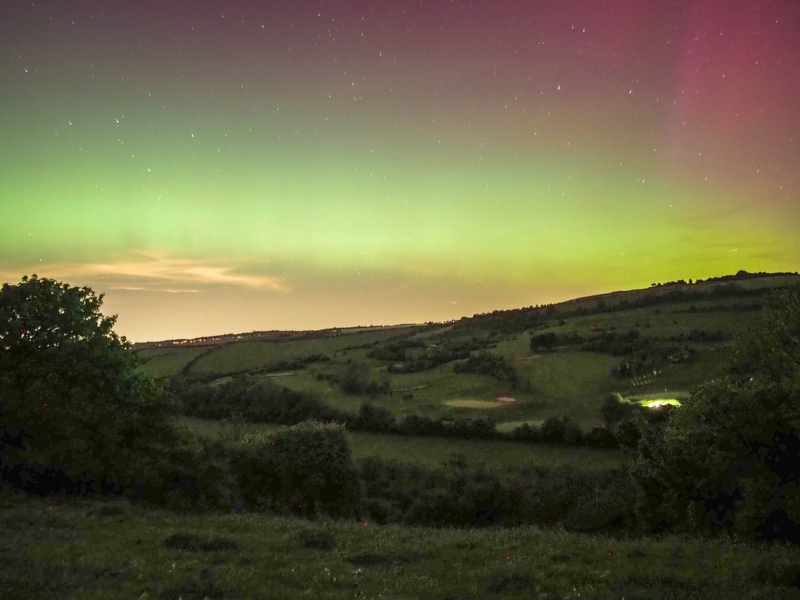
In October 2024, people in Sussex were offered a rare visual treat – conditions in which it was possible to see the aurora borealis, otherwise known as the Northern Lights. One of the most spectacular displays it is possible to see in our night skies. These dancing green and pink lights are caused by charged particles from Sun solar storm activity reaching Earth and interacting with the magnetic field. Most particles get deflected away, but some become captured and collide with gases in our atmosphere, emitting colourful light displays. Different gases produce different colours, with oxygen emitting greens or reds, and nitrogen producing purples, pinks and blues. Magical!
The light and skies are crucial for wildlife and humans alike. Wildlife relies on natural light patterns and sky colours for navigation, migration, and foraging, to name just a few. So, whether it’s the peaceful beauty of a clear, blue sky, or the dramatic colours of a sunrise, our sky constantly reminds us of the importance of nature around us.