
Lederman Trainees - September update
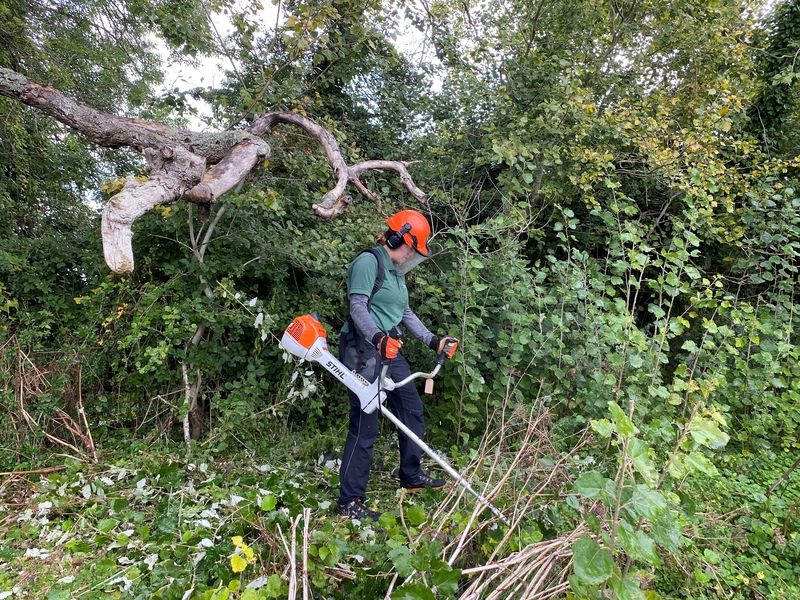
Rosie
September brought a change for us as trainees; now it’s coming into chainsaw season it means we will get a lot of practice using machinery, this will include chainsawing, brush-cutting and mowing. As it gets colder now it’s nice to be out getting practical. Mark and I recently spent a day at Leythorne Meadow over near Chichester, with Reserves Manager Mark Monk-Terry. The day involved mowing an area of fen meadow. We mowed most of the meadow, leaving some areas of Devil’s Bit Scabious as there were still lots of bees enjoying it. Scabious is a great late food source for many insects so it’s important that we respect this and leave areas untouched. We used a brush cutter and the BCS mower which has a large reciprocating blade to cut the meadow, raking the cuttings into piles to be removed later.
As mentioned in our last blog, we have continued monitoring bats at The Mens. We recently collected in the last round of monitors and they have been sent off to be studied. It was lovely being involved in this project with the Bat Conservation Trust, learning monitoring techniques and just exploring the beautiful expanse of woodland that is The Mens.
Last week I had my 4x4 training in Slindon, with an expert off-road driving instructor. This was a really fun chance to learn techniques that will be vitally important when out on reserves, especially in winter! We have such a range of sites in Sussex, it’s important to know how to tackle different terrain. It was really good fun and I look forward to using my new skills out on site.
Back at the start of September I took part in a training day in Wadhurst about the ecology of the Hazel Dormouse. The course was led by ecologist and Dormouse expert [who regularly runs Sussex Wildlife Trust courses] Laurie Jackson, who led us around an area of woodland searching for Dormice. Not only did I learn lots, including how to recognise Dormouse teeth marks in a nut, but I also actually saw my first Dormouse! It was great learning different survey techniques and how to provide suitable habitat to encourage the Hazel Dormice.
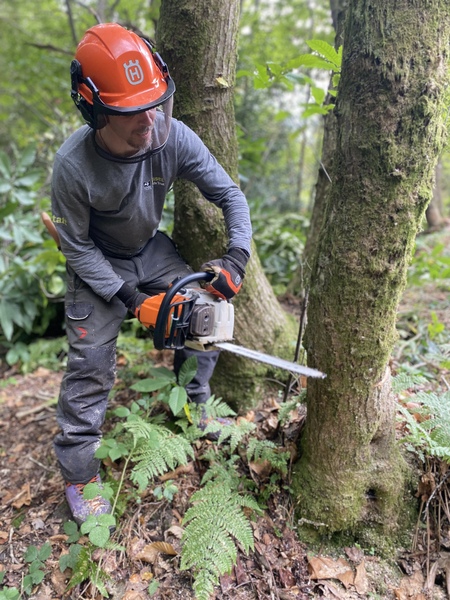
Mark
While Rosie was out seeking Dormice and flexing her skills in all-terrain vehicles, I was at Plumpton College learning all the parts and maintenance of chainsaws. Our tutor James Smith then got us out in the yard to practise cross-cutting: slicing up tree trunks into manageable chunks so they can be moved and processed. After passing this part, I could move on to actual tree-felling, and spent a week out on the Wiston Estate in West Sussex learning how to safely cut and process trees in the forest.
All this tree-felling sounds very unecological, but there’s a good reason behind learning this skill as a land manager. Diseases and storms can weaken even the mightiest looking trees, putting people at risk if they are walking around reserves or along public rights of way, so trees are sometimes felled to make areas safer. Conservation workers also need to simulate the actions of species we’ve removed from the ecosystem, like Bison or Beavers (now being returned to parts of our countryside – yay!), as these animals would create new habitats by gradually clearing woodland areas.
I practised this kind of habitat transformation soon after my tree-felling training, working with Reserves Manager Jamie Parsons to clear Sweet Chestnut trees at Eridge Rocks reserve, and create glades in the woodland so that rare butterflies can flourish. I’m looking forward to honing my chainsawing skills as the winter works continue.