
Late summer on an organic farm
Marian Harding
Guest blogger
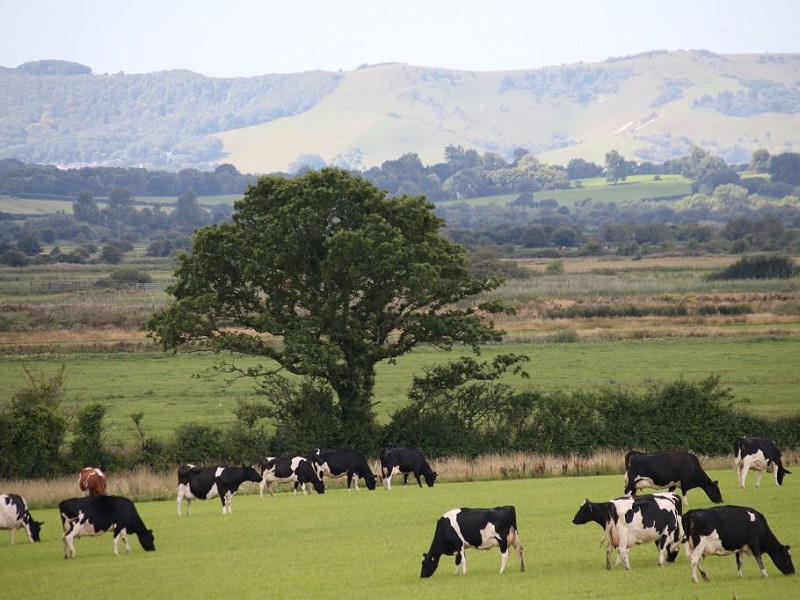
Looking down from our farm at Wartling, the Pevensey Levels are various shades of green - fields that have been cut for forage are re-growing a lush lime green, and those that have been grazed by cattle and sheep have a khaki tinge. Last summer the ‘marsh’ looked more like the Serengeti Plain - all shades of yellow and brown. The grass was starved of moisture and didn’t grow, yields from our dairy herd were down and we were short of winter forage.
Last summer our cows were hungry and grazed the pastures very short creating little pools at ditch edges with their hooves, (micro habitats for invertebrates), as the water drew down. This year, water levels have stayed high and there seems to have been a profusion of Water Soldier growing in the ditches. This spiky plant is favoured by the iconic Fen Raft Spider for rearing broods of spiderlings, so hopefully the population of this rare arachnid has risen.
With such good growth we haven’t had enough cattle to make best use of the pasture on Pevensey Marsh, so have baled the extra as haylage for winter feed. Haylage is a cross between hay and silage, made by mowing and baling meadows that are seeding, as opposed to silage which is normally younger fresh growth. Our reasons for pickling the long stalky grass in those awful black plastic bags this year, instead of making hay, are that hay needs five consecutive sunny (preferably breezy) days to be cut, turned, rowed up, baled and brought in, whereas haylage only needs two dry days. Also, hay must be stored in a dry building, whereas baled haylage and silage can be stored outside and finally, the cows love it!
Nevertheless we’re uncomfortable about using plastic. As we unwrap the bales, the plastic is stored in a bin and collected by a recycling business, who turn it into a wide range of products, from chicken coops and horse jumps to garden furniture and traffic bollards. It’s the least worst option, but of course a compromise.
When our local Farmwatch reported a spate of thefts of tools and equipment, we were extra diligent at shutting the main gate to the farm last thing at night. The bonus has been frequent views of our resident hedgehogs. Since we haven’t used any agrochemicals for over 20 years we have an abundance of invertebrates providing plenty of food for them. Also, as we’re not the tidiest farm around there’s plenty of cover for them as well as teasels and thistles in abundance resulting in hordes of Goldfinch.

Marian and David Harding of Court Lodge Farm, an organic dairy farm on Pevensey Levels. The farm is a business member of Sussex Wildlife Trust, and David has also been a Trust member for over 50 years.