
June 2015: Rye Harbour nature reserve sightings
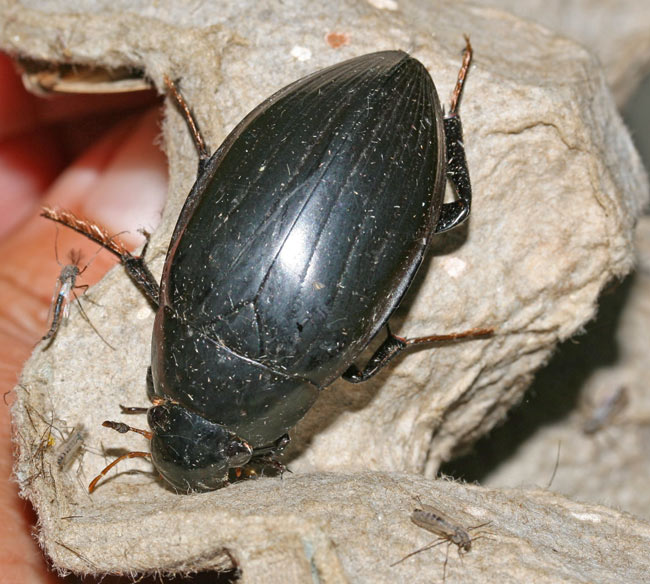
One of the characteristic insects of Rye Harbour Nature Reserve is the great silver water beetle. This behemoth is one of the largest British insects, up to 5cm in length and weighing in at around 25-30g. As the name suggests, this is an aquatic species, the adults storing a bubble of air under their abdomen to allow them to breathe (and giving them the ‘silver’ part of the common name) and feeding largely on plant material, while the larvae feed on freshwater snails, drilling holes in the shell to get at the juicy insides. A rare species in Britain, great silver water beetle is associated largely with grazing marshes and ditches in Britain, and at Rye Harbour they are most at home in the ditches and pools at Castle Water, though they are most often seen when they come to the moth trap at Lime Kiln Cottage.

In general it’s been a good year so far for our breeding birds. At Ternery Pool around 200 pairs of Sandwich tern are doing well after several years of poor productivity, producing around 200 chicks and with the first fledglings seen late in the month, while at least four fledged Mediterranean gull were present on the 26th, the first successful breeding here for a couple of years. On Flat Beach Level, it seems that work carried out during the winter to provide extra protection against predators has been successful so far, with little sign of the depredations of the previous couple of years. The bulk of our oystercatcher nested here, with perhaps 20 pairs successfully hatching and then fledging good numbers of chicks, while ringed plover also seem to have done better than usual. In addition, at least nine pairs of little terns set up home here, with the first chicks produced towards the end of the month. On Harbour Farm, at least 40 pairs of avocet (above) nested, and while they struggled early on in the season later nesters did well and many early failures re-nested so that both fledged young and tiny chicks were present by the end of the month. Wheatear also seem to having a slightly better year, with perhaps five pairs on the Beach Reserve probably well into their second broods by the end of June (juvenile below). There have however been some disappointments. Lapwing numbers were down this year and those that did nest were probably adversely affected by the poor weather and very few fledglings were seen. Similarly redshank, though present in good numbers at the start of the season, have been similarly unproductive. Another disappointment has been turtle dove. It used to be that you could almost guarantee it at two or three places in area, but this year we have had only a few sightings, at Castle Water. Some early signs of passage movement were seen during the month, presumably birds nesting in the far north, and included regular whimbrel and curlew on Harbour Farm and the Beach Reserve, and bar-tailed godwit and spotted redshank on Harbour Farm on the 9thand 29th .

The improved weather during June saw an increase in the catch for the Lime Kiln moth trap. Highlights included the macros star-wort, shore wainscot, dotted fan-foot and cream-bordered green pea and the micros starry pearl, giant water veneer and saltmarsh grass veneer, while migrants included small mottled willow, bordered straw and rush veneer. Still very poor for butterflies despite the upturn in the weather, with low numbers recorded throughout, though there were several records of red admiral and painted lady during the month. Other interesting invertebrates recorded during June included bombardier beetle (below) and the false widow spider Steatoda nobilis. Plants in flower during June included pyramidal and common-spotted orchid, ribbed melilot, evening primrose, sea heath and yellow vetch.
