
July 2016: Rye Harbour Nature Reserve Sightings
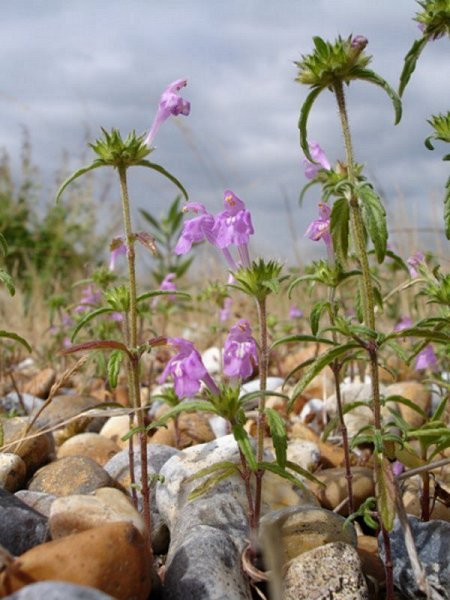
One of the characteristic plants of Rye Harbour at this time of the year is red hemp-nettle. This inconspicuous little relative of the mints and dead-nettles, with its red flowers and nettle-like leaves, grows on sparsely vegetated habitats on the Beach Reserve and Harbour Farm, often where the ground has been disturbed. This species used to grow in many parts of England and Wales, but loss of habitat, changes in agricultural patterns and use of herbicides among other things has seen a marked decline in its fortunes, and it is now confined to a few 10s of sites. As a consequence it is now classified as critically endangered, indicating it is at a high risk of extinction in the UK and has its own Biodiversity Action Plan (BAP). At Rye Harbour red hemp-nettle is the foodplant for the very rare flea-beetle Dibolia cynoglossi which causes characteristic feeding damage on the leaves.

On the Beach Reserve the common and little tern colonies appeared to be thriving at the start of the month, but both fizzled out rather abruptly, with few of the former and apparently none of the latter fledging. There were still a few Sandwich terns around at the start of the month, feeding the few fledged young they managed to produce, but for them too the year was somewhat disappointing. Oystercatcher (below) seem to have a bumper season, with good fledging success, and our ringed plover have not done too badly either (and in fact there were still one or two young broods seen during July). Both redshank and lapwing however have not done so well, with few chicks and even fewer fledglings noted.

A good range of waders during July included a few returning passage migrants. This included up to 11 common sandpiper on the 13th, nine whimbrel and six black-tailed godwit on the 8th,small numbers of green sandpiper and greenshank and, the highlight, a wood sandpiper on Harbour Farm on the 2nd. In addition, this month saw yet another record of spoonbill, with two on Ternery Pool on the 2nd. This exotic looking water-bird has been recorded here every year since 1970!
Raptors included regular marsh harrier, with two fledged young seen on the 10th, hobby on the Beach Reserve on the 5th and 16th and peregrine on several dates early in the month. Passerines also showed signs of passage movement with up to 400 swift, 70 sand martin and 25 house martin recorded during July, while small numbers of yellow wagtail had begun to put in an appearance on the Beach Reserve by the end of the month and a whinchat was seen on the 31st.

Highlight in the Lime Kiln moth trap during July was a dark bordered pearl on the 6th, a migrant and partial resident which had not been recorded on the reserve before, while five-spot ermel, saltmarsh grass veneer, crescent striped and star-wort were also of note. Butterfly numbers picked up during the month, largely due to the appearance of meadow brown and gatekeeper which can be very abundant at this time of year. There were also several sightings of small copper, which seems to be having a good year, marbled white and migrants such as painted lady and red admiral, while dragonflies included brown hawker, emperor and black-tailed skimmer. Other notable invertebrates during July included large–headed resin bee (above) new to the reserve from Watch Cottage on the 24th, several saltmarsh horsefly on the Beach Reserve and Harbour Farm late in the month and the rare jumping spiders Pellenes tripunctatus and Phlegra fasciata on the Beach Reserve on the 20th. Plants in flower included red hemp-nettle, least lettuce, stinking hawksbeard and red bartsia (below), this new to the Rye Bay area from the Narrow Pits on the 21st.
