
How to spot a Ladybird
By Charlotte Owen
Conservation Officer (maternity cover)
Everyone knows what a ladybird looks like – a cute and friendly beetle with a round body, its domed back painted letterbox-red with a smattering of glossy black spots. But not all ladybirds look like this, and some are not quite what they seem.
There are 46 species in Britain, although only 26 of them look like typical ladybirds. The remainder are fairly drab and inconspicuous compared to the bright and colourful beetles we know and love.
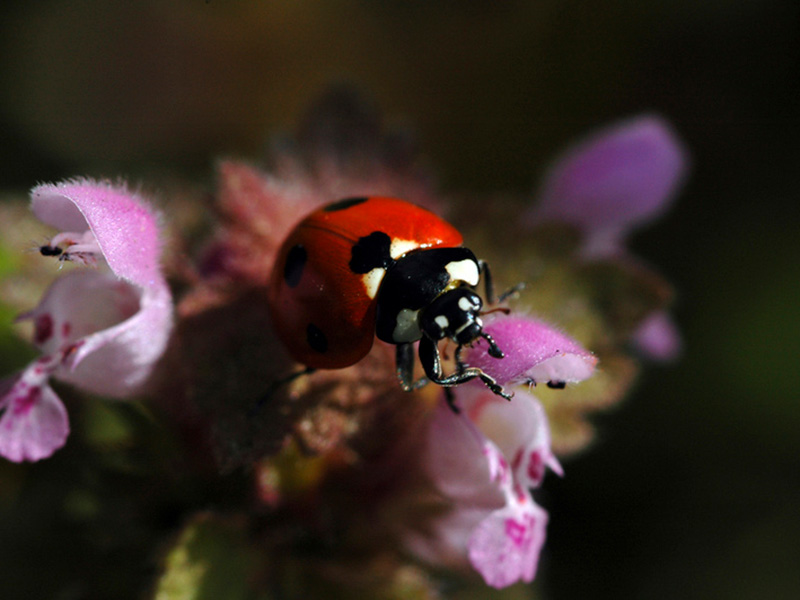
The commonest is the 7-spot Ladybird, which is the stereotypical red with seven black spots.
The one pictured below is the much less common Scarce 7-spot, which has four white triangular markings below the legs, whereas 7-spot has only two markings.
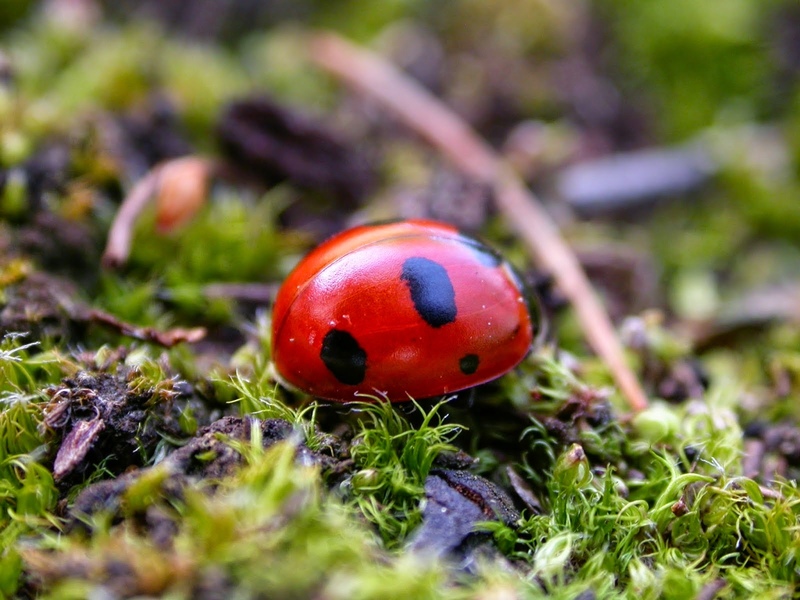
The 2-spot Ladybird follows the same format as the 7-spot but this is where things start getting complicated, because the 2-spot ladybird also comes in black with up to six red spots.
The Kidney-spot Ladybird and Pine Ladybird are also black with red spots, while the Ten-spot ladybird doesn’t always have ten spots.
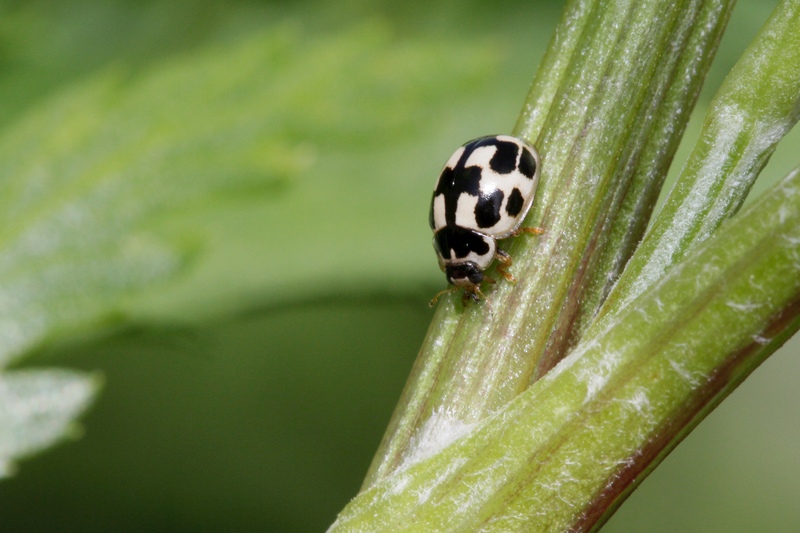
The 22-spot Ladybird is yellow and true to its name, as is the similar 14-spot ladybird. The Orange Ladybird is indeed orange and the Cream-spot has cream spots - but shouldn’t be confused with the Cream-streaked Ladybird, which is often salmon pink. There’s even a Striped Ladybird, which bucks the trend completely.
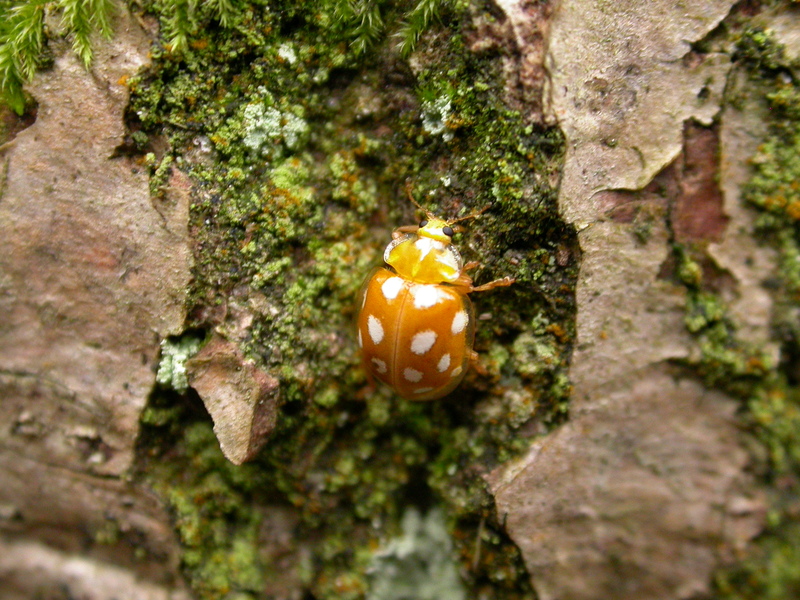
So why is there so much variation in ladybird colour and pattern? The bright colours warn potential predators that they are toxic and taste terrible, so it would make evolutionary sense for ladybirds to stick to consistent colouring to get a clear message across. Interestingly, studies have shown that the highly variable but actually quite tasty Two-spot ladybird varies its colouration to mimic its more toxic relatives, which may be red with black spots in some habitats, or black with red spots in others.
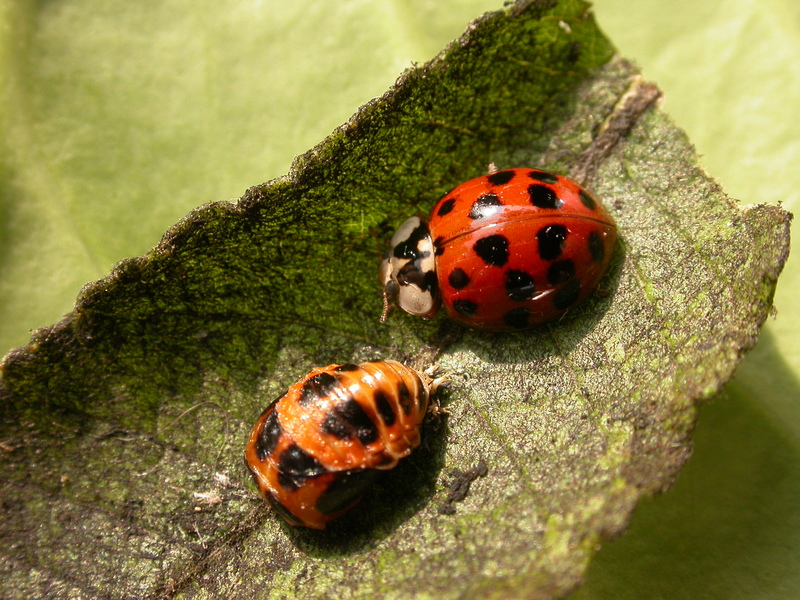
Temperature may well determine which colours are found where, and some of the best evidence for this comes from one of the most variable species of all – the non-native Harlequin. The black varieties are more common than red in cooler woodland habitats, where darker colouration could help them warm up more quickly. In late autumn/early winter, Harlequins of all colours will cluster on sunny walls or window panes, often in huge numbers, as they seek out a sheltered spot to hibernate.
Fun fact: did you know that the Welsh for ladybird, buwch goch gota, literally translates as 'red-coated cow'!
Comments
thank you for the fascinating insight into the world of lady birds.
I was not aware of some many different species. I will be on the look out for them in my garden and on the allotment.
14 Sep 2023 12:49:00
I have had loads of ladybirds, in my garden, this year! Their lavae have been on my garden table and chairs, deckchairs and even the door frame. The adult ones have been just as bountiful. They are all different types but I haven’t seen an orange striped one yet. I will keep my eyes peeled.
14 Sep 2023 13:01:00
Today I saw a mustard yellow ladybird with tiny faint dark pinprick spots on our Fennel plant.
14 Sep 2023 15:04:00
Fascinating, thank you.
15 Sep 2023 08:28:00
My double glazing is crowded with hibernating lady birds each winter.the window is on the south side of my home.R
15 Sep 2023 14:35:00
Really enjoyed this nicely written little article – thanks 😃🐞
18 Sep 2023 20:58:00
Really enjoyed this nicely written little article – thanks 😃🐞
22 Sep 2023 13:06:00
Really enjoyed this nicely written little article – thanks 😃🐞
24 Sep 2023 07:19:00
Really enjoyed this nicely written little article – thanks 😃🐞
25 Sep 2023 21:15:00
Really enjoyed this nicely written little article – thanks 😃🐞
27 Sep 2023 20:51:00
Really enjoyed this nicely written little article – thanks 😃🐞
29 Sep 2023 14:03:00
Really enjoyed this nicely written little article – thanks 😃🐞
29 Sep 2023 21:16:00