How Sussex Wildlife Trust manage their conservation grazing animals
We speak to Grazing Manager Tom Parry about how lambing and calving is going this year, and how Sussex Wildlife Trust manage their conservation grazing animals throughout the year to support the ongoing biodiversity of our reserves.
For more information about grazing at the Trust and why conservation grazing is so important for biodiversity, read here
Where does all the lambing and calving take place?
The Wiston Estate near Findon, where we have barns and graze around 1000 acres of mixed grassland, ranging from improved grass leys right the way up to nationally rare and important chalk grassland SSSIs.
We use the Estate as a base for our livestock operation, allowing us to draw down animals to graze reserves as ecological requirements dictate. This arrangement gives us flexibility and allows us to react quickly to adjust the grazing pressure we need on our reserves.
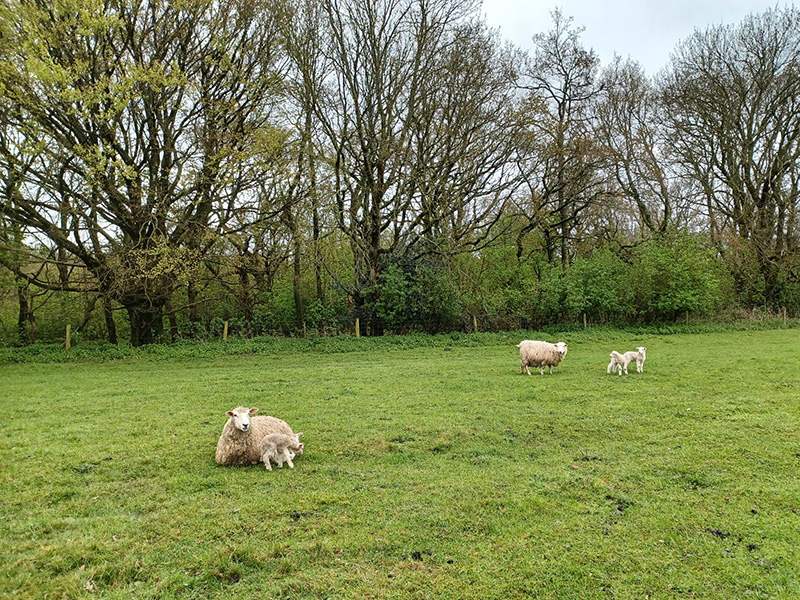
It's a lot of work, but we enjoy it, especially at this stage, when we have so many lambs charging around the fields. We've had around 500 lambs born. About half are ewes and we will keep those. We are currently expanding the flock.
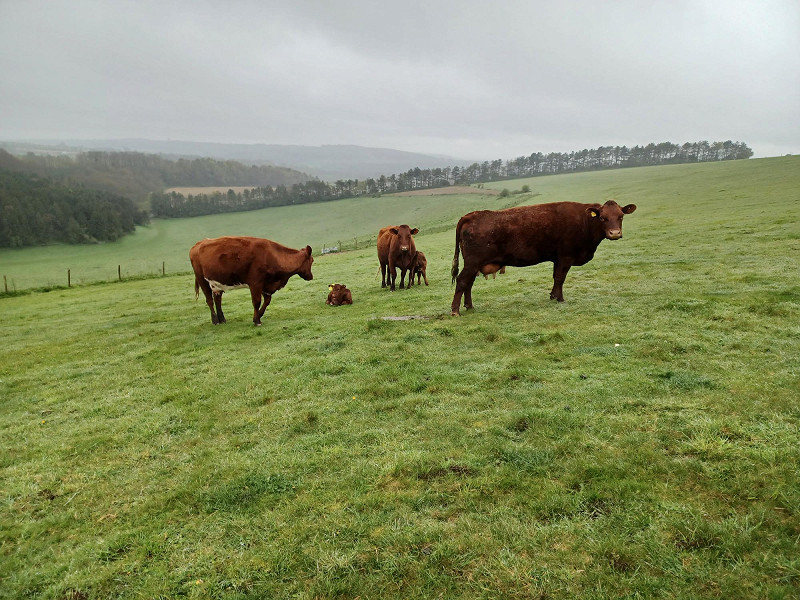
Now, we're calving. All calves have to be registered within 30 days. The UK now has best livestock tracing system in the world, ever since the Foot and Mouth outbreak. Each cow has a paper passport which has to be physically stamped every time they are moved.
Find out more about how we take care of our sheep
Tell us about your stock
We use two breeds of sheep Romney and Herdwicks. Both are hardy breeds capable of carrying out the grazing we need, and flourishing on a forage only diet.
The cattle are predominantly Sussex cattle. Again a hardy breed that have been selected for hundreds of years to do well grazing the Sussex landscape. This makes them ideal for managing our nature reserves, and they are a fantastic cow to work with.
We have 350 breeding ewes, 70 breeding cows, plus 120 followers (Younger cattle that will go into the herd as replacements). We also have two Sussex bulls, Buccaneer and Monarch, and twelve rams, including 'teasers' (a ram that has been vasectomised rendering him unable to impregnate ewes, but maintains sex drive). Teasers are used to naturally synchronise ewe ovulation, condensing the lambing period and hopefully saving time and labour. We are always mindful of our carbon footprint and thinking of ways to reduce it. A few weeks before lambing a ewe’s nutritional demand outstrips the amount she can get through grass alone, so we do have to feed them with some high energy feed. In previous years we would feed sheep nuts. A compressed pellet that contains everything the ewe needs.
This year, in an effort to reduce our ewes food miles, we have made an on farm blend of feed consisting largely of oats grown right here on the Wiston Estate.
When does shearing take place?
Shearing starts from about mid-May for the sheep that haven’t lambed, and towards the end of June/mid July for the ewes with lambs. The reason for the split is that sheep won’t shear that well just after lambing. Ewes tend to be thinner after lambing, having put all their energy into making a lamb and then feeding it, and the wool wont “lift” until the sheep puts a bit of weight back on.
Why is it so important to have this kind of farming set-up?
Habitats and livestock don’t do well when they are set stocked, i.e. the same grazing pressure put on them all year round. The habitat will get overgrazed in the winter, under grazed in the summer and the animals will become more susceptible to parasite burdens, disease and malnutrition.
To maintain a healthy habitat and healthy animals we try and replicate the natural movement of animals through a landscape. For example, increasing grazing pressure in the spring/summer, then slowly reducing it to nearly zero in the winter (depending on habitat). Unfortunately, this means we operate a bit of a boom bust approach to livestock numbers on our reserves. Without the associated farming infrastructure behind the conservation grazing operation we would lack the ability to respond to this boom bust model.
Historically our nature reserves would have been farmed, with no notion whatsoever of conservation grazing. The link between healthy animals and healthy habitats alone, bringing about a perfect conservation grazing regime. The boom in population and necessary adaptations to farming practices over the last 100 years has meant that, unfortunately, these sites have fallen out of most everyday farming system, and have fallen by the wayside when it comes to grazing.
In order for biodiversity on these sites to flourish, grazing is essential, and in order for grazing to flourish we need healthy, hardy animals that are supported by a backbone of traditional and innovative farming practices. Neither conservation nor farming can exist in perpetuity, without complimenting and supporting each other.