
How Louis nearly met his Waterloo
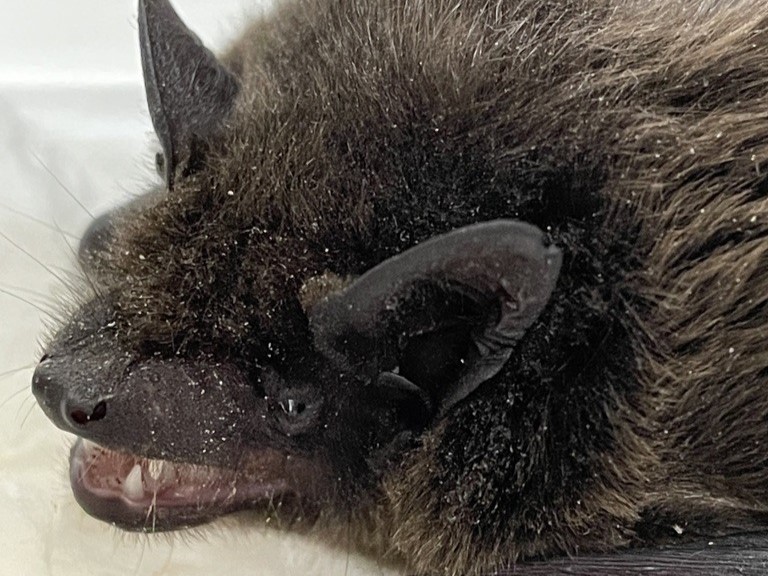
A guest post by Sussex Wildlife Trust member 'SB'
Sometimes you go looking for nature and sometimes it comes looking for you.
“Oh – there’s a giant leaf in the loo,” I thought.
Until it moved.
“Oh – there’s a giant toad in the loo,” I thought.
Until it spread out its wings.
“AARRGGHHH – THERE’S AN ACTUAL BAT IN THE LOO!!!!” I thought.
And here he is, floating to survive, surrounded by bat poo, so he’d obviously been in there quite a while, poor lad.
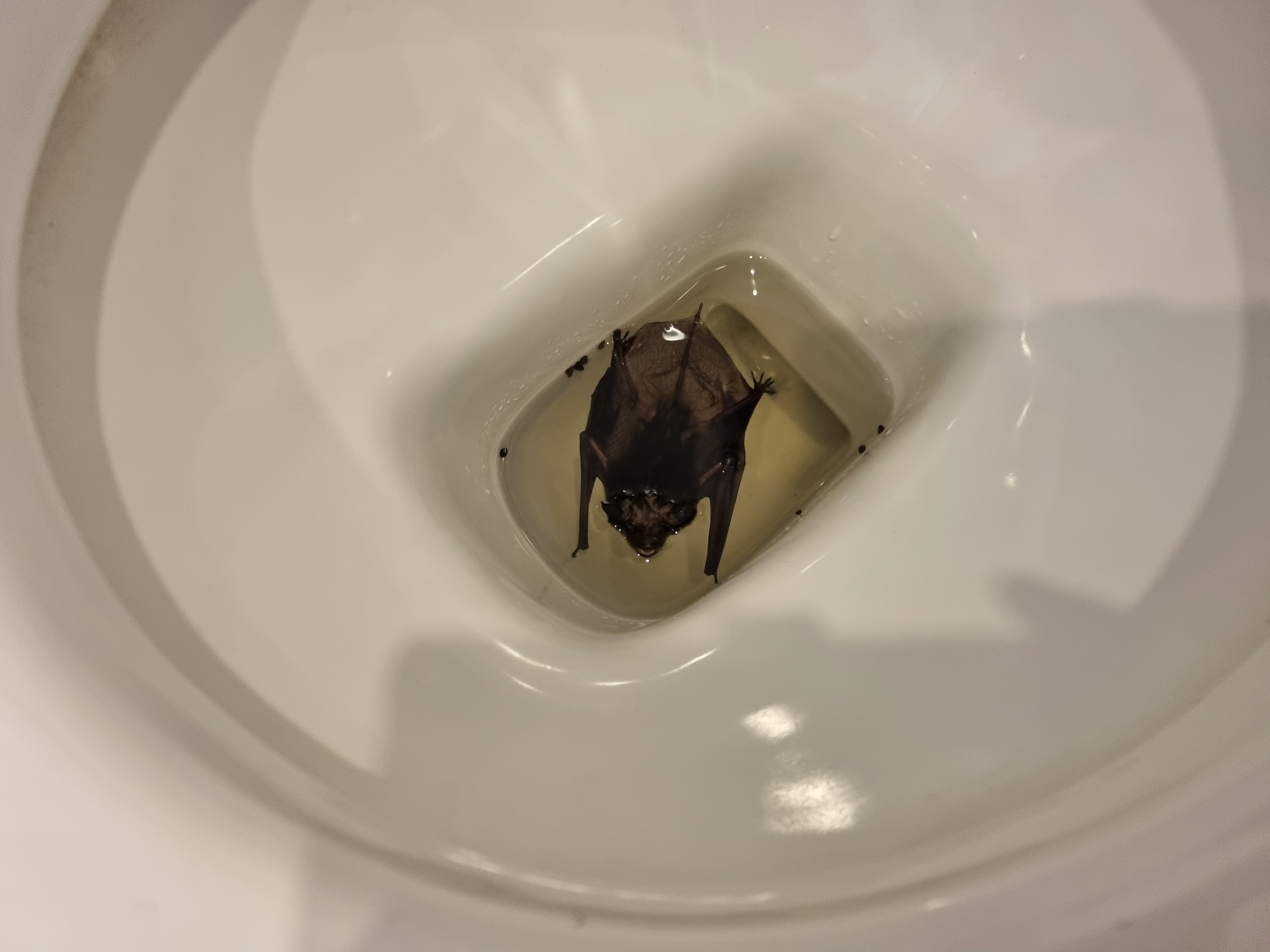
And so began an encounter not just with the bat but also with some wonderful people from the Sussex Wildlife Trust and Sussex Bat Group. Not least the matron of bat hospital, Amanda, who instantly named him Louis after his place of discovery (and yes, she checked first that he wasn’t a Louisa).
But first, the bat rescue. OH was deputed to fish Louis out, wearing long gloves as even in the UK it seems there’s a minuscule risk of rabies. Scooping him out with a plastic tub failed. A garden trowel proved perfect. Louis clung on, seeming to understand this was a rescue. But he did end up looking like, well, a drowned bat. And barely recognisable as a living creature. We feared the worst.
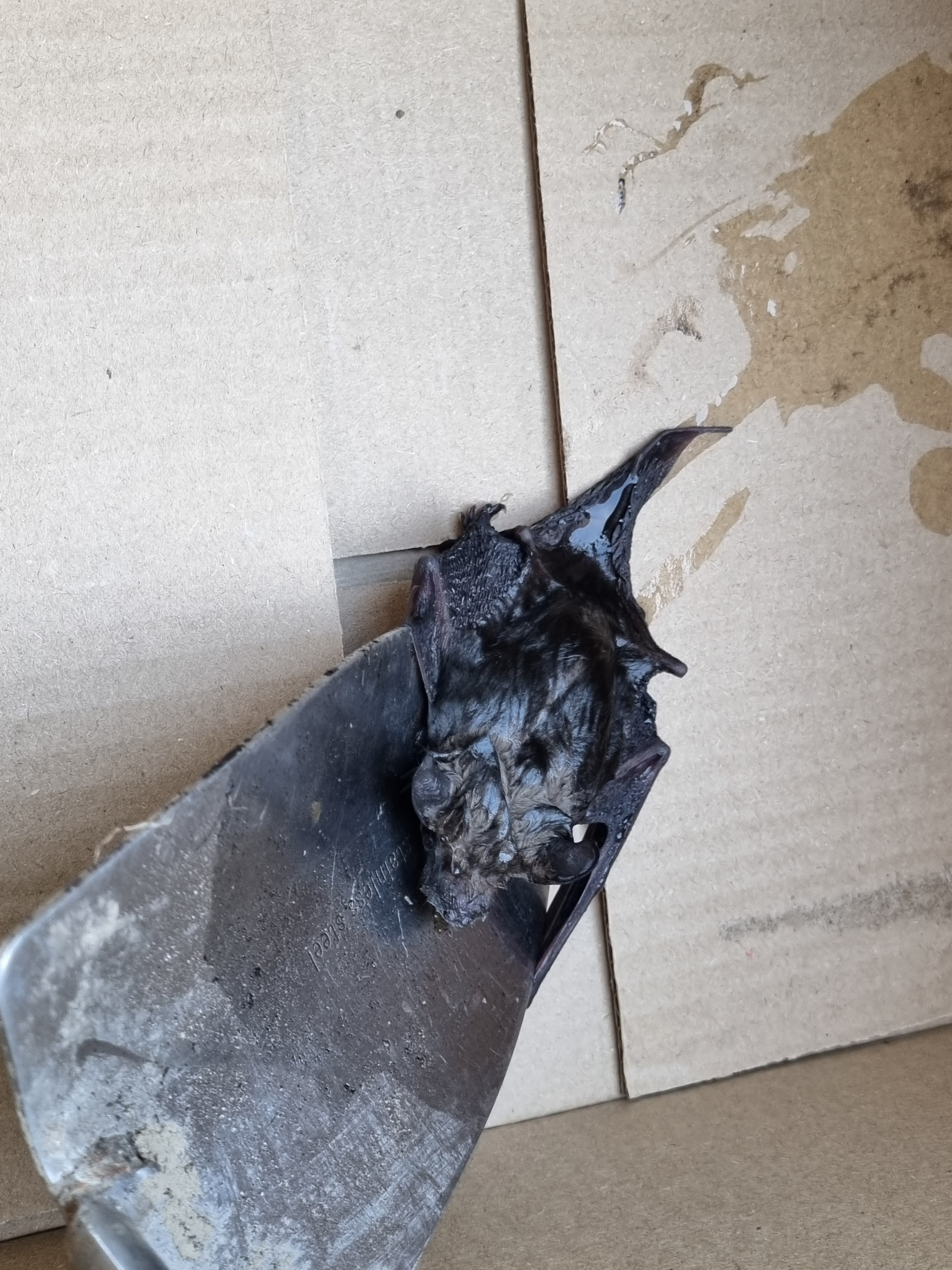
We carefully placed the trowel in a cardboard box, Louis still clinging on for dear life, and left him in a quiet spot to dry out. A while later, he clambered off the trowel and took refuge underneath it. But he was still looking very soggy and very sorry for himself. We needed the experts on board.
Sussex Wildlife Trust kindly directed us to online bat resources via their Bluesky account (thank you, Charlie). A couple of phone calls later (thank you Rita and Amanda) and we’d been advised to add a tea towel for Louis to hide under and some kitchen roll to dry him out. Then it was off to bat hospital. The fabulous and knowledgeable Amanda was waiting to meet us.
Louis was a Serotine Bat (nope, I’d never heard of one either). Serotines turn out to be one of the bigger bat species around, and one of the grumpier, although Louis was later described by Amanda as a gentle soul. I like to think of him more as a bat with attitude, resourceful and with a spirited determination to live. He was also on the thin side – the heatwave is leaving many bats dehydrated and hungry. Louis must have been so desperate for water that he’d flown through the open window and into the toilet. It must have been a thirst-quenching moment of triumph until he realised he was trapped.
The story has a happy ending. After a week in bat hospital, Louis was restored to his fiercer, fatter, furrier self on a diet of mealworms, keeping one back to snack on later.
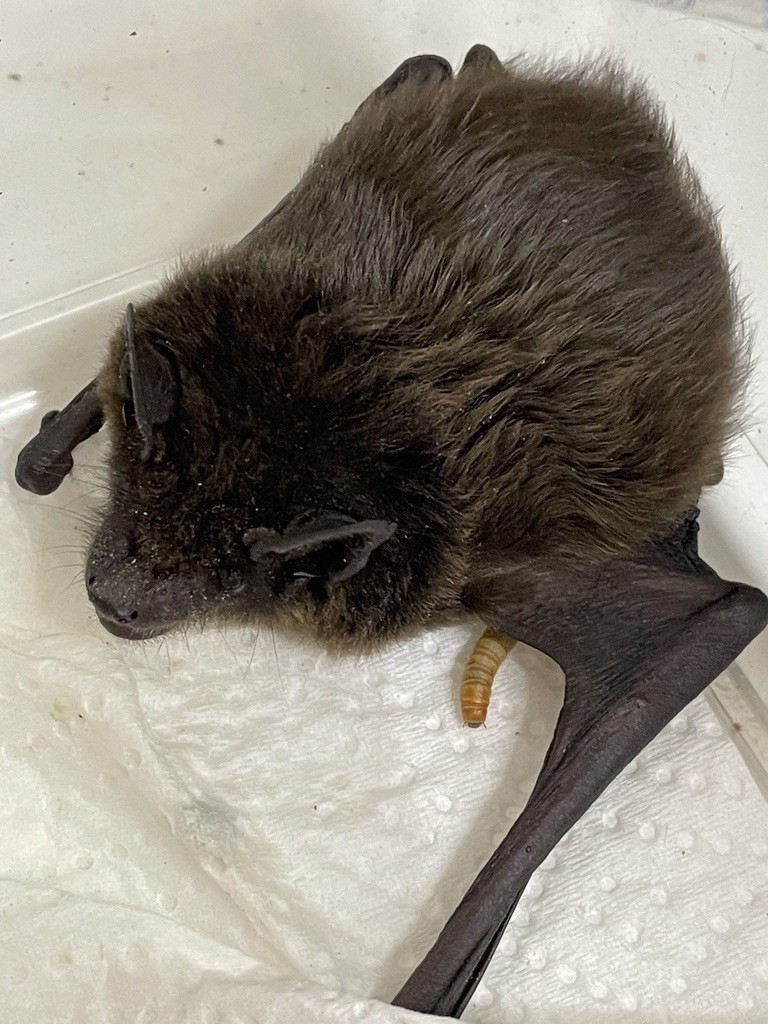
But could he still fly? Louis was launched on a test flight round bat hospital and briefly took refuge on top of a wardrobe, emerging this time not wet but dusty. And looking very displeased at being temporarily put back in his box after his premature bid for freedom.
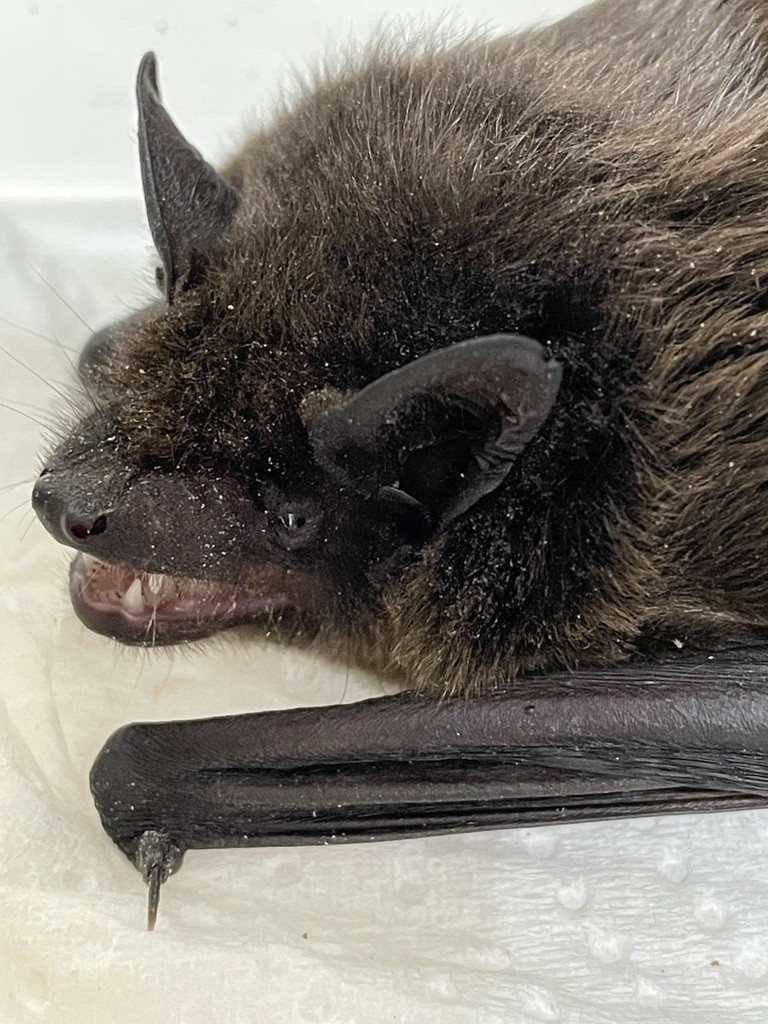
Then it was freedom time. He was driven back to our garden at dusk by a volunteer “ambulance driver” (this time, thank you Eleanor!), posed for one final picture and then off he flew, over the honeysuckle towards our neighbour’s garden.
A few minutes later, a large bat flitted past in the darkening sky. Was it Louis, doing a flypast as he reorientated himself to his patch? We’d like to think so. After that, the only bats confirmed on the bat-detecting device attached to Eleanor’s mobile phone (the Batmobile?) were two species of Pipistrelle, Common and Soprano.
I’ve learnt so much about bats from this wonderful and unsought encounter with a beautiful wild creature, including that so many are dehydrated and that the biggest single cause of injury is cats, who lurk outside their roosting places. And that they can find refuge in the tiniest gaps under hung tiles and in other nooks and crannies on older buildings.
Gerard Manley Hopkins wrote the beautiful line “Long live the weeds and the wilderness yet”. I’d add “Long live the bats and the crevices yet”. And the fabulous people who care for them.
-----
Thanks to SB and to Amanda at Sussex Bat Group for sharing the story.
If you've found a bat in trouble in Sussex, contact the Sussex Bat Group.
For bat advice outside Sussex, try the Bat Conservation Trust
Comments
Such a beautiful story and I learned about bats
13 Aug 2026 10:51:00
What a fabulous story! Thank you!
13 Aug 2026 11:02:00
Such a beautiful, heartwarming story; have to declare an interest in the Sussex Bat group through my son Ryan! Such a hard working and caring group of bst fanatics.
13 Aug 2026 11:10:00
What a lovely story with a happy ending, thanks
13 Aug 2026 11:37:00
Wonderful story thank you so much for sharing it and I’m looking at bats now with new eyes amazing little souls
13 Aug 2026 12:02:00
A lovely story – so delighted it turned out well.
13 Aug 2026 12:51:00
Thanks for your uplifting and well written story. It must be very tough on bats at the moment.
13 Aug 2026 14:55:00
Brilliant story! A few decades ago I planted an oak acorn which is now a large mature oak tree which I’ve cared for with pleasure but a little sadness as no birds/animals use it UNTIL NOW!! I have a lovely couple of Bats who have now made their nest there & have settled in. My neighbours are now getting their cameras out, hopefully recording the junior bats!”
13 Aug 2026 16:09:00
We have actually got bats in our (Copthorne St John’s church) steeple. I don’t think we are able to help them
13 Aug 2026 16:23:00
Louis is certainly a good name for the bat, I don t think he will try and do that again. It was good information about bats
13 Aug 2026 17:47:00
Thank goodness this poor thirsty bat was found in time and rescued but what a shock to find him in the toilet pan.
13 Aug 2026 19:44:00
I really enjoyed reading this and enjoyed your lovely sense of humour. Pleased to hear that Louis lived to fly again!
13 Aug 2026 19:47:00
Fascinating.
Thank you for the photos and insight into a bats life in these extraordinary weather conditions and thank goodness for the Sussex Bat Group and its knowledgable carers. Well done!
14 Aug 2026 06:33:00
Fantastic story so pleased he survived
We have Bats in the eves of our house.We now
Plan on finding out what species they are and
Also have Bat boxes on the way .
14 Aug 2026 08:30:00
What a wonderful story, I’m in tears of joy.
14 Aug 2026 10:31:00
Wow!! Such a brilliant piece of writing – absolutely captivating. And what a adventure for you and Louis!! Thank you for sharing this tale, SB.
14 Aug 2026 11:53:00
Beautifully and creatively written. All animals are desperate to find water and what a surprising place! We have several colonies of wonderful bats in our old house Brown long-eared and 2 spp of Pipistrelle. I will be careful to look in the loo just in case!
14 Aug 2026 12:06:00
Great story with a happy ending, well done to all involved.
14 Aug 2026 13:37:00
We have actually got bats in our (Copthorne St John’s church) steeple. I don’t think we are able to help them
14 Aug 2026 19:10:00
Thank you for this informative and heartening story! Well done to all of Louis’ rescue team.
17 Aug 2026 13:47:00