
Hermit Crabs
By Sarah Ward
Living Seas Officer
Crabs are a group of marine animals which are more familiar to us than some of the more ‘weird and wonderful’ creatures which inhabit our shorelines. There are at least 62 species of crab known to inhabit UK waters, and around 4,500 species recognised worldwide. Crabs come in all different shapes and sizes, but perhaps the most unique is the hermit crab.
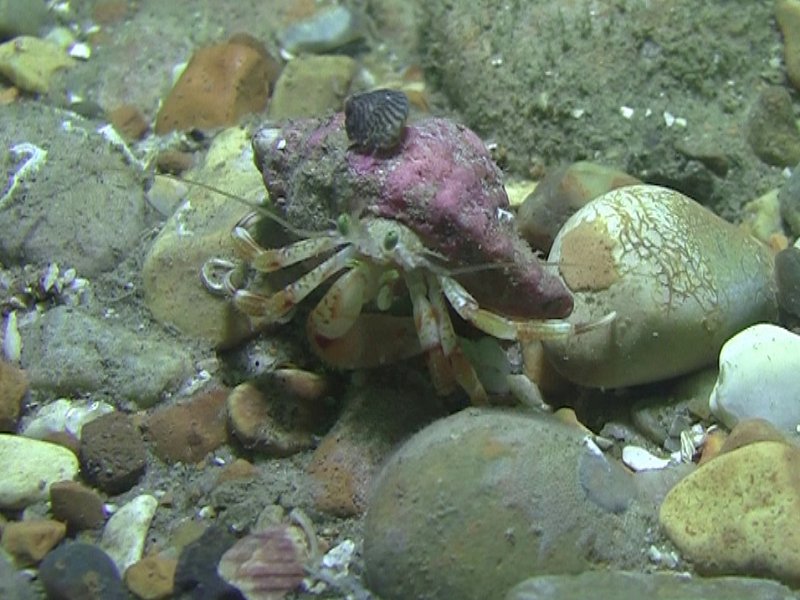
What makes hermit crabs unique is that they lack an exoskeleton on their rear end, meaning that they have to acquire an alternative form of defence in order to protect their soft, vulnerable abdomens from predators seeking an easy meal! As their name suggest, hermit crabs seek out and recycle discarded items for this purpose: often they will use empty snail shells, although they have been known to inhabit a variety of ‘homes’, including (alas!) pieces of litter. Their need to find shelter leads to some fascinating behaviours which has long piqued my curiosity…
Finding a suitable shell in a large ocean may be challenging for these creatures, but luckily they have a built-in “sat-nav” to help them locate one. Hermit crabs can sense chemicals, known as pheromones, which are released by dying snails. This means that they can sniff out a shell which is soon to be vacated by the snail who made it. When a crab moves shells, they vacate their previous shell; this can trigger a chain of shell switches between individuals, much like our human housing market!

Exposed hermit crab © Bryon Chapman
If presented with options, hermit crabs are known to be ‘choosy’ about their shelter, carefully inspecting a potential home to ensure it’s just right before they move in. The ideal shell needs to be the right size and weight: if it’s too big or heavy it will be cumbersome for getting about in; if it’s too small it won’t provide adequate protection. They’ll also be looking for a shell in good condition, as cracked or holey shells won’t protect them as well. A properly fitting shell allows the occupant to completely hide away inside, shutting themselves in using their specially modified claw as a ‘trap door’ to seal the entrance shut.
They are also not shy of picking a fight with a fellow hermit crab if they take a fancy to their shell. A fight will be initiated by the attacker mounting the opponent and ‘rapping’ repeatedly on its shell with its claw. If the occupant outlasts the attacker, it will remain in its shell whilst the attacker retreats; however, if the occupant tires first, the attacker will evict it and take ownership of the shell.
Hermit crabs are widespread along our coastline so keep your eyes out for them the next time you’re on the rocky shore!