
Heathland Management at Graffham Common
Dav Bridger (he/him)
Ranger - West
Recently, in a great piece of collaboration, Sussex Wildlife Trust and the South Downs National Park Authority (SDNPA) combined forces to help improve and maintain Graffham Common as an area of lowland heathland.
Typically found on sandy, acidic soils, most of our heathlands in the UK emerged around 5000 years ago, after humans cleared areas of forest and woodland for timber, grazing, foraging and hunting.
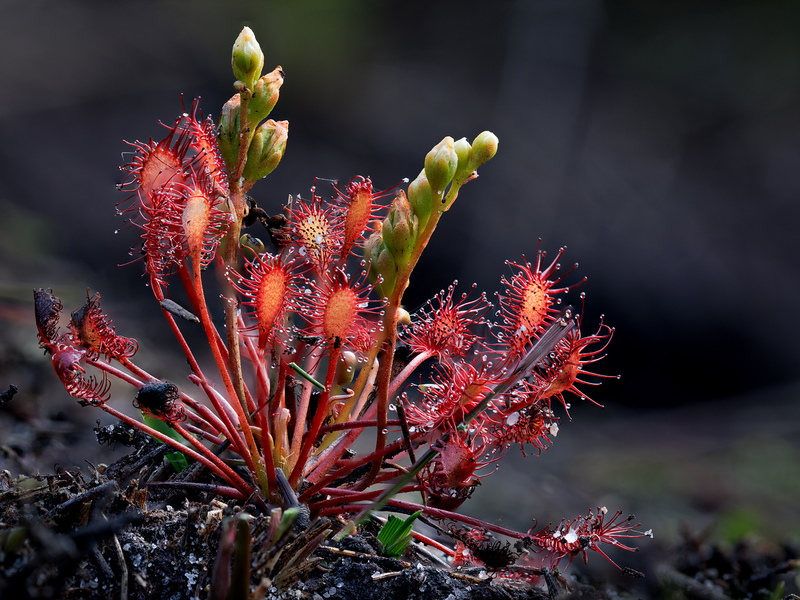
This led to reduced soil fertility, slowing the ecological process of succession, preventing secondary woodland. So lowland heaths became a haven for wildlife, such as sundews (below), Tiger Beetles, Silver-studded Blue butterflies, snakes, Woodlarks and Nightjars.
From the mid-19th century, the intensification of agriculture, urbanisation, and the creation of Pine plantations, has left the UK with just 15% of lowland heathland, with much of it fragmented, isolated and neglected.
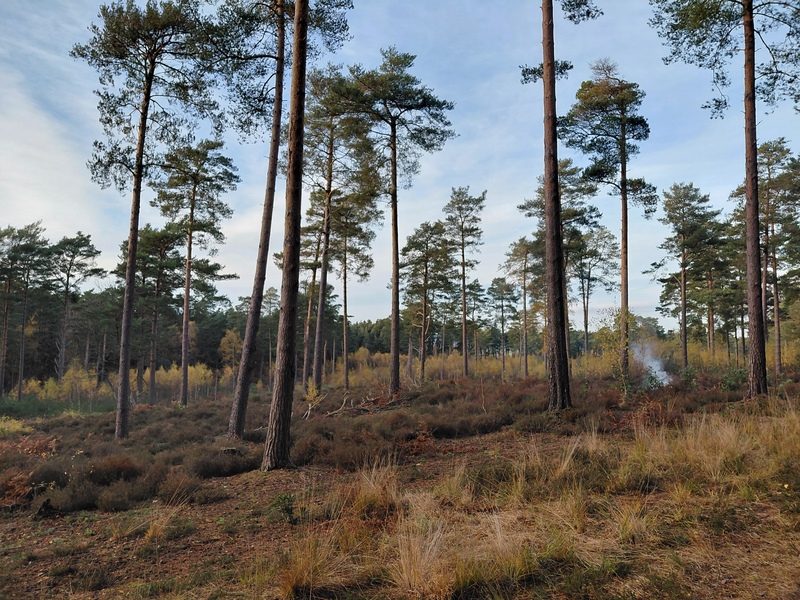
Graffham Common was a Pine plantation when we acquired it in 2010, and since then has undergone big changes, with most mature Pines removed, bringing space and light to the common once again. The management is ongoing, of course, with Silver Birch, young Pine trees, and invasive Rhododendron all competing to take advantage of the new opportunity for growth.
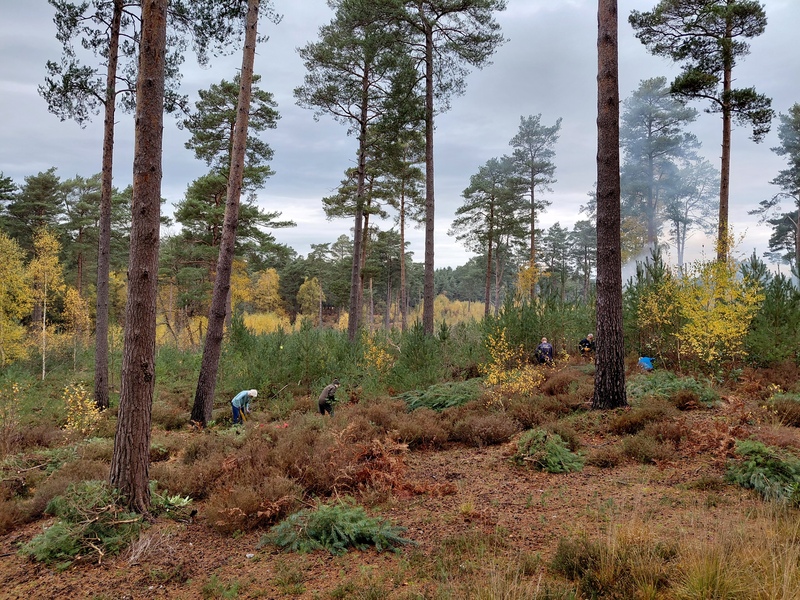
So our volunteers set to work using hand tools to cut down young Pine trees. Leysdown Trainee Callum Forster and I cut down mature Pine trees, with fellow Ranger Clive Lunny clearing young Pine trees. SDNPA Rangers, Kirsty M, Kirsty F, Dom and Jake felled Birch, cleared Pine and undergrowth to create bare ground.
It was a hugely impactful, fun day, and we hope to collaborate more with the SDNPA team in future.
Improving the quality of lowland heath at Graffham Common will improve the habitat long-term, and help prevent habitat fragmentation in the Greensands Heath belt. This extends from Pulborough into north Hampshire. We are lucky to have Graffham Common as one of our reserves and it is our responsibility to protect and maintain it, as part of the wider landscape that extends beyond our boundaries, as well as those of our neighbours, land owners, and other conservation organisations.