
Goshawk: Phantom of the Forest

By Kerry Williams
Communications Officer - Conservation
For many of us, film and literature may be the closest we get to experiencing the sharp detail of certain charismatic wildlife goliaths; the breath of a Bengal Tiger, the splashing breach of a Humpback Whale or the down-the-barrel fire-eyed stare of a Goshawk. If you’ve watched the recent film adaptation of Helen Macdonald’s bestseller, H is for Hawk, you’ll have been treated to some beautiful close-ups of these impeccable birds. Cherish these shots – they're not common.
Nicknamed ‘Phantom of the Forest’, Goshawks are extremely secretive, flying under the radar and shrouded in mysterious woodland wonder. It’s said their name was bestowed upon them by medieval falconers; Goose-hawk, for their apparent ability to take down geese. Anyone who’s ever had a run in with a lairy farmyard goose will know they’re quite a contender, and the name immediately conjures images of the Goshawk’s mighty strength and hunting prowess.
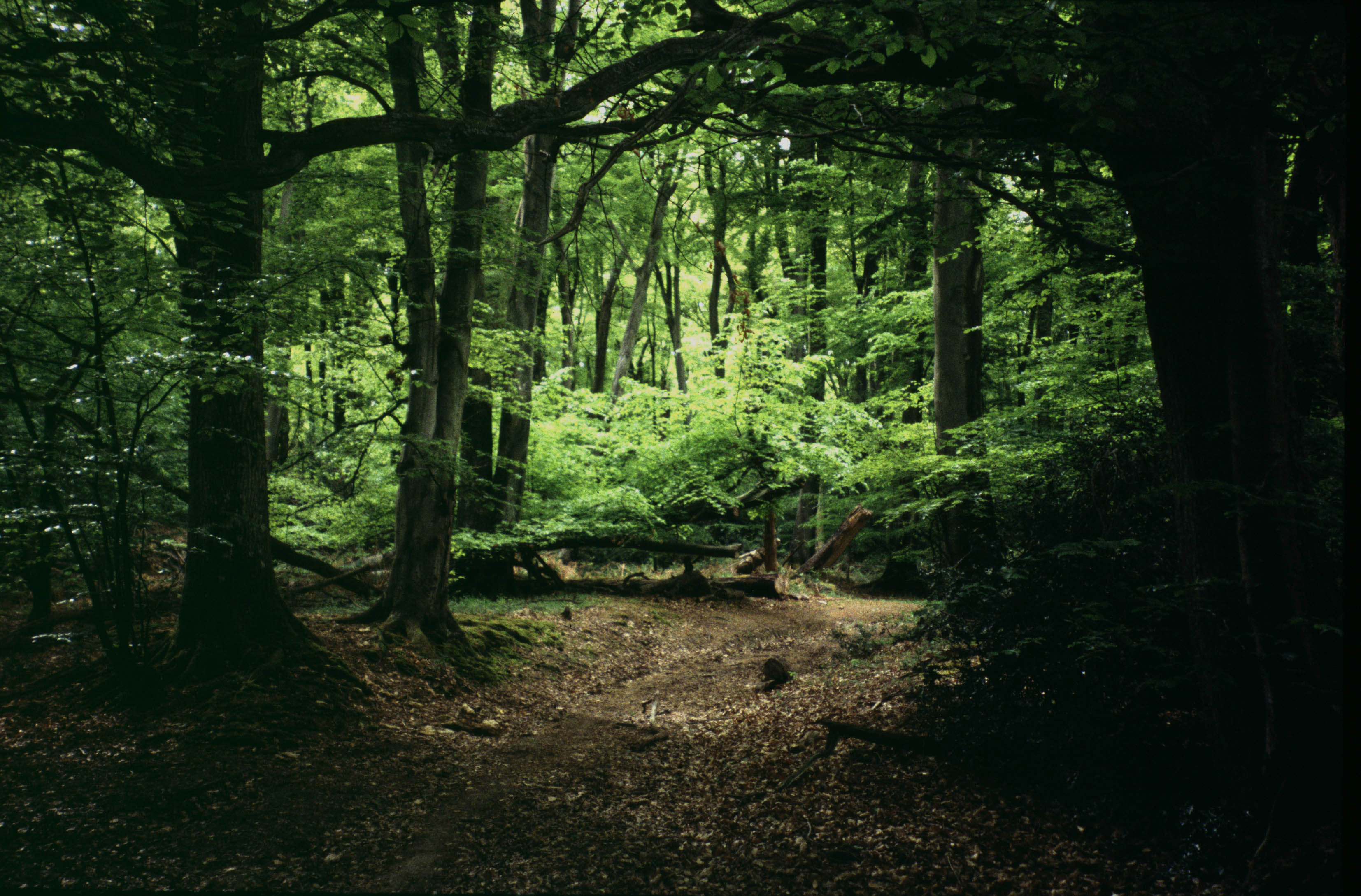
Goshawks share a similar barred chest, yellow legs, and bright eyes with their cousin, the Sparrowhawk. But the similarity ends with size, and with a wingspan of up to five feet, a female Goshawk can easily weigh four times as much as a female Sparrowhawk. Despite their impressive bulk, Goshawks are tricky to spot, and surprisingly agile. Preferring to nest and hunt in deep forest, they whip through thicket and glade at speeds of up to 38 miles per hour to silently dispatch unsuspecting birds and small mammals with spearing golden talons.
Like many awesome predators, these magnificent birds get a rough reputation. Historically persecuted, by the late 19th century Goshawks were all but extinct in the UK. Due to accidental escapees, and perhaps some deliberate releases, these birds have bounced back. Although, their trauma is not as much in the past as you would like to assume, with vilification and very real crimes against the species still happening. Along with added threats of habitat loss and climate change, this serial oppression has slowed their steely return.
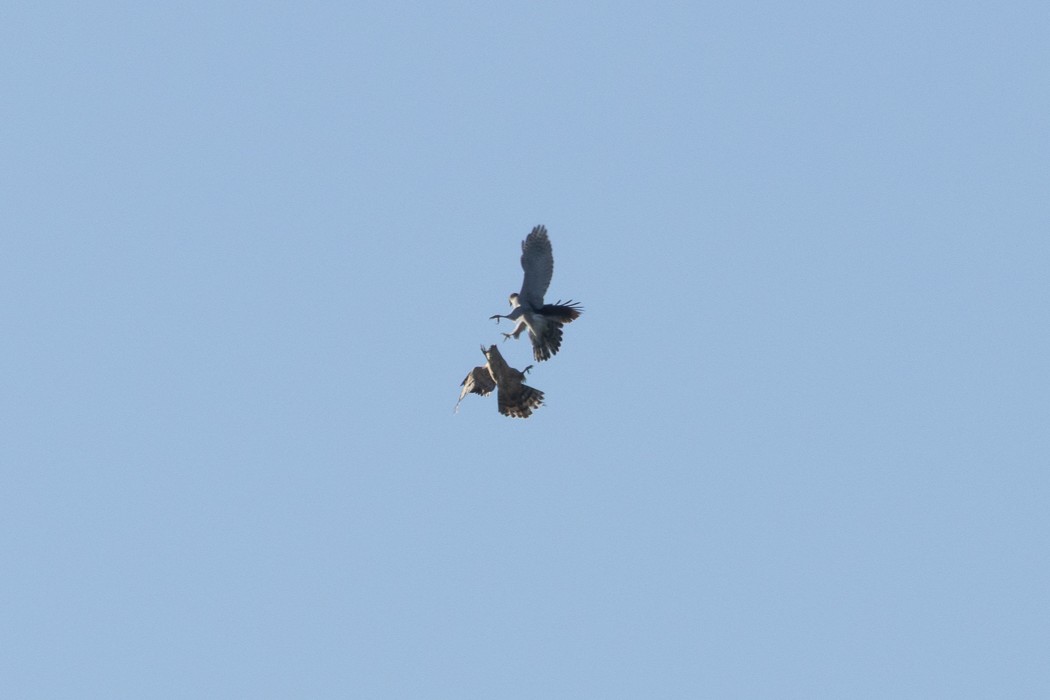
But return they do. Although populations are patchy across the UK, those that do persist are strong in number, including here in Sussex, with around 65 breeding pairs now thought to be resident. Between late winter and spring is the time to find a mate, and with it comes the season of titan sky dancing. Goshawks swap their secluded woodland sanctuaries for open sky to perform elaborate aerial displays, and these rarely witnessed moments when vast wings beat and strong feathers soar may be your chance to see them.
If you do, you’re ever so lucky. But if you miss out, don’t despair. Lean into the mystery, the stuff of film, and tales of the forest. You might not have seen them. But they’ve probably seen you.
For your best chance of seeing displaying Goshawks, choose a sunny morning in late winter and find a good view over dense woodland. Most are north of the South Downs – try the West Sussex commons, Ebernoe Wildlands, Ashdown Forest and other wooded spots in the High Weald.

Comments
Cool!
19 Feb 2026 11:34:00
Oh, my goodness, I would just love to see one of these magnificent birds. As it seems it is probably a little unlikely,I have at least enjoyed very much your photos and descriptions of this incredible bird. Thank you VERY much.
19 Feb 2026 11:43:00
Good news indeed for Sussex and other wooded parts of the UK. Thanks to conservationists, care and conservation of woodland and a reduction in persecution.
19 Feb 2026 12:20:00
Thank you so much! SWT’s info is always helpful and engaging – I always get a little bit excited when I see one pop up in my email! 👏👍👏
19 Feb 2026 12:39:00
A lovely article thanks- encouragement to get out and about.Just waiting for that ( rare ) sunny morning!!
19 Feb 2026 12:58:00
I live in a moderately wooded area of the High Weald about half way between Rye and Battle. Occasionally I use the Merlin Bird ID app to draw my attention to the birds around me. But I really lost confidence in it when it told me that there was a Goshawk around. Maybe it was right after all. Thanks for the article.
19 Feb 2026 13:02:00
Knew little about gosehawks before reading your article. Very interesting 👌 what a fantastic bird. I’ll be on the lookout for sure 👀
19 Feb 2026 13:29:00
Never too sure if I’ve seen one or not but it’s happening more often in ‘my’ woods. It’s the size and speed that catch the eye. And always silent. Usually a single glimpse but sometimes he’ll wait in a tree further up and flee again as I near. I’ll maybe never know if he’s a gossie or not but he’s magic and he’s mine.
19 Feb 2026 13:31:00
Thank you so much! SWT’s info is always helpful and engaging – I always get a little bit excited when I see one pop up in my email! 👏👍👏
19 Feb 2026 14:05:00
Amazing. Thanks for the info. Def one to look out for.
19 Feb 2026 14:40:00
Thanks for the info about goshawks. I have seen the film H is for hawk and loved the close up shots of the bird. I shall now look up for sightings of this great bird when I am out walking.
19 Feb 2026 14:53:00
What a beautiful bird – long may it prosper
19 Feb 2026 16:45:00
I live in east Grinstead, near Ashdown Forest and in an area dense woodland. Would Goshawks be near here?
19 Feb 2026 17:38:00
Sussex Wildlife Trust:
Hi Linda - it's certainly possible! Dense woodland is the preferred habitat. You might like to keep an eye on The Sussex Ornithological Society for Goshawk sightings in the area.
What magnificent creatures. I’ve heard one once (Wales forest) but never been so blessed as to have seen one in real life. There’s still time!
19 Feb 2026 17:54:00
Article is m ost interesting & informative for which, many thanks
19 Feb 2026 18:46:00
Last spring I heard Goshawks in woods near Heathfield, East Sussex. I am hoping to hear them again this year!
19 Feb 2026 19:41:00
This article has confirmed my recent sighting of a Goshawk
19 Feb 2026 20:14:00
A beautiful bird and a beautifully written article, thank you.
20 Feb 2026 06:13:00
Thank you for showing us this beautiful majestic bird.
A day out to your suggested area’s are a must.
20 Feb 2026 07:58:00
I would absolutely love to see a goshawk! Stunning birds! I get excited when I see a buzzard then the excitement is ramped up when I see a red kite, thind I’d explode with excitement if I saw a goshawk or a white tailed eagle!! One day 🤗🦅
20 Feb 2026 08:20:00
Really interesting article!
20 Feb 2026 08:29:00
A vivid description of a bird I have yet to see. Fascinating, thank you.
20 Feb 2026 10:16:00
I’d love to see one! Good to know that Ashdown Forest is visited by these amazing birds.
20 Feb 2026 14:41:00
Could I have seen one on Newick Lane between Heathfield and Mayfield? I saw a big dark silvery grey hawk by the side of the road. It was bigger than a sparrow hawk or kestrel.
20 Feb 2026 16:40:00
Really interesting article! I would love to see one of these birds in the wild. We often see kestrel hovering over the banks of Widewater and the river Adur but nothing bigger as yet.
21 Feb 2026 09:41:00
While the film “H is for Hawk” is very moving, it concerns me that this type of production and the publicity surrounding it can encourage people to want to own a wild bird and there are always unscrupulous people wanting to make money in this way – I hope I am wrong ?
21 Feb 2026 10:12:00
Such an encouraging and well written article. Thank you so much for whetting our appetites Hope springs eternal that I might be lucky enough to see one!
21 Feb 2026 17:40:00
Thank you for this.
22 Feb 2026 09:57:00
I have seen one some time back flying silently through yew woodland on the Down close to Amberley.
22 Feb 2026 13:08:00
Oh wonderful images – I loved the book ‘H is for Hawk’
Definitely going out to see if I can spot one!
Thank you!
06 Mar 2026 19:47:00
Thank you for this.
11 Mar 2026 18:04:00
I’m pretty sure we have a Goshawk in our woodland near Battle, East Sussex. It’s bigger than a sparrow hawk, has a mean face and has been spotted with a rabbit in its talons.
06 Jun 2026 12:26:00