
Good weather for ducks
Charlotte Owen
WildCall Officer
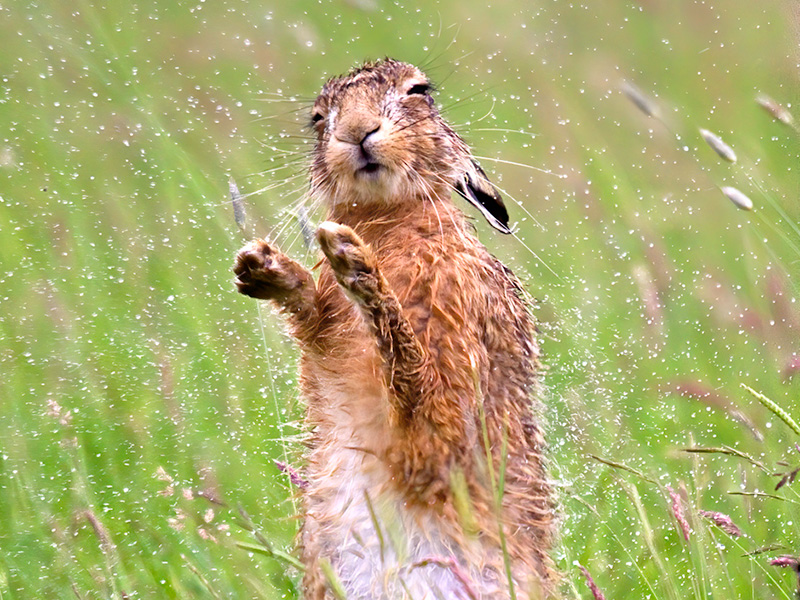
Not only did we not get April showers, we got virtually no rain at all in April. We're getting some wet weather in early May however - so we thought it might be interesting to think about wildlife in the rain.
Who loves it?
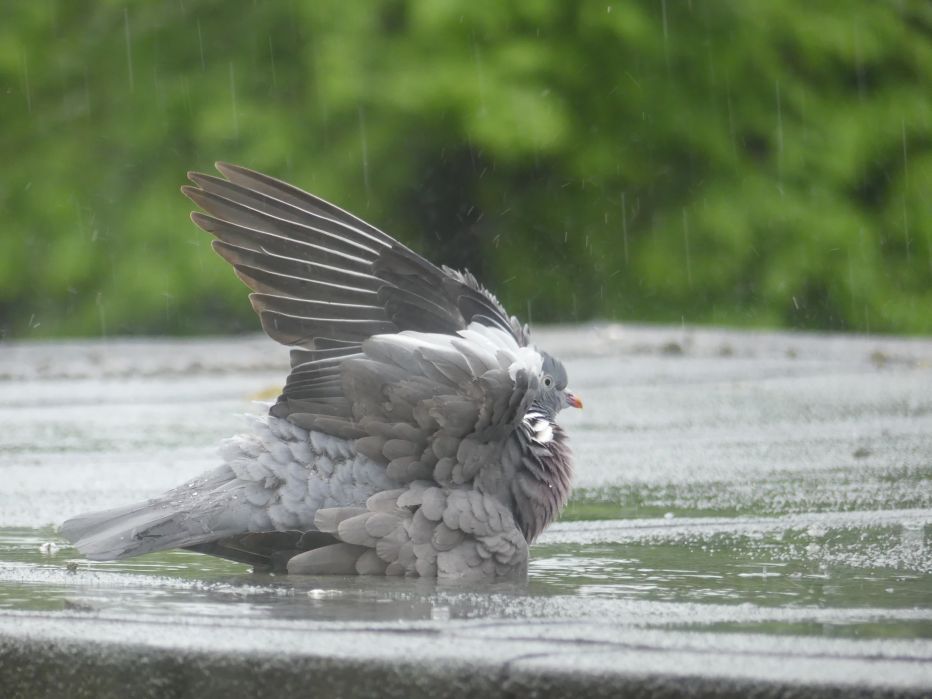
- Wood Pigeons often enjoy a shower, deliberately sitting out in the rain and raising each of their wings in turn to bathe those hard to reach places. They will shake off occasionally to avoid getting soaked through. When the rain stops, they’ll ruffle their feathers and sit in the sun to dry.
- Our recent arrivals, Swifts, love to wash themselves by flying through rain. They also drink on the wing. And, smart birds that they are, when they get sick of it, they just fly above the rain clouds!
- Frogs and Toads like it damp, and a spell of wet weather helps signal the time is right for them to emerge from hibernation in spring. All amphibians are very vulnerable to drying out, so a refreshing shower in hot summer weather can be a real life-saver.
- Slugs and snails are active at night, especially after rain, which creates the damp conditions they love most.
- Earthworms tend to surface during rain, possibly because it’s easier for them to travel across wet surfaces, and possibly to escape the danger they perceive when they confuse the vibrations made by rain with the vibrations made by an approaching mole, hungry for worms. Birds certainly seem to exploit this behaviour by stamping on the ground to mimic the sound of rain, which draws worms to the surface.
- Anything that eats earthworms!
- Plants need water to hydrate their cells but it’s also vital for photosynthesis, which is how plants create energy. Rainwater also contains nitrates, a form of nitrogen, which is essential for growth. Plants absorb nitrates from the soil via their roots, and the structure of their leaves helps to channel rainwater down towards the base of their stem ready to be absorbed.
Who tolerates it?
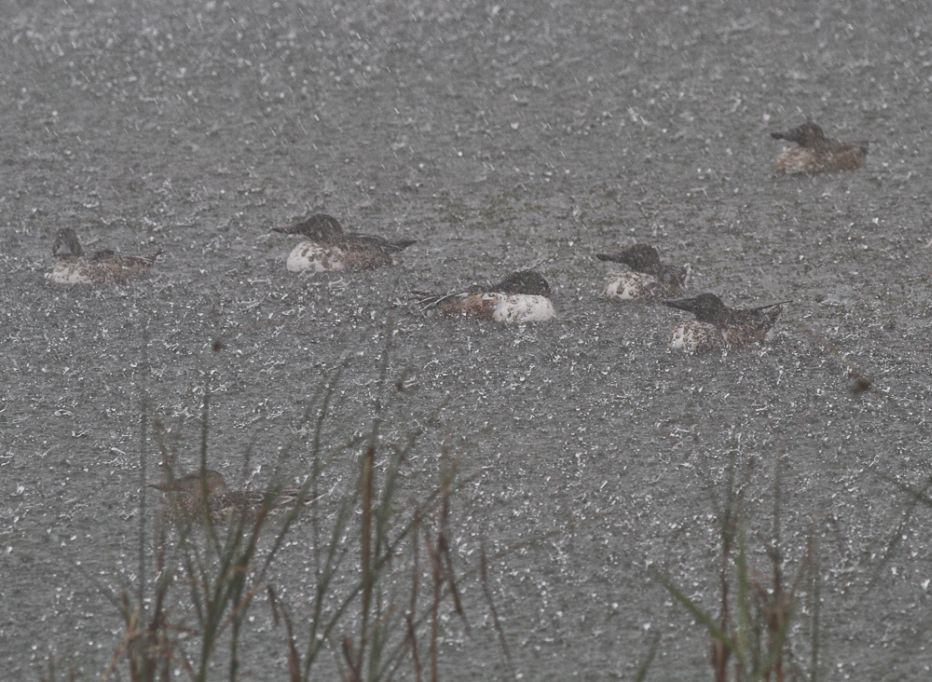
- Most birds are waterproof thanks to their feathers, so raindrops usually roll off without soaking through. Each feather is made up of a number of separate barbs, which zip together tightly so that water cannot penetrate. Birds also produce a water-resistant preen oil in a special gland near the tail, which they spread onto their feathers to help waterproof them even further. But feathers can still become waterlogged in very heavy rain, so small birds usually take shelter in dense vegetation and only venture out in heavy rain when they need to feed.
Who hates it?
- Barn Owls cannot fly in heavy rain, as their super-soft feathers – ideal for silent flight - are not at all waterproof
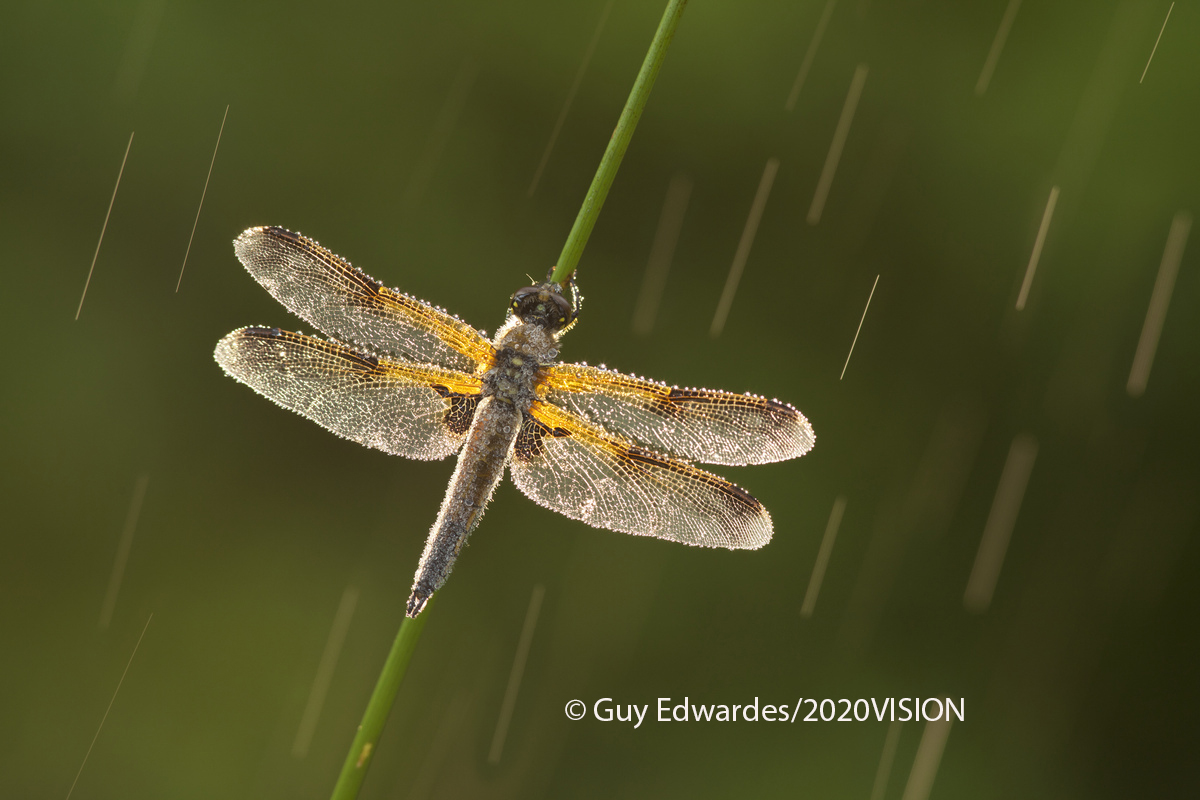
- Butterflies don’t fly in the rain, so cannot feed or mate in wet weather. It’s usually too cold for them to fly when it’s raining and the rain drops themselves can present a significant hazard to such small, delicate creatures