
Glow-worms and the magic of bioluminescence
By Charlotte Owen
Conservation Manager
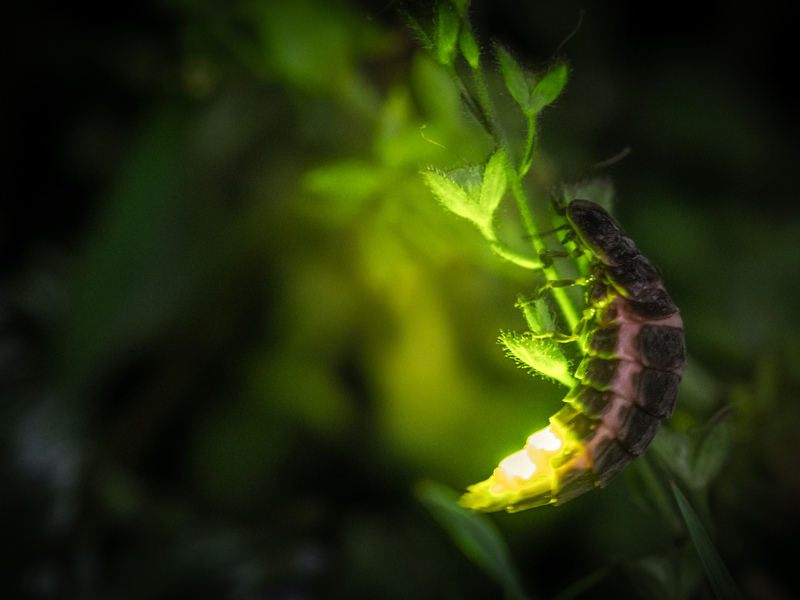
Lampyris noctiluca. It sounds like a spell, but this is the Latin name of one of our most magical creatures, the Glow-worm.
If they really could be conjured into life by the wave of a wand, the result would be an impressive constellation of glowing green lights, arcing through the air to illuminate the night. Sadly this mesmerising display would be disappointingly brief.
Only the adult females glow strongly, and while they can keep their little tail-lights on for hours at a time they don’t have wings and can’t fly. Rather than a magical cloud of floating Fireflies, the hapless Glow-worms would continue their trajectory and tumble down to earth in a glimmering heap.
The Glow-worm’s glow has inspired countless fairy tales and reams of folklore, but this seemingly supernatural ability has a solid scientific explanation. It’s a fascinating example of bioluminescence, the emission of light by a living organism.
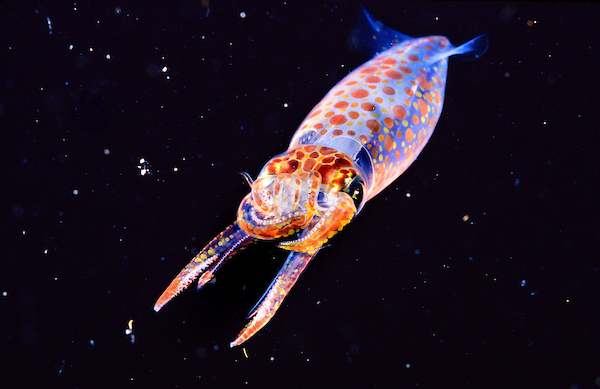
This trait is much more common in the oceans, which are full of luminous marine creatures, from algae to Squid and deep sea Dragonfish.
The Glow-worm is one of the few terrestrial beings to have mastered this power, which stems from a simple chemical reaction.
It begins with a measure of luciferin, a light-generating substance whose name derives from the Latin lucifer, meaning light-bringer. Add a pinch of luciferase, an enzyme that will catalyse the reaction, and ensure a steady supply of oxygen before kick-starting the process with a jolt of metabolic energy. Then – as if by magic – there is light.
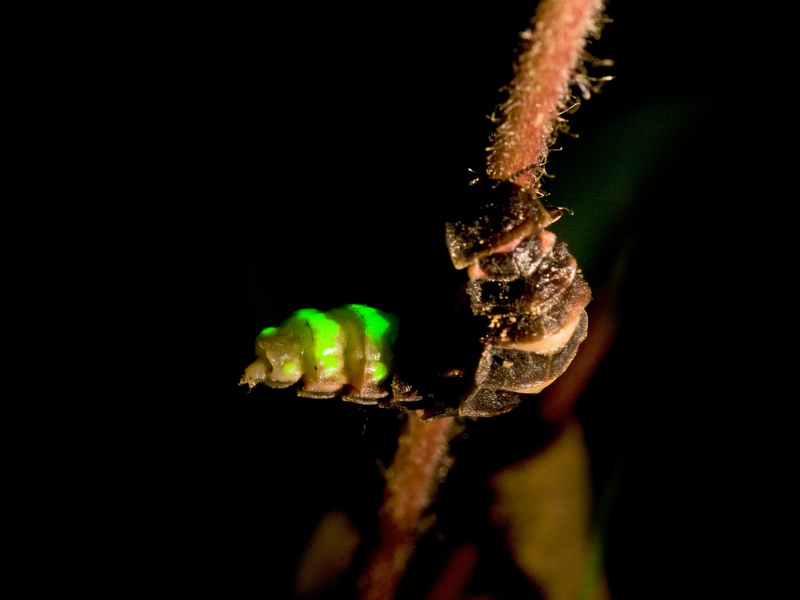
Females use their luciferin-fuelled lanterns to attract a mate, and with only a few weeks to live, there’s no time to waste. An enchanting light show is the surest way to romance, so they climb as high as possible to secure a good vantage point before beginning their broadcast.
Male Glow-worms do have wings and they fly around in search of females, homing in on their glowing abdomens until they are lured into landing by the beacon that shines the brightest.
Where to look for Glow-worms in Sussex
Glow-worms can be found across much of Sussex in June and July. Meadows and grassy tracks on the South Downs are a favourite place to go looking for them, but they can also be found along some hedgerows and road verges, on heathland, along woodland rides and even in gardens. The glow of the female is easiest to spot on a dark night.
If you find a Glow-worm, please let us know by logging it on iRecord.
This article has been amended to reflect that it's not just the adult female Glow-worms that glow - adult males can glow, but do so rarely, and the larvae also glow, rather faintly.
Comments
Good to see the glow-worm enjoy the limelight as such an enigmatic creature! Thanks Charlotte. Please can I ask for the iRecord link to be adjusted to the glow-worm specific recording page:
https://irecord.org.uk/enter-glow-worm-record
You may also wish to include the general link to the UK survey website for GWs which is packed full of information: https://www.glowworms.org.uk/
09 Jul 2026 14:17:00
Sussex Wildlife Trust:
thank you, I have update the link
2 in my garden RH20 on the side of mown track to long grass shining like beacons.
09 Jul 2026 14:44:00
I have them every year in my garden in Goudhurst Kent
09 Jul 2026 14:55:00
I would love to see a glow worm, it’s on my bucket list but whenever there’s a group going to see them it’s always full!!! I live on my own so I cant go looking in the late evening on my own, could we have some more glow worm walks please?!
09 Jul 2026 17:58:00
2 in the garden last night 9/7/2027 …I believe this might be the first of many sightings…Last year we had up to 5 a night on our little 1/3 acre garden/plot which we have rewilded or just let go since10 years ago (might be longer actually)
09 Jul 2026 18:21:00
Saw a glow worm on Forest Way lat night near Groombridge by the bridge carrying the live railway line
10 Jul 2026 06:25:00
Brilliant and informative article thank you.!
Now to try and find some- and as they are most visible at night a good excuse to get out in the cooler air!
10 Jul 2026 09:29:00
14 females seen glowing strongly in grassland above Cocking. Possibly 2 larvae, glowing lightly.
10 Jul 2026 11:42:00
Spotted a couple in the last two nights in my garden in Westdean We usually find a few every year in the hamlet. They like the Churchyard wall
10 Jul 2026 14:47:00
My friend and I saw glow worms glowing one summer evening amongst sea cabbage on the beach at Seaford and Tide Mills some years ago.
11 Jul 2026 14:25:00
The glow worms are most visible before midnight. As I usually make my trip at or after midnight I believe there may have been more that I missed earlier, at around 22:00/23:00
11 Jul 2026 23:38:00
Saw two females glowing on the path between Litlington and Lullington Heath on 8th July, on returning from doing a bat survey.
13 Jul 2026 21:36:00
2 in my garden on the side of mown track to long grass shining like beacons.
21 Jul 2026 14:01:00
Saw a glow worm on Forest Way lat night near Groombridge by the bridge carrying the live railway line
24 Jul 2026 18:24:00