
By Henri Brocklebank
Director of Conservation
How did these species become the unlikely poster children of an anti-growth narrative?
Yesterday, The Guardian ran a headline quoting Rachel Reeves, suggesting that 20,000 homes in Sussex were being held up due to “some snails that are a protected species or something.” This kind of framing is not just misleading, it’s damaging.
In the face of mounting pressure to deliver growth, we must challenge the narrative that pits nature against progress. Suggesting that environmental protections are petty obstacles to development fuels division and places undue strain on the environmental NGO sector. It implies that we are anti-growth, small-minded, and obstructive, when in reality, we are advocating for the very foundations of a sustainable future.
We constantly push back against this false dichotomy. A healthy, functioning natural environment is not a luxury, it’s essential to economic resilience, public health, and wellbeing. Across sectors, it’s increasingly recognised that nature is not the barrier to growth. If anything, short-sighted decisions are.
So what’s the real story behind the “snail vs. 20,000 homes” headline?
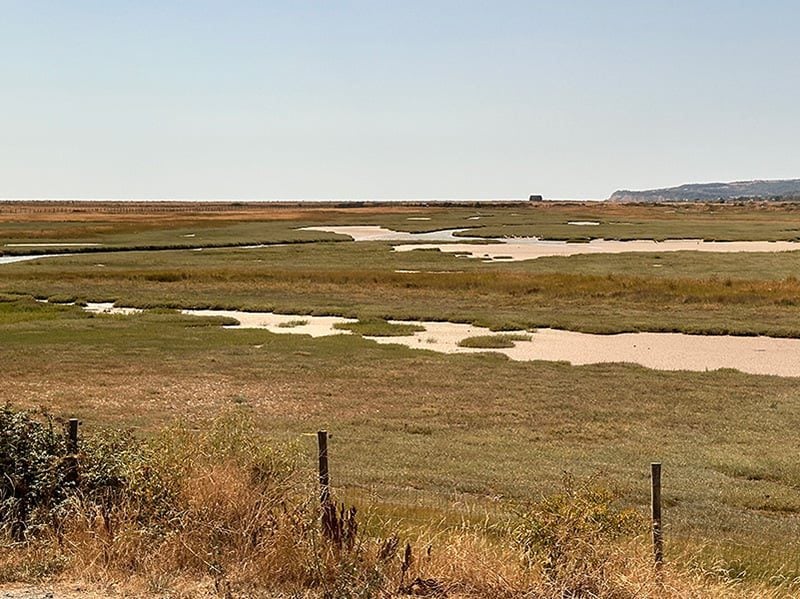
In 2021, Natural England raised concerns that groundwater abstraction in the Sussex North Water Supply Zone — covering an area in Horsham, Crawley, Mid Sussex, and Chichester districts and boroughs — could be harming biodiversity in internationally protected sites. Water supplied by Southern Water in this zone is hydrologically linked to the Arun Valley, a designated Special Protection Area (SPA), Special Area of Conservation (SAC), and Ramsar site. These wetlands support rare birds, invertebrates and aquatic plants, all of which depend on a healthy water system.
The snail mentioned by Reeves is simply one indicator of the ecological health of the Arun Valley. It’s not the villain, it’s the canary in the coal mine.
Natural England’s response introduced the concept of water neutrality ensuring that new developments do not increase overall water consumption. This was a new and complex requirement, and as with any innovation, it took time to implement. Unfortunately, this delay created fertile ground for the narrative that nature was blocking development.
Fast forward to today: after extensive collaboration between statutory agencies and planning authorities, a new streamlined certification scheme has been launched. Developers can now demonstrate water neutrality either through their own schemes or by contributing to a central certification process.
Sussex Wildlife Trust welcomes approaches that place nature at the heart of decision-making. But we must ask: what does this new scheme mean for the Arun Valley? It clearly aims to avoid making the situation worse but is that enough?
At a time when we are striving to protect 30% of land and sea by 2030, we cannot settle for “not making it worse.” We must actively seek opportunities to improve the resilience and adaptability of our natural environment.
Let’s stop blaming snails and start building smarter.