
Fire, water, clay - a journey of discovery on Chailey Common
By Callum Forster and Anya V H Treadwell
Leysdown Trainee Rangers
If you happened to have looked out across the waterlogged playing fields of Chailey Common in the last few weeks, you would be forgiven for thinking that there was not much joy to be had amongst the rainswept heather or out in the soggy woodland. The reality, however, is that if you had zipped up your waterproofs, put on your wellies and, rather than getting back in your car to head home, you marched onwards to Memorial Common, you would have found a group of young people in their element!
Students and teachers of Priory School’s alternative provision forest school were joined by the Wilder Learning team and us two trainees in their effort to take on the four core challenges of the John Muir Award:
Discover, Explore, Conserve, Share
The footpaths and bridleways of the Common were a good place to start when it came to discovering Chailey Common, a Site of Special Scientific Interest (SSSI) and one of the largest surviving commons in the South of England. On their walk, the students learned about the history of the area and the special community of plants and animals that make up lowland heath.
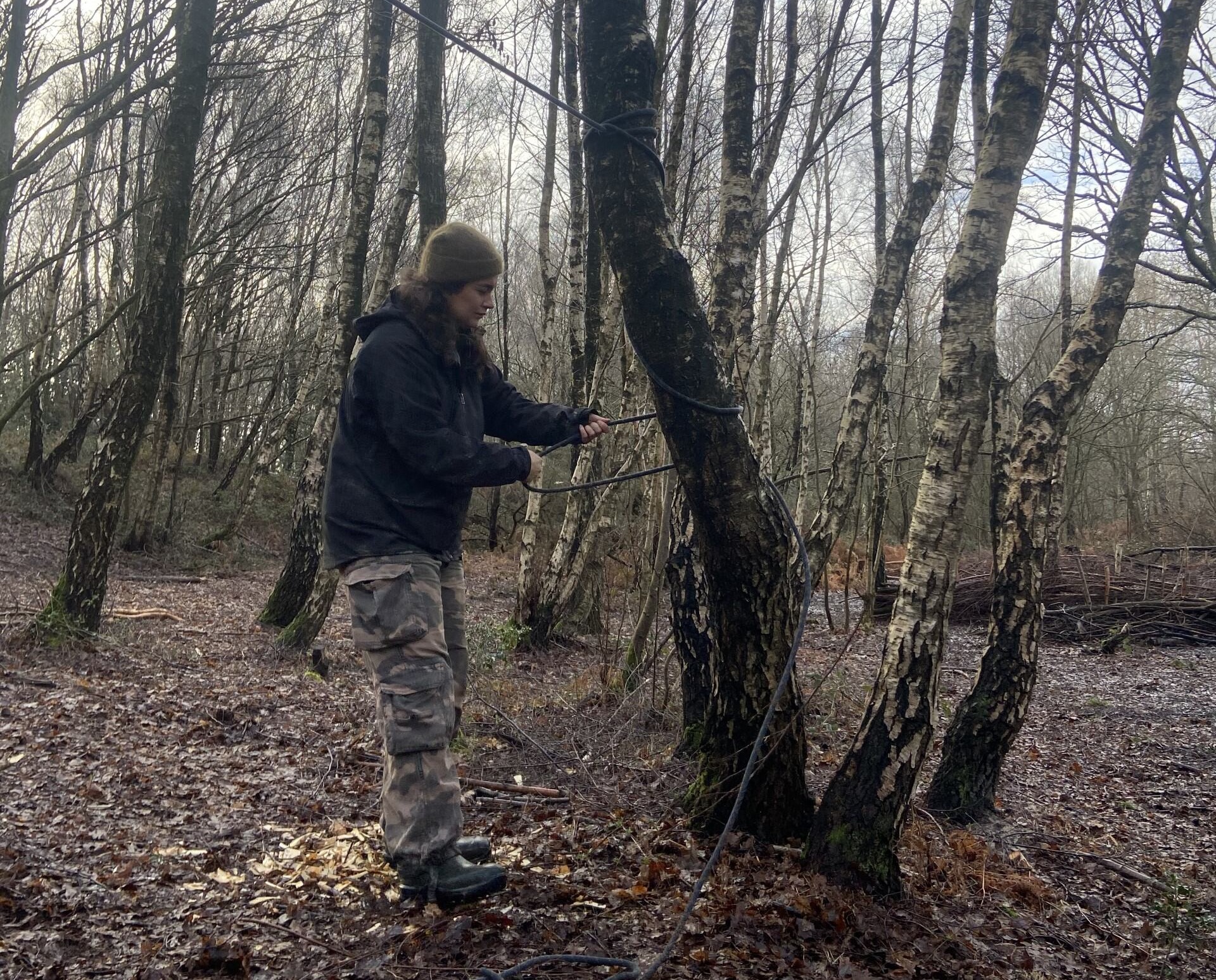
It was in the wet woods of Hazel, Willow and Oak that we located our basecamp. The group set up a tarp so that there was always somewhere dry where we could seek refuge on our breaks. For us two trainees, it was a chance to add another tool to our toolbox; our colleagues taught us new knots and hitches and also shared tips on how best to put up a shelter.
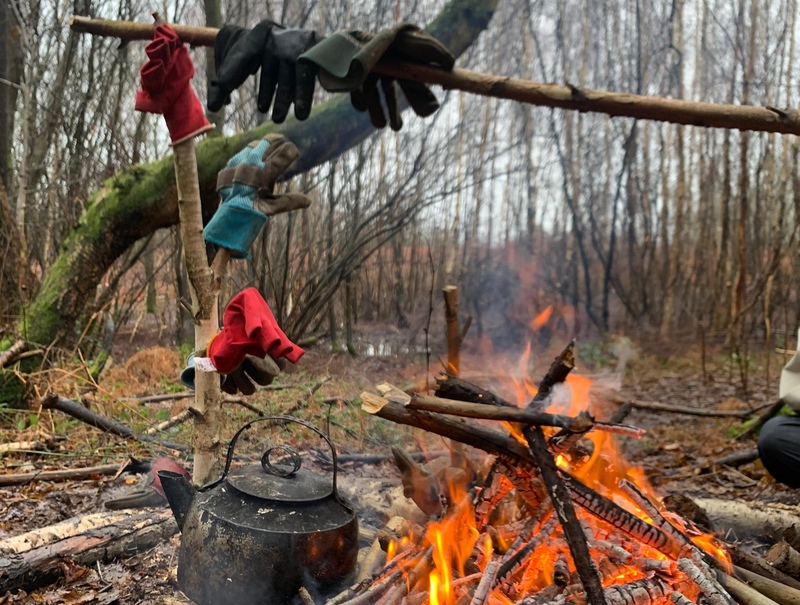
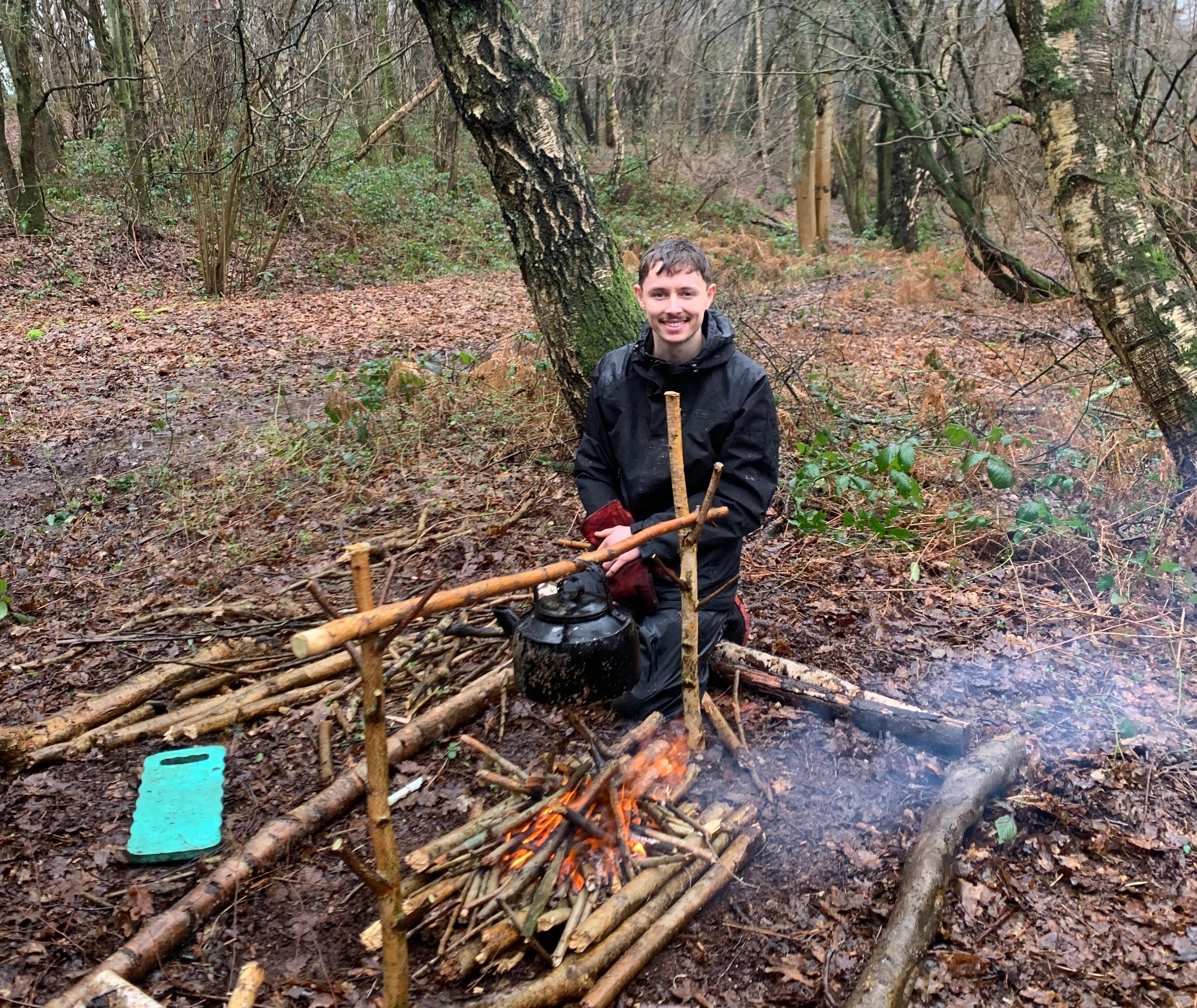
Nearby we made an upside-down fire, which is built with the kindling placed at the very top creating a pyramid shape. This type of fire burns downwards, drying the ground in the process, making it useful when lighting on wet ground. As well as providing us with warmth, the fire also allowed us to boil a kettle, which meant we were all able to enjoy a well-deserved hot drink in the afternoon.
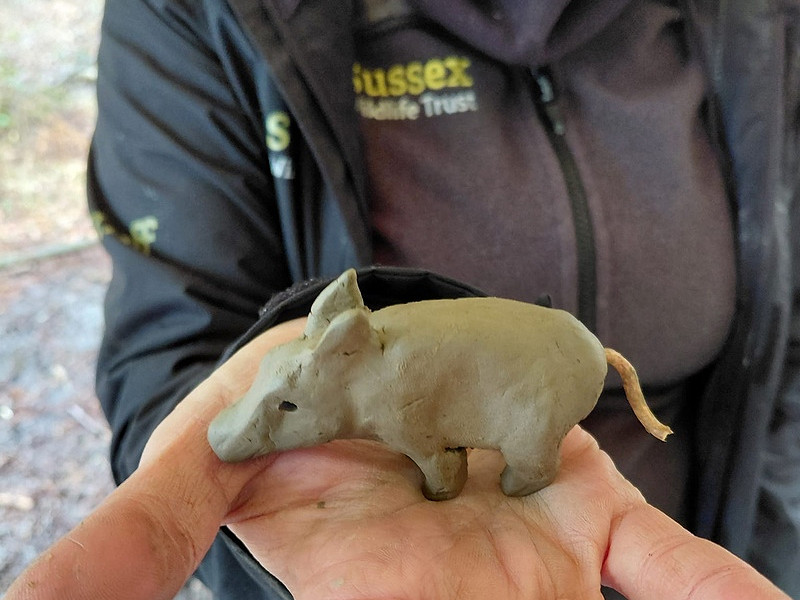
Illustrations of a prehistoric British landscape, produced as part of a University of Sussex project, were used to inspire our exploration of the site. Despite belonging to a long-lost past, the megafauna wonderfully depicted in the drawings inspired the young people to imagine a future where the reintroduction of different animals could reshape parts of our countryside. In groups, we worked together to create tableaus of a rewilded Chailey Common; brash was stuck in the ground to represent the trees, the rivers were carved in miniature with spades, small bits of dead wood and leaf litter acted as dams and lodges. These 3D maps were then populated with animals the group had sculpted from clay; Wolves, Hippos, Beavers.
And whilst Beavers are not yet a reality on our local waterways, the young people proved you don’t have to wait around to see how the presence of those ecosystem engineers would benefit the landscape; you can crack on with it yourself by working like a beaver.
In that spirit, the group played an active role in restoring and conserving their surroundings through building and repairing leaky dams. We cut down and processed young Birch; the new material was placed to reinforce and extend the old dams; we then secured everything with stakes that we had pointed earlier with axes.
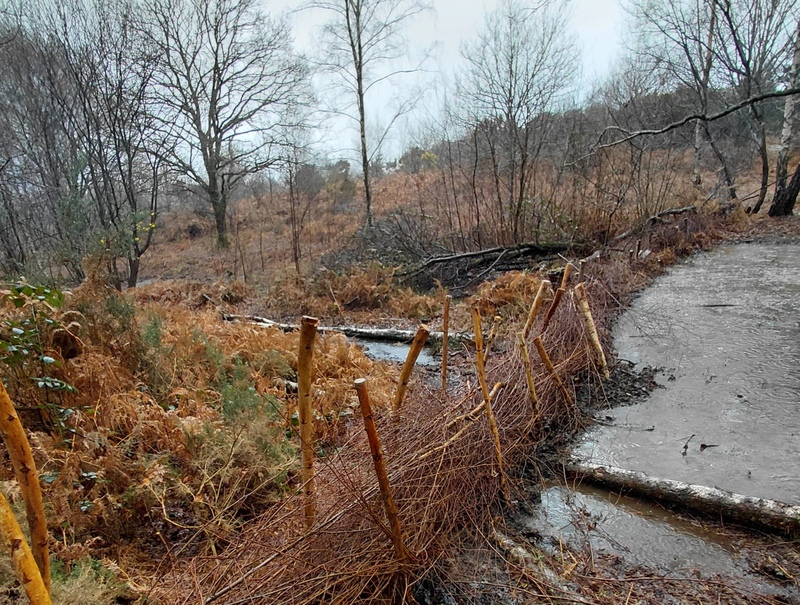
Whilst these jobs may have been easier on a drier day, the constant rain gave us a chance to see the dams in action; the streams caused by the downpour were slowed and new pools formed within the woodland. Within an old brash pile, we spotted a Common Frog who seemed happy with the work we were doing and the soggy paradise it was creating. The group’s positive impact on the land didn’t just stop there in the woods; up on the common, the removal of the Birch new growth for use as material in the leaky dams created new open areas where the heather can regenerate.
Sharing was a thread that ran through all the sessions. We learnt new practical skills from one another, took on responsibilities as a team, encouraged one another to play an active role in tasks. The young people were also eager to hear about our experience as trainees with the Sussex Wildlife Trust and so we shared our stories with them. At the end of the sessions, we would gather to put out the fire together and each one of us had an opportunity to share a small thought about the day’s activities. Finally, as part of their Award, the students are producing a scrapbook diary of images and reflections that they can take with them and share more widely.
Participating in the John Muir Award has been a demonstration not just of the importance of a good set of waterproofs, but also of the ability of outdoor learning to facilitate the development of new skills, to inspire the imagination and to reshape our relationship with nature.
Our shared experiences on Chailey Common will mean that when we return, whenever that may be, we will now walk amongst the rainswept heathers and through the soggy woodlands with a new sense of belonging and a strengthened awareness of our power to protect nature.
The John Muir Award is open to anyone; organisations, individuals or smalls groups. If you feel you can meet the Award criteria, you can participate. Follow the link to find out more about their engagement initiative.
The delivery of this Award by the Sussex Wildlife Trust was implemented by The Lost Woods of the Low Weald Project, made possible by The National Lottery Heritage Fund. The Lost Woods has also provided funding for the training of a number of Forest School Leaders and Assistants within the project area.