
Farming - working with nature

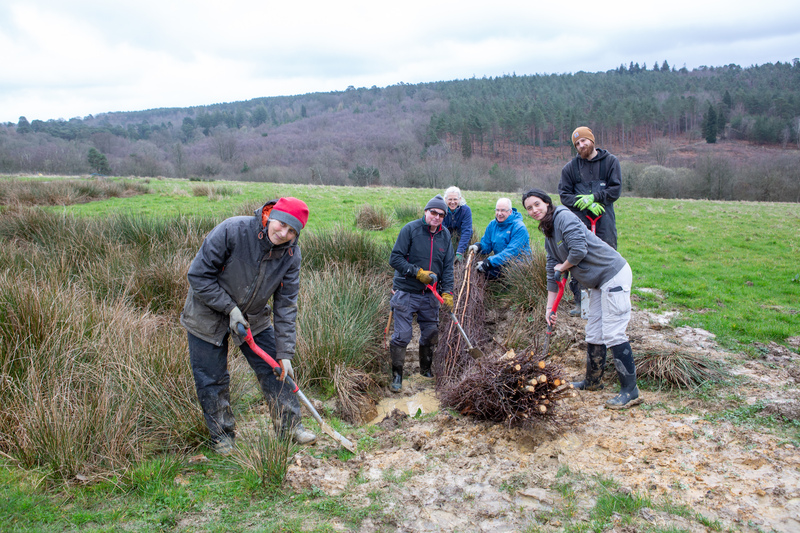
I went along with photographer Roz Bassford to meet up with Wilder Ouse Project Officer Lydia Baxter and her group of volunteers, creating cascading ponds on a heavily sloping field belonging to landowner Anita, on a farm near Haywards Heath.
The fields had a confusing and elaborate land drain system put in many years ago, in order to make the ground usable for agricultural purposes and to ensure things like fertilizer stayed put rather than getting washed away in the rains. Unfortunately, these drains are now compromising all of the land around it as they crack under wear and tear. It's not good for wildlife, grazing livestock (broken legs etc), heavy farm machinery or managing heavy rainfall. You end up with massive sink holes and horrible top-soil erosion.
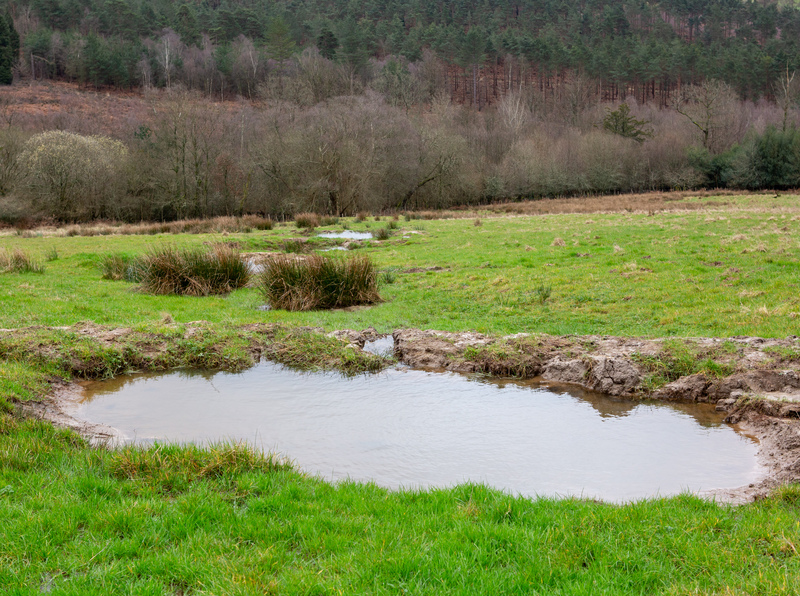
A contractor had come in to break up the land drain system, and stuffed the holes to try to mitigate the sink holes and prevent further holes popping up randomly in these fields.
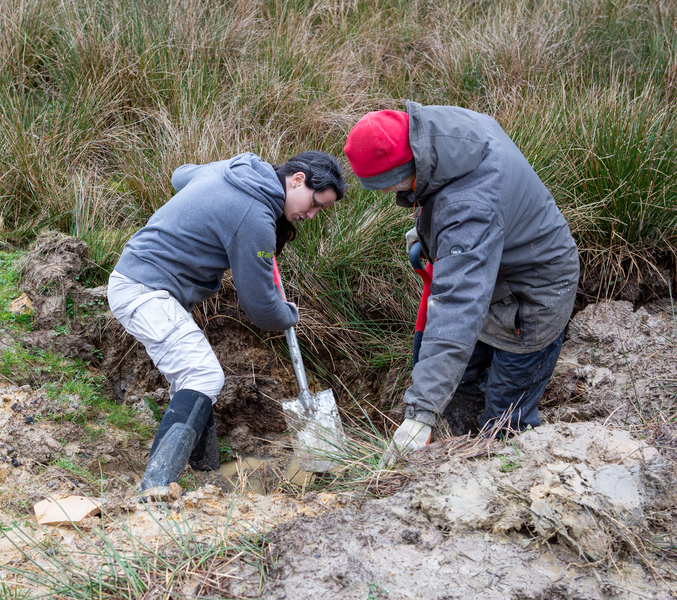
Today, Lydia and her volunteers, following on from work done two years ago nearby by Sam Buckland (above) and the Sussex Flow Initiative, were installing surface flow leaky dams on a series of newly created cascading ponds. They were fashioning a graded lip for each pond or scrape, to hold water, to stop it charging down and taking away the top soil with it.
Bunds were also being built up by the volunteers to increase capacity for the series of scrapes. This means they will slowly overflow rather than eroding away at one point and eventually creating a small channel of fast flowing water. Brash bundles are being put on the lip of scrape to spread out the water overspill and ensure it gently makes its way down the slope, making pit stops at each pond before finding its way to the ghyll at the very bottom. The brash bundles have come from the RSPB locally, and the wood to keep them in place were sourced from other works on the site, made into stakes by the volunteers.
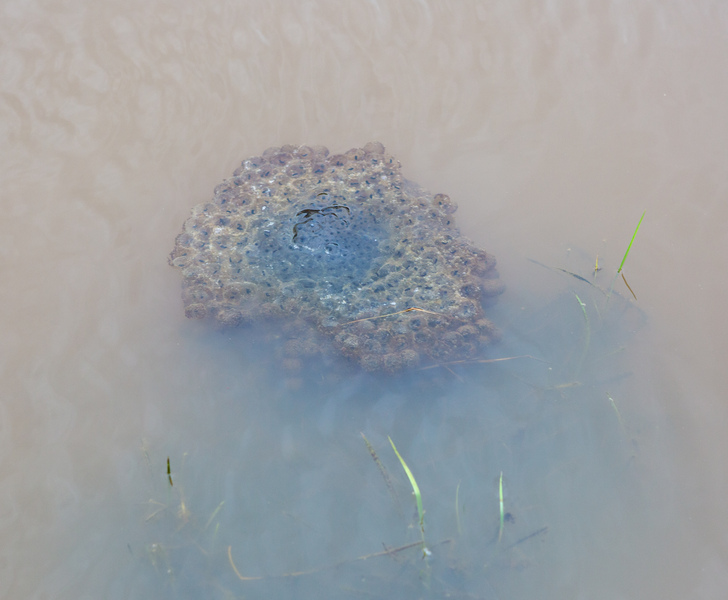
As we could see from the areas Sam had created previously, this mean you have areas that are now functioning well as a habitat for wildlife - pocket havens, being used by amphibians in fact, as you can see from this frog spawn.
The landowner is still using the land for grazing, but because she uses the mob grazing technique, this means there isn't too much dung, which would damage the soil and leave pollutants in the held back water. The animals are regularly moved on to ensure poaching of the soil doesn’t occur and the ponds aren’t compromised by heavy hoofprints.
There's now an Egret nesting in a nearby Oak tree and Skylarks are back after five years. At the top of the site, we also found fresh owl pellets.
Anita is seeing species never previously recorded on the site. Nature has been invited back.
Comments
I am impressed with the work you do. From the experiences that I had in my career in West Sussex Highways and dealing with storms in 1987 I then went to Gatwick Airport as Roads Manager, but kept in touch with my bosses concerning quite a few things, which I found that when they stopped having Direct Labour things changed drastically. Not everything can be blamed on “climate change” ! The workers used to clear ditches and streams and keep floodwater running out to sea. Now all that goes out to sea is sewage from the millions of homes they build on land not suitable for development. I wish I was young again, I retired 22 years ago….
04 Apr 2024 15:09:00
I enjoy reading about the activities, thsnks
04 Apr 2024 16:11:00
Inspiring. Working with landowners, and especially landowners of the future, has to be the way to save the farming countryside which in so many places has been deserted by nature.
04 Apr 2024 20:35:00
Very interesting article/photos.
Thank you
05 Apr 2024 06:06:00
At last some good news – thanks to everyone concerned. Have you tried getting this information into any national newspapers?
05 Apr 2024 08:38:00
Great stuff – every positive action counts – nature rules – the revolution is fertile.
05 Apr 2024 10:21:00
I have found this article so very interesting and I would love to be one of your volunteers but unfortunately I cannot walk on uneven ground as I require either a stick or walker.
05 Apr 2024 10:51:00
I always enjoy reading accounts of this kind of work; to see the frogspawn is a great indication of its value.
06 Apr 2024 06:37:00