
Dolphin Head designation announced

By Ella Garrud
Living Seas Officer
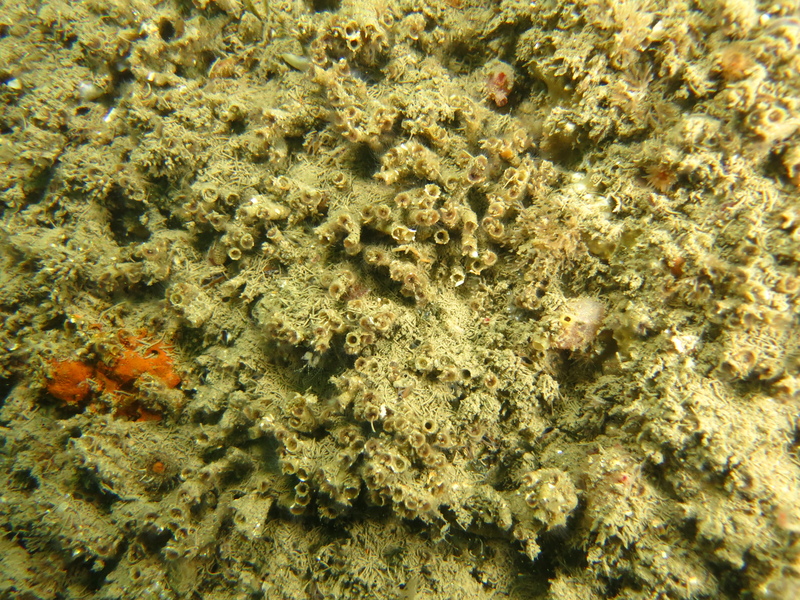
Dolphin Head will be designated as a Highly Protected Marine Area (HPMA) by July - along with two other sites in English waters. This is fantastic news for Sussex, as this new gold standard of protection will see the removal of all damaging activities from within the site. Dolphin Head, which is 55 km offshore from Selsey Bill, is a diverse area that is home to Ross Worms, which create delicate, complex reef habitats on which many other species make their homes. The area also attracts many seabirds and marine mammals including Risso’s Dolphin and Harbour Porpoise. Damaging activities such as bottom-towed trawling will end, allowing the currently degraded ecosystem to recover.
We would like to thank Sussex Wildlife Trust members and supporters who answered our call-to-action last year to support the designation of Dolphin Head as an HPMA.
Although the designation of Dolphin Head and the two other HPMAs should be celebrated as a step in the right direction, we still need to look at the wider picture of the state of marine conservation in the UK. It is not going far enough to protect Sussex or wider UK seas.
A panel of experts recommended that five HPMAs was the minimum number that needed to be designated by July 2023 to start to create a network of fully protected marine habitats. So it is incredibly disappointing that only three of the proposed five HPMAs will be designated. Migration between habitats for feeding and breeding is a key part of life for animals in the marine environment – so protecting only three small areas around the English coast will not protect them throughout the different stages of their lives. The Government has made a commitment to protect 30% of land and sea by 2030. Although we already have a network of Marine Conservation Zones (MCZs) in England, nine of which are in Sussex, these areas are not highly protected; damaging activities are still allowed within their boundaries. The science shows that Marine Protected Areas (MPAs) allow recovery, but only when they have high levels of protection.
Once these three new areas come into force, less than 0.5% of English waters, will be highly protected. 2030 is creeping ever closer and the question remains – will we see 30% of Sussex and wider UK seas highly protected by that deadline? Sussex Wildlife Trust will continue to call on the government not to miss this target. The recovery of our oceans is essential for marine life and humans alike.
Comments
Good to hear about Dolphin Head and HPMA!! BUT… How is the proposed (presume the Gov. will ensure it will happen regardless) Wind Turbine installation across the Sussex Bay (with cabling inland via Climping beach) going to affect the local ocean area? I want to be ‘green’, but makes no sense to install wind turbines that will cause damage to the environment… i.e. cause more harm than good.
09 Mar 2023 11:48:00
This is great news. Really proud to see Sussex Wildlife Trust taking an active role in protecting the oceans. Really important to keep pressure on the government not to backslide on these crucial promised protections.
09 Mar 2023 15:14:00
Well done, it’s a great start. We need to keep the pressure on and form some bigger stronger Alliances between the Conservation groups of all types.
10 Mar 2023 08:44:00
As a resident of East Wittering near RSPB Medmerry I
Am concerned about the huge pollution by Southern water from our local sewage works at Pagham Sewage has been flowering into RSPB Pagham Harbour and then out to sea to Selsey. Also we are fighting the proposed Rampton wind farm off Shoreham/littlehampton the silt will cause huge pollution to sea wildlife and the pile driving will effect marine life adversely over 50 K.
10 Mar 2023 12:58:00
Thoroughly agree re HPMAs.
But my queries about re-kelping the coast (what is being DONE about it, and what help can volunteers give) have not been answered.
Please….
16 Mar 2023 17:45:00
Sussex Wildlife Trust:
The Sussex Kelp Recovery Programme has been undertaking an extensive research programme, which aims to measure and quantify changes in the ecosystems, fisheries and local communities resulting from the introduction of the Sussex Nearshore Trawling Byelaw. This has included towed cameras, eDNA projects and surveys with the local fishing community. Find out more here: https://sussexwildlifetrust.org.uk/sussexkelp
The main way volunteers can help is by taking part in the citizen science Sussex Kelp Recording Scheme: https://sussexwildlifetrust.org.uk/what-we-do/living-seas/kelp/kelp-recording-scheme There are also volunteer opportunities for divers as part of Seasearch: https://sussexwildlifetrust.org.uk/seasearch