
Does the River Ouse have rights?

Emma Montlake
Guest blogger
The Sussex Ouse is 36 miles long, rising in Slaugham in West Sussex, finishing its journey across Sussex at Newhaven. In parts tidal, and though heavily modified with many impediments to its right to flow, it is home to some iconic species. The largest Sea Trout in the country and a strange, ethereal gathering of thin-lipped Grey Mullet, thousands of fish gather in the spring, where the clear waters of the Winterbourne chalk stream in Lewes meet the muddy brown waters of the tidal part of the Ouse. It is said they gather to clean themselves of parasites and purge themselves of sea water in the chalk water…. it is a wonderful wildlife spectacle.
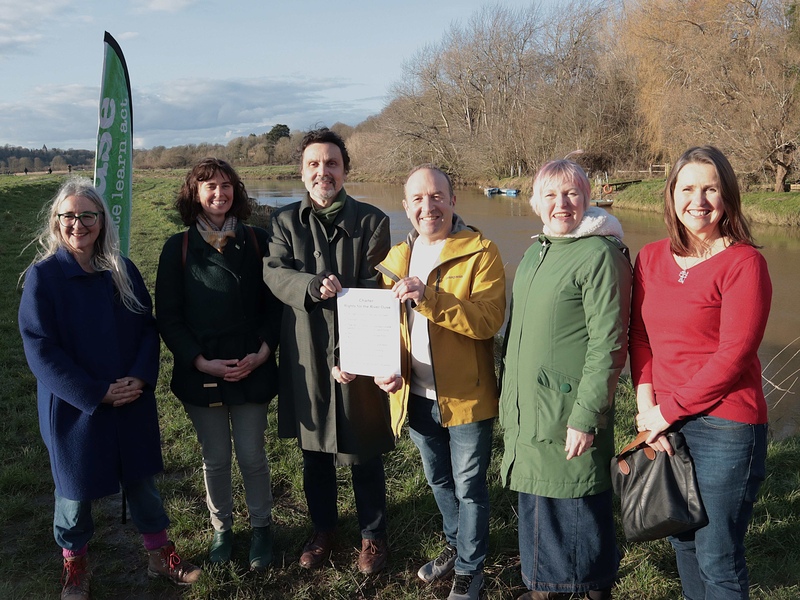
In 2022, four Lewes residents with a passion for the River Ouse set up a Community Interest Company, Love Our Ouse. LOO’s aims were to celebrate, educate and take action for the Ouse.
Reflecting ambitions, in February 2023, one of LOO’s Directors, then a District Councillor, proposed a Rivers Rights motion for the Ouse, to Lewes District Council (LDC). The motion proposed that LDC would explore the development of a Right’s Charter for the Ouse, working with local stakeholders, including Sussex Wildlife Trust. The motion was passed with strong cross-party support and was a “watermark” moment for the Ouse and indeed all rivers across the country.
Since the passing of the motion, LOO has engaged multiple stakeholders, water regulators, NGOs, river communities, regarding river rights through multiple community events, workshops and a river summit to steer thinking on the draft charter with invited delegates including the Environment Agency and Natural England. The Charter is the outcome of a participatory approach, ultimately co-created by LOO, Lewes District Council (LDC), Sussex Wildlife Trust, Ouse and Adur River’s Trust (OART), Railway Land Wildlife Trust and the Southwood Foundation. The Ouse was fortunate to have the advice of lawyers at Environmental Law Foundation, Hogan Lovells and international barrister, Monica Feria Tinta.
On the 25 February 2025, LDC announced that they will “support” and “champion” the Ouse Charter. For a local council to have decided to “support the principles within the Rights of Rivers Charter” is momentous. Those principles document certain proposed rights - to flow, be free of pollution, and importantly for the river to have an influential voice in decisions that effect it.
A door has been opened to legal rights, though more needs to be done to ensure the realisation of these rights. What this does achieve though is to pave the way for court decisions to be made using the principles, any such decision would start to embed in common law precedent, those rights through the courts.
The Charter will also assist the Council in taking decisions which respect the principles, ultimately over a course of actions protecting the substance at their heart whether or not they are enshrined in common or statutory law by then.
LOO also hope it serves as an inspiration to other Councils.
Rights of nature is a growing global movement, codifying nature’s rights into legal systems, national, local, statutory, constitutionally. There is a bubbling grassroots movement in the UK for rights of rivers and the Ouse has set a course.
It is worth reminding readers that we give rights to ships and companies; rivers, it would seem, are ripe for rights.
To have the involvement of Sussex Wildlife Trust in the shaping of the Charter has been fundamental to what we have been able to achieve. LOO looks forward to future working with the Trust to implement the charter.