
Dig Days Are Over

By Abi Weeden
Head of Wilder Learning
My dive into the wonderful world of soil health came out of a need to make my life easier; I’d just taken on my allotment plot, which was bare soil in some places but mostly beginning to grass over. I began by doing what I’d always seen my grandparents and Mum do in the garden before starting any planting, by ‘digging it over’; turning over the soil with a fork and breaking it up. I was awkward, I didn’t know the ‘right’ way to do it and my body ached before long. I’d look up to assess my progress and it was measly, I’d managed a tiny slither of the entire plot.
I thought there had to be an easier way and I began to question why we needed to ‘dig over’ the soil. All I could see was that it made the planting canvas nice and uniform but couldn’t think of any other reason. So, under the watchful eyes of the Robins, who were becoming increasingly concerned about my lack of progress and their absence of an easy lunch, I began a simple search: ‘Do you need to dig over soil before planting?’ The resounding ‘No!’ was enough for me to put my fork away and honestly, apart from a gentle potato lifting, it hasn’t been put in the ground since.
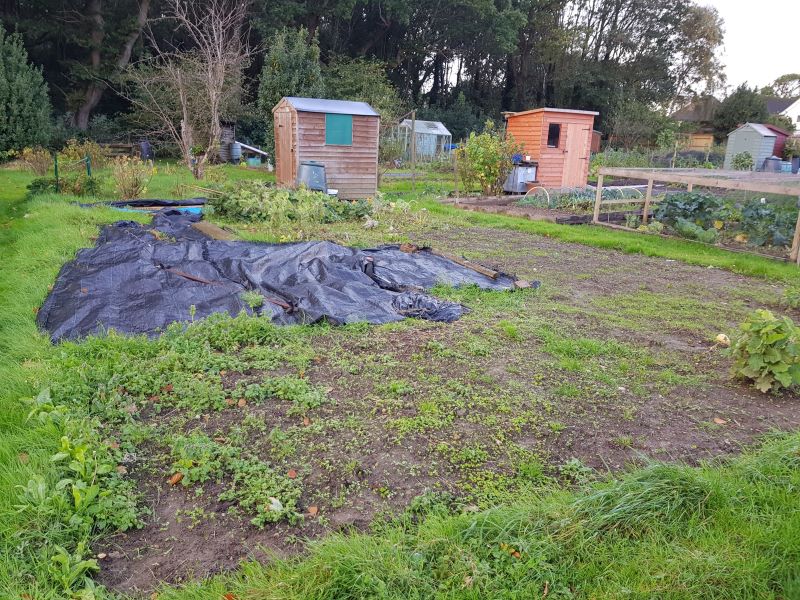
What I quickly learnt that day was that good soil structure is essential for healthy plants. By digging over my soil, I was breaking apart the arrangement of the soil particles and the pockets of air between them. Plant roots need these air pockets to breathe (who knew!) and oxygen is essential for microbial activity, particularly Mycorrhizal Fungi, which forms a symbiotic relationship with plant roots supporting their ability to take in nutrients. There were other risks to digging-over that bothered me; by turning over the top layer of soil with its intricate network of roots and plant matter, I was exposing the nutrient packed, vulnerably loose layer below to the elements, leading to erosion and loss of those all-important nutrients, degrading the quality of the soil.
Luckily there was a solution to all this doom and a welcome low-impact way of getting growing straight away, including an immediate, weedkiller-free way of dealing with the weeds and grasses that had begun to grow. The answer was the ‘no-dig’ gardening approach. Simply, it aims to reduce soil disturbance and build organic matter, helping replicate the natural processes in soil and over time improving soil structure.
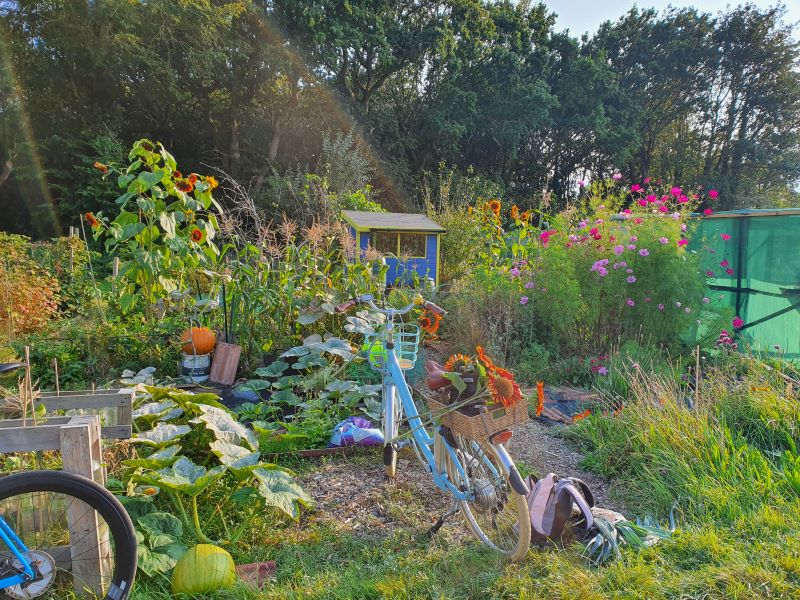
All I needed were 2 ingredients: some thick cardboard to lay on top of the soil (this also did a great job at suppressing the weeds) and a few inches of organic matter on top. I was then able to plant straight away! Success! I’ve played around with the organic matter layer over the years; homemade compost, mushroom compost, Alpaca poo, manure and most successfully, seaweed from the strandline.
The soil wasn’t the only thing to have benefited from my adoption of no-dig that day. I gained a whole load of time back from not needing to labour-intensively dig my whole plot, I was able to grow immediately, and the Robins and I have rebuilt our relationship. They trust that when they visit my plot now, they’ll always find a tasty lunch because my soil is brimming with invertebrate activity that wouldn’t have existed in such numbers had I been bulldozing their habitat after every harvest.
Comments
Concise, factual and held my attention through whole process
05 Dec 2024 11:08:00
We love a time saving and better for plant approach
06 Dec 2024 05:43:00