
Dead quiet - wildlife in churchyards and cemeteries

Huw Morgan
Wilder Communities Team Manager
Churchyards are by nature quiet, undisturbed places, often providing a green oasis of calm amongst the hustle and bustle of modern living. As such wildlife can thrive in these spaces, Badgers, Foxes, bats, Slow Worms, fungi, insects and wild flowers can all be found in our burial grounds.
The Wilder Communities team run lots of bat walks in churchyards, as the bats often roost in the ancient buildings, where there are chances to crawl into roof spaces or use cracks and holes in old, mature trees that have grown undisturbed for years. On one walk at a church in Pulborough, we stopped counting the bats at over 100 as they emerged just after dusk to forage for insects over the churchyard.
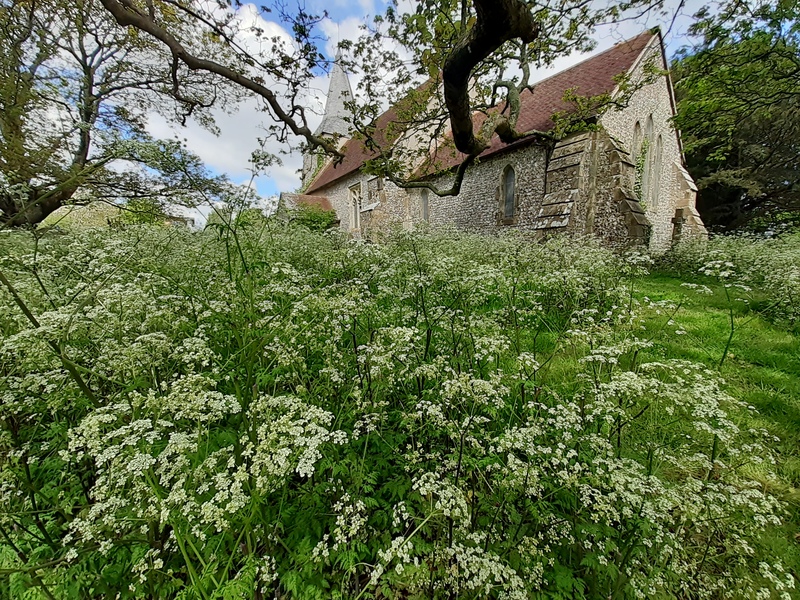
As a team, we’ve worked at churchyards across the county from Winchelsea to Midhurst, offering advice to groups who are keen to improve the sites for wildlife. Groups are often looking to change mowing regimes to allow areas to grow long to encourage wild flowers and increase insect numbers, which in turn help feed birds and hungry bats.
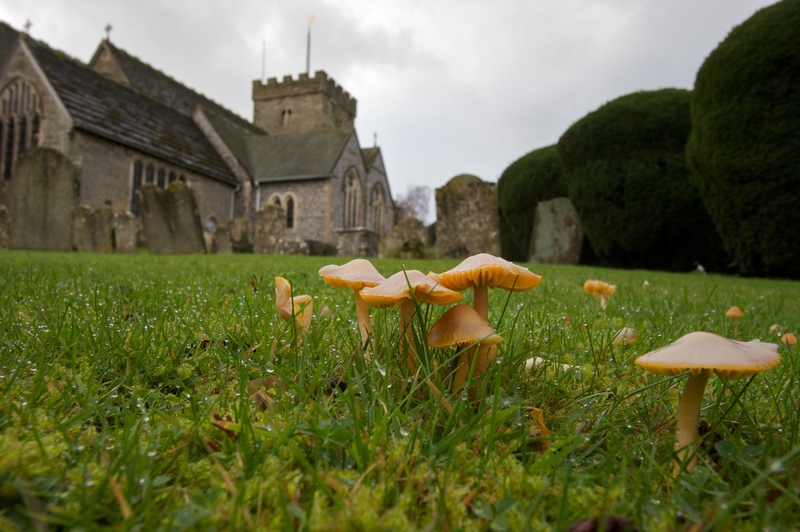
Ivy and lichens grow on gravestones and old walls and some churchyards such as St Peter’s in Henfield are great for fungi such as Waxcaps.
Cemeteries such as Woodvale in central Brighton can support such a wide variety of species, whilst surrounded by a thriving city, fragments of wildness in a very urban landscape.
Churchyards in general are atmospheric places, and a couple of my favourites are in Graffham and Lullington, peaceful spots surrounded by beautiful countryside and not in the slightest bit spooky…until the bats emerge and the moon rises!
Comments
You should come and visit St. Michael The Archangel churchyard, South Malling, Lewes.
We have all that you mention in terms of flora & fauna plus Roe Deer!
03 Nov 2024 14:10:00