
Creating a Swift friendly garden - part 2

So, as part of my cunning plan to make my little urban garden more Swift and wildlife friendly, and again, with the invaluable help of Audrey and Nick from Lewes Swift Supporters, I wanted to create a living roof. Something simple - unlike this amazing one at Lewes Depot -
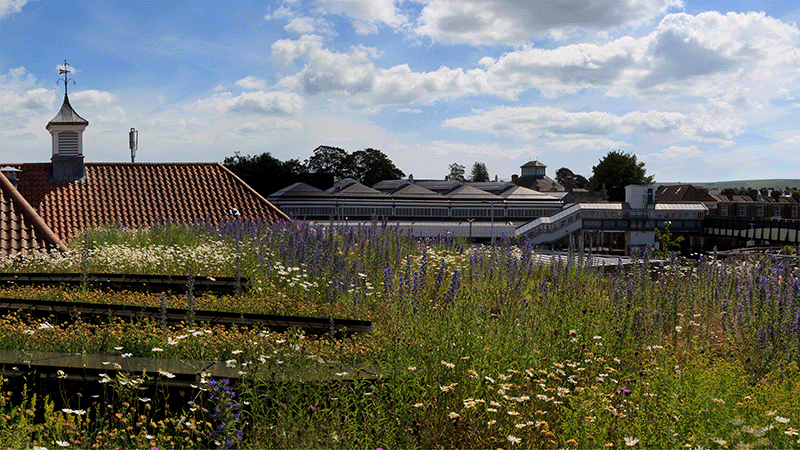
There are various ways of doing this, but after a discussion with Audrey, what we decided to do was plant wildflowers on top of my shed. Wild flowers don't want rich soil, quite the opposite, so after making sure the roof was suitably strong, lined, and with enough drainage, we added gravel, then a mixture of peat free compost and sharp sand.
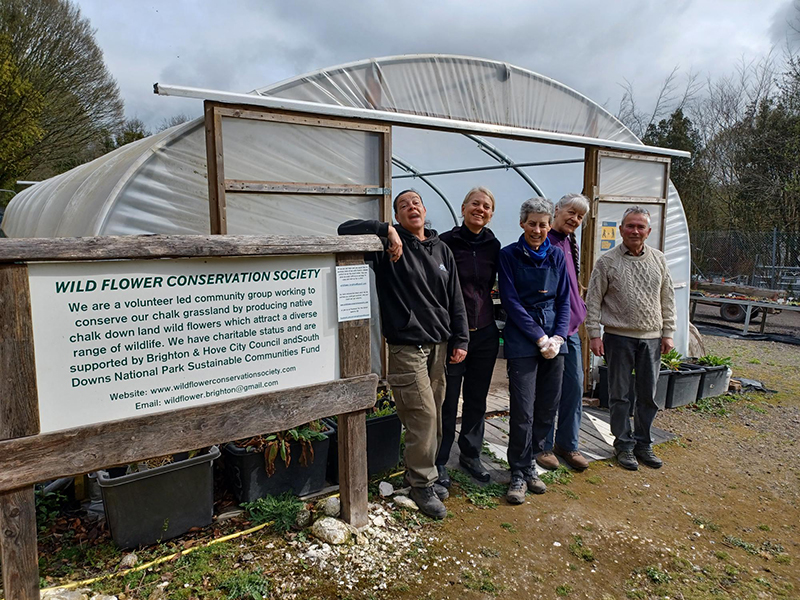
Audrey suggested I visit the Wild Flower Conservation Society (WFCS) at Stanmer. They open year-round but only two hours per week, Tuesdays 10am-noonish.
It's a bit tricky to find them so I'm glad I checked in advance - you head through the new Patchway car park past Stanmer House, then left past the council and SDNPA depot and follow the track round. I'd not been to Stanmer Park since a great deal of work has taken place to make it more accessible, so it was fascinating to see.
WFCS is a really lovely place. It's a volunteer-led community group and a charity whose aim is to preserve downland flowers.
This is the list I went with, provided by Audrey, who told me: "These wildflowers are typical of the wildflower areas around Lewes, from our surveys for Wildflower Lewes: Ox-Eye Daisy, Red Campion, Wild Carrot, Bird's Foot Trefoil, Lady's Bedstraw and Hedge Bedstraw, Small Scabious and Field Scabious, Wild Thyme and Wild Marjoram, Kidney Vetch, Horseshoe Vetch, Self-Heal, Common Knapweed and Greater Knapweed. Although not quite so common, I also like Dropwort, Ragged Robin and Harebells and I bought some successful ones from this nursery - also Sainfoin which looks quite exotic but grows along the verges towards Brighton."
Such magical, evocative names - it's amazing to see them all as plug plants that you can buy (very reasonably too). I was helped by Linda. They had lots of plants, not quite every one on the list right at the moment, but I nonetheless ended up buying 60 plug plants, five of each kind.
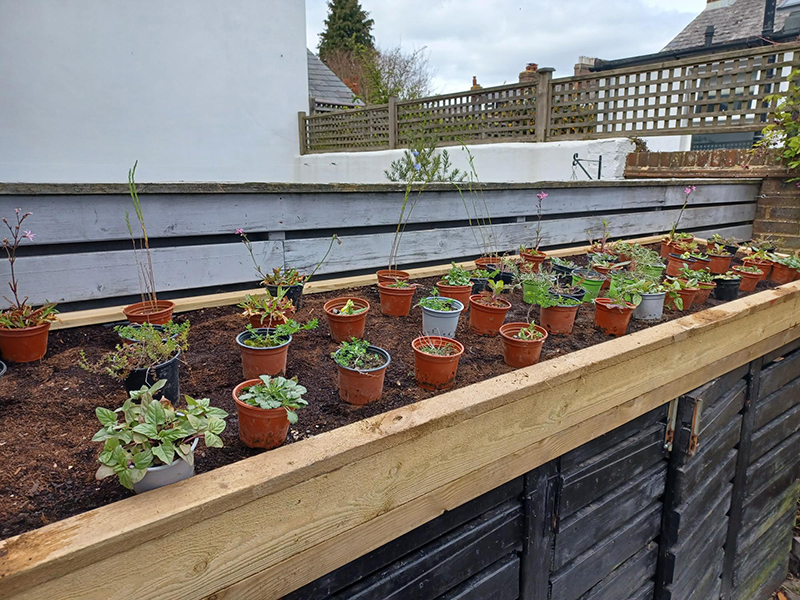
And here they are on my living roof!
Hopefully some of the low growing ones will soften the edges. I'll return all the empty pots and the trays of course. They all get reused.
I'm now hugely excited to see how they grow - and will update in a few months!
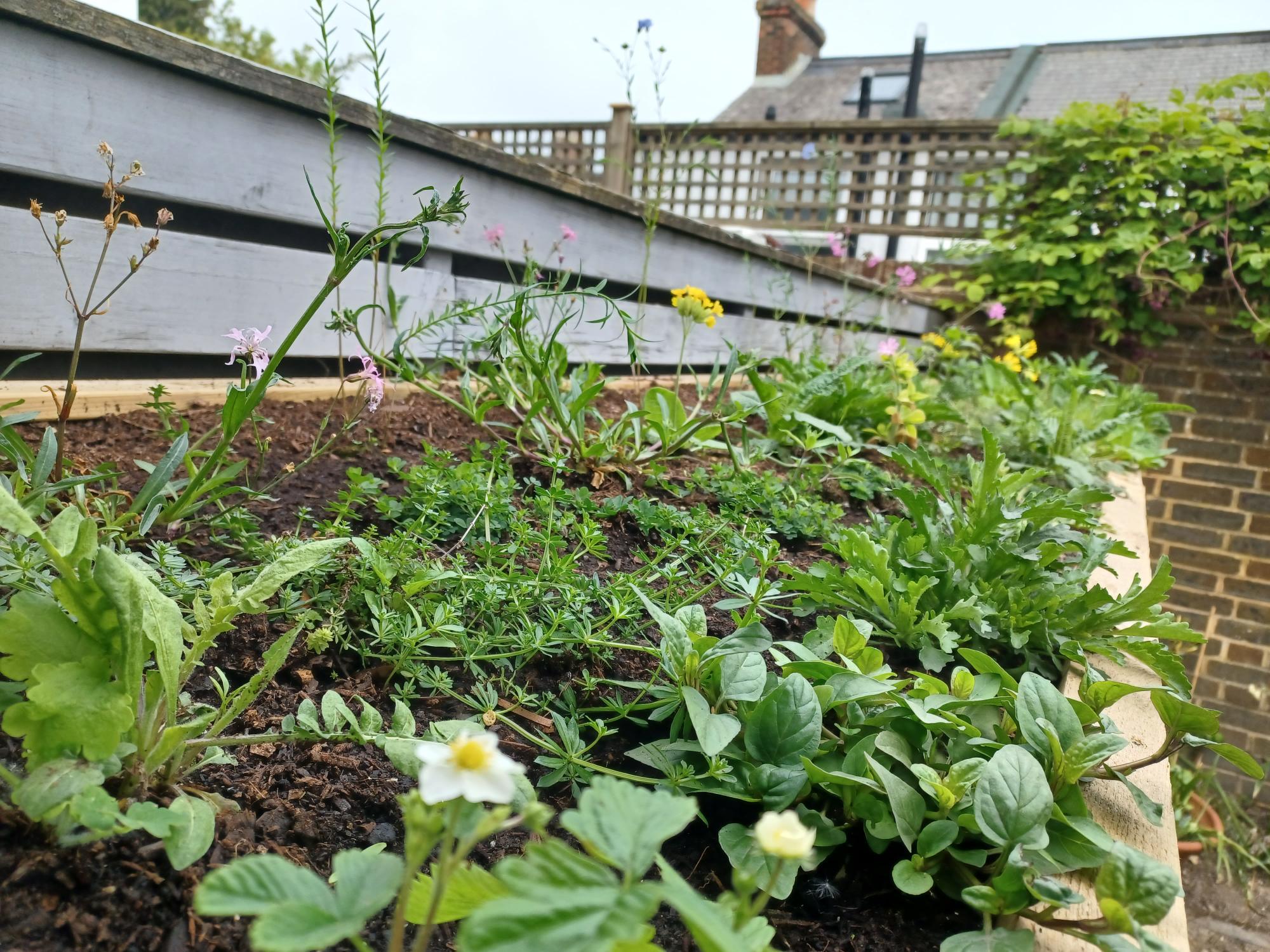
Update - early May
See here for more information about the Wild Flower Conservation Society