
Cracking stuff! Record-breaking Hawfinches in Sussex
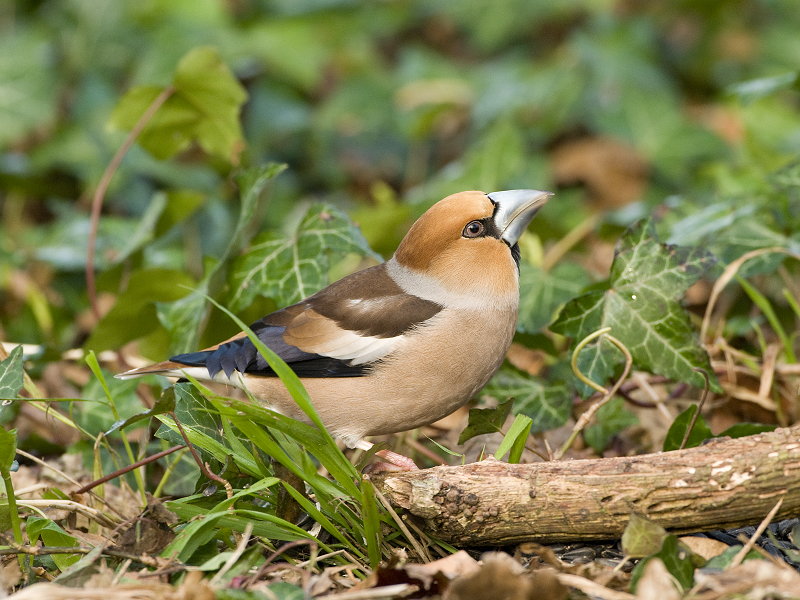
Hornbeam. Wild Cherry. Sloe. All make seeds that are tough to crack, and most birds give them a miss.
But cracking stuff is what Hawfinches do best.
Hawfinches are built for break-ins. They have stout beaks, big heads and bull necks, giving them a distinctive top-heavy look.
Hard to see
Despite the chunky proportions and tough guy diet, Hawfinches tend to be rather discreet and hard for us humans to detect.
In the UK they have a thin, patchy distribution. They breed in old, broad-leafed woodland, and often go completely unnoticed through the summer.
In winter, birds arrive from continental Europe, and form larger flocks, especially in some bumper years. Even so, these can be hard to find too.
For many birders, glimpsing a single Hawfinch, for a moment or two at the top of a tree, might well be the highlight of a winter’s walk.
All this makes the estimate last winter of 400 birds at a single site in West Sussex quite something.
This count, made in late February, is not just the biggest anywhere in the county this year. It seems it may be the biggest gathering of Hawfinches ever recorded anywhere in the UK.
Hawfinch fieldcraft
A large measure of the credit for revealing the true numbers of Hawfinches in Sussex goes to ornithologist (and trustee of Sussex Wildlife Trust) Mark Mallalieu.
In recent years, Mark has spent many hours searching for potential Hawfinch roost sites, and has confirmed that they are here in more places, and in bigger numbers, than previously thought.
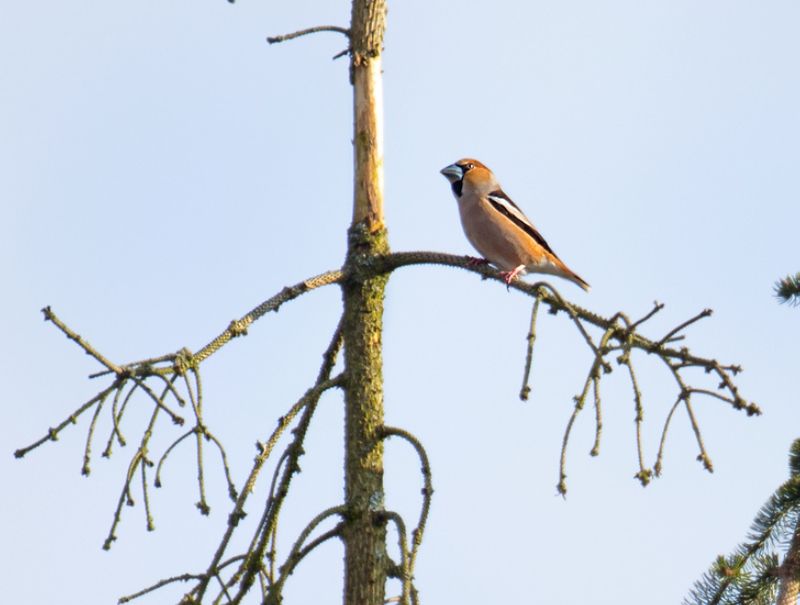
The key, Mark says, is to search at first light, and watch for them to gather in high, bare branches before they disappear into the trees to feed.
Making Sussex even better for Hawfinches
Despite the record-breaking count in Sussex last winter, Hawfinches are far more common in much of mainland Europe. It might be that we are seeing only a fraction of the numbers that could flourish here.
The seeds of the Hornbeam tree are their favourite winter food when available (in ‘mast’ years). Protecting, improving and increasing areas of Hornbeam coppice in the Weald could well help Hawfinches.
Scrub is also proving to be an important habitat for them. Hawfinches are known to follow flocks of Redwings, feeding on the sloes (Blackthorn berries) that Redwings have excreted. Post-Redwing, the stones remain intact, and ready for a Hawfinch to finish the job.
Meanwhile, creating diverse woodlands, with plenty of oaks and Wild Cherry, is likely to be key to tempting more Hawfinches to spend the summers in Sussex and raise young.
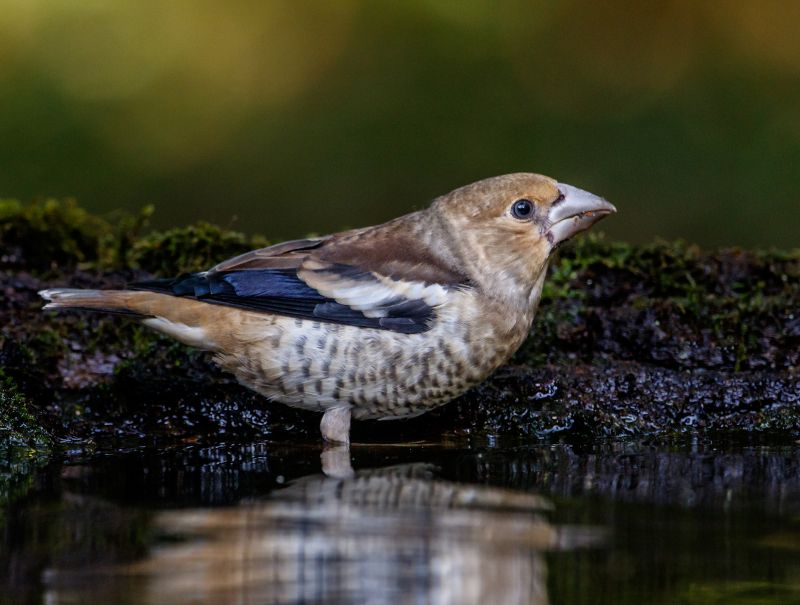
Wintering Hawfinches arrive back in the UK in October and November, and can be found at a number of sites, mainly in West Sussex. Check the sightings board of the Sussex Ornithological Society for recent reports.
If you are lucky enough to find a Hawfinch in Sussex, please report it via Birdtrack.