
Corona Wildlife Diary: Day Seventy-two

Day Seventy-two
My wild flower lawn is looking fantastic. A blooming, buzzing, fluttering, sweet-smelling celebration of life. Glorious. But as I bent down to sniff the flowers this morning I noticed something rather horrid; it appears that someone has been spitting all over them. It drools from the clover and dribbles down my daisies. My garden looks like the front row of a gig by punk band The Damned circa 1977. But who is this phantom froth flinger?
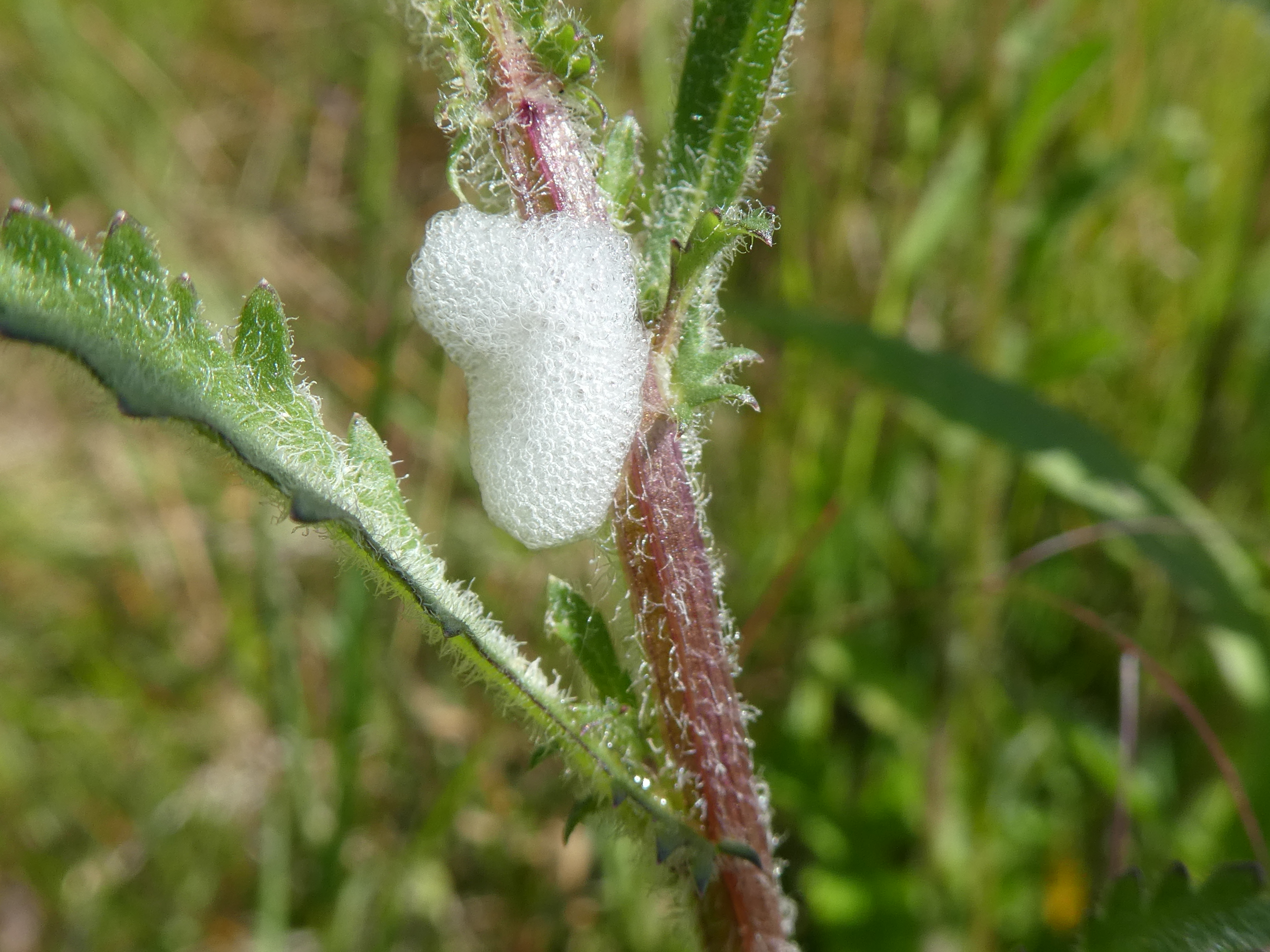
Once upon a time, English naturalists believed that the culprit was the Cuckoo. The spit appeared at the same time as the first Cuckoo’s call and, as no-one had ever found a Cuckoo’s nest, some folk believed that Cuckoos were spitting their young out from above. Utter twaddle of course, but the name ‘Cuckoo spit’ still survives today.
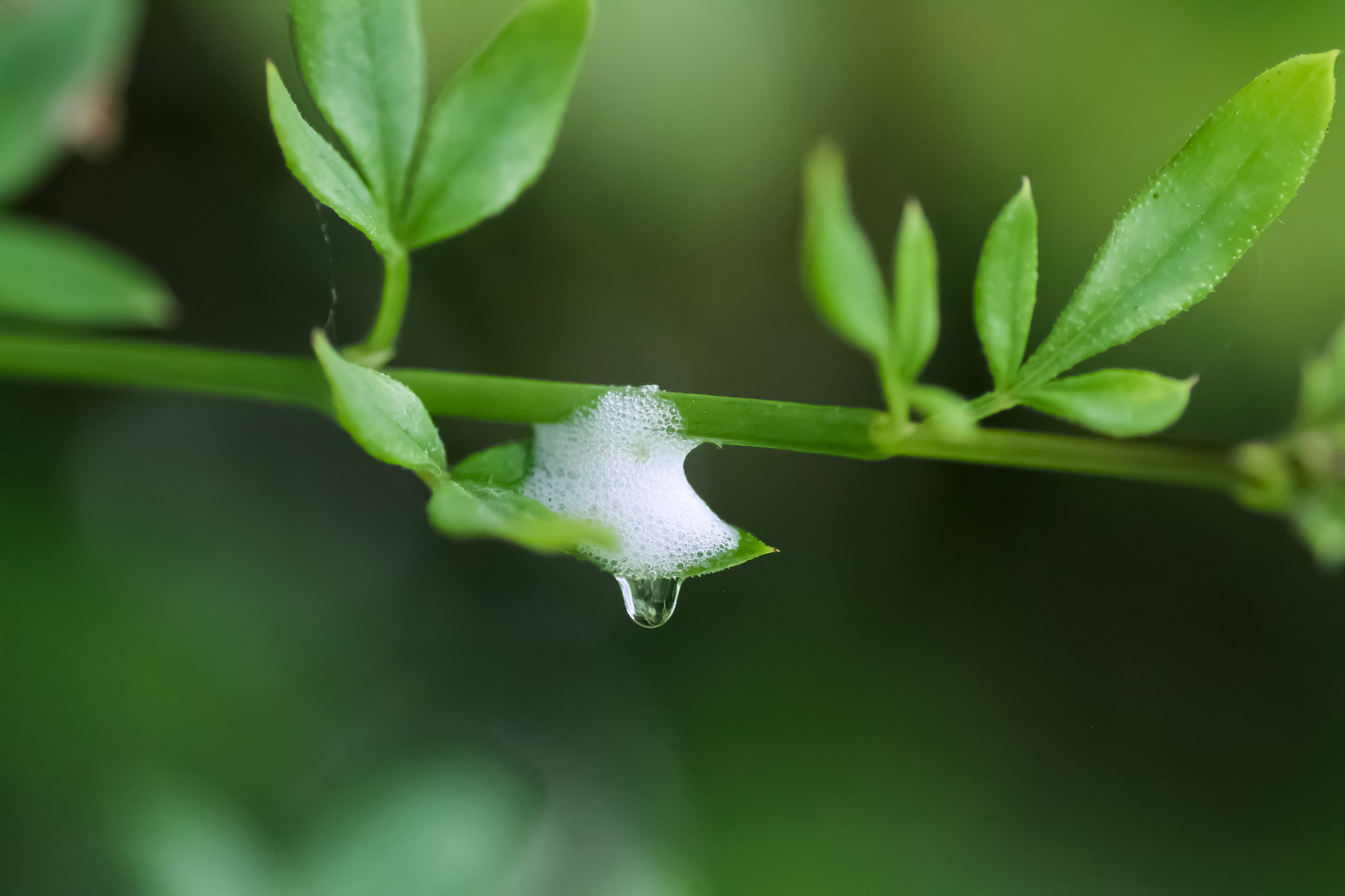
(Photo by Emma Morgan)
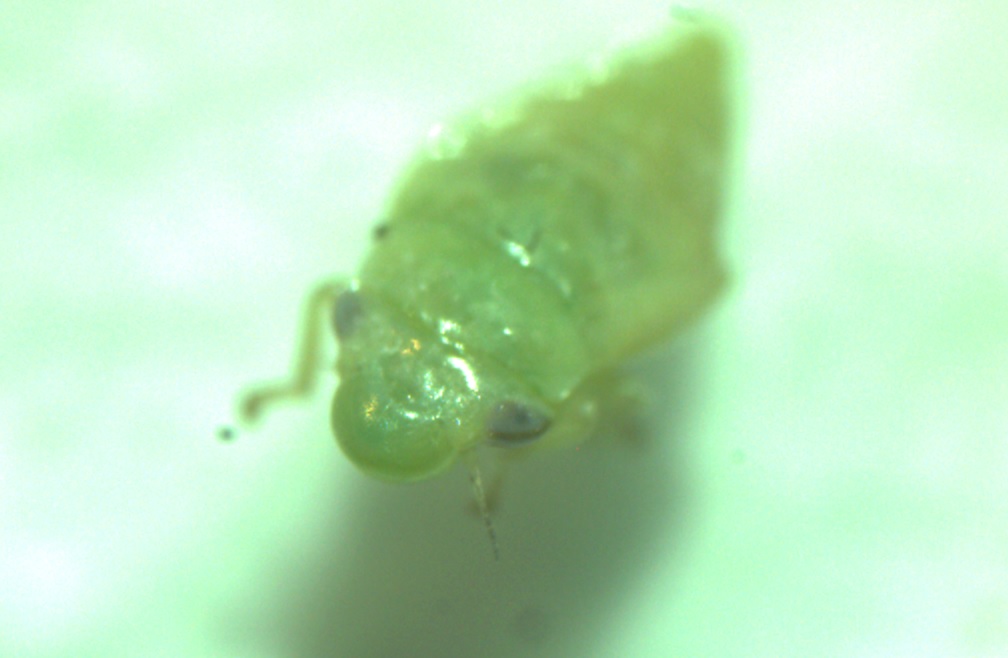
To get to the bottom of this mystery, you need to do some poking around. In the middle of every bubbly blob, you’ll find a tiny, cowering larvae – a spittlebug. I had a look inside the bubbles and found one - here's a photo I took down my microscope.
Whereas other insect larvae use clever camouflage or distasteful chemicals to avoid getting eaten, the spittlebug has an altogether more flatulent approach to protection. It blows bubbles out of its bum. A mixture of plant sap and air are used to get itself into a lather. I imagine a similar thing would happen if you ate five tins of baked beans and washed it down with a bottle of Radox.
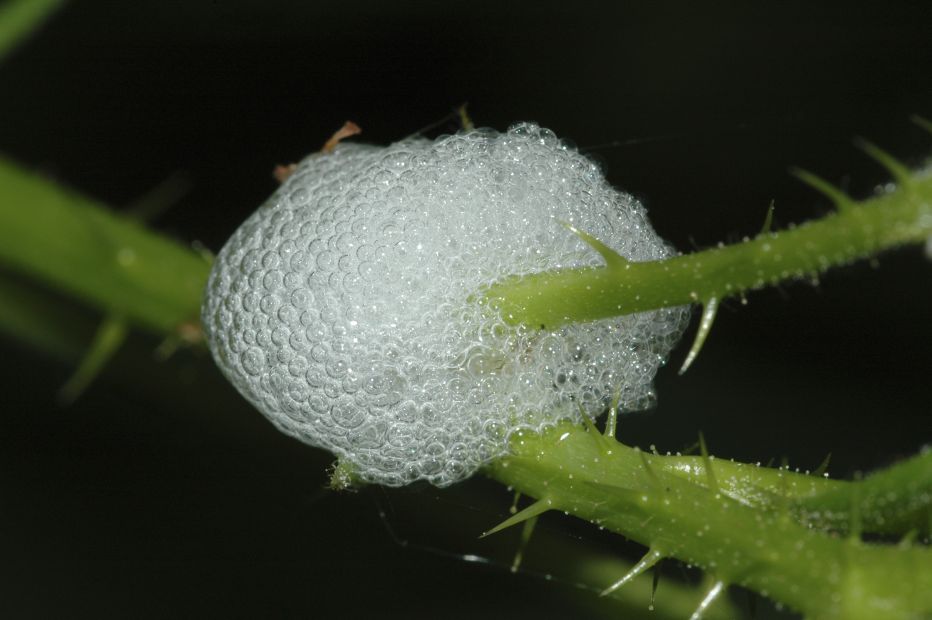
(Photo by Gemma Pratt)
This frothy flatulence creates a foamy fortress and the blob of bitter bubbles protects the spittlebug from predators (and the hot sun) as it sucks on sap. The spittlebug feeds, grows, moults and triumphantly emerges from its bubble as one of the most powerful animals on the planet; an adult froghopper. Encased in a tough re-enforced suit equipped with some fantastic features the froghopper is the Iron Man of the insect world. Its super power is its ability to jump and, boy, can it jump!
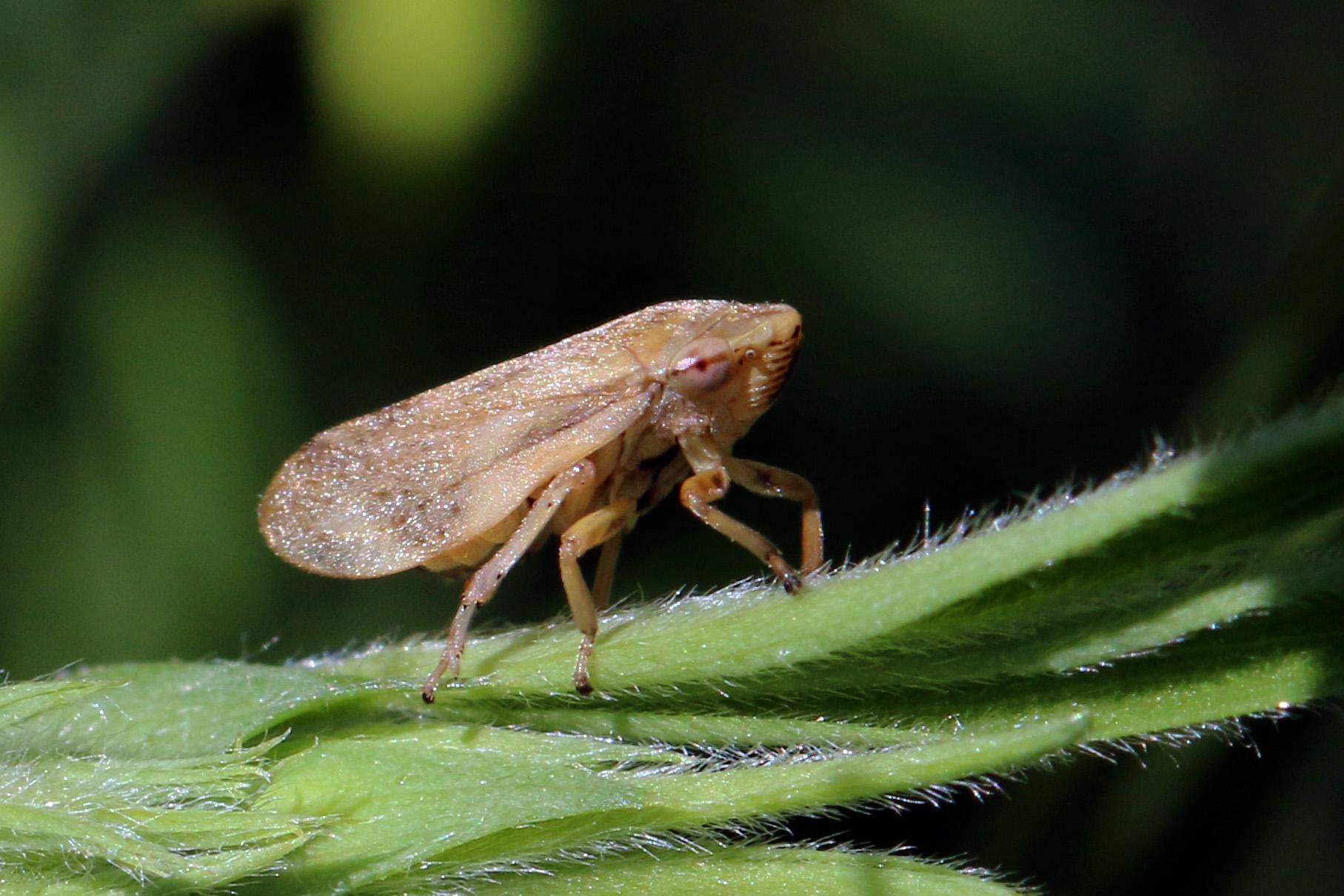
(Meadow Froghopper Philaenus spumaris Photo by Sharp Photography)
Fleas always get the credit as the natural world’s high jumpers. Famously, if you had the same power as a flea you could jump to the top of St Paul’s Cathedral. But froghoppers, although heavier than fleas, can proportionally jump even higher (so imagine, while you’re on the top of St Paul’s, seeing an elephant leaping high over you). Scientists have recorded froghoppers jumping 70cm vertically, experiencing over 400 gravities of acceleration (by comparison, those astronauts in Florida waiting to blast into space may experience about 5 gravities).
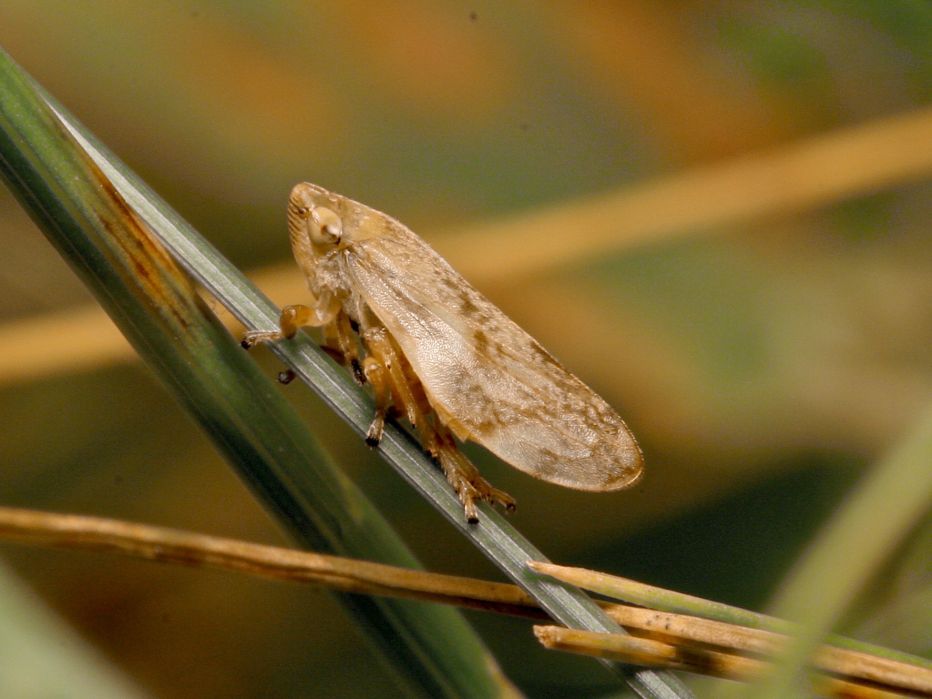
(Photo by Neil Fletcher)
If you've seen some cuckoo spit in your garden, then the University of Sussex would like to hear from you. They are asking people to take part in their Spittlebug Survey to help them "find froghoppers, spot spittlebugs and look for leafhoppers!"
Head over to their survey website (here) - there's a quick questionnaire where you can enter your spit sighting. It only takes three minutes and the project team will appreciate your help.
The website also has a load of spittlebug information if you want to learn more or fancy trying to identify your spittlebug.
There's also this two minute video (here) all about spittlebugs and the survey.
And if you've got some bored kids at home there's a 'fun facts' sheet (here) which encourages them to look for cuckoo spit.
And here's today's singalong from a century ago (here) for when you're out spittle spotting.
Comments
Thank you for another very entertaining and educational diary. We’ve all seen cuckoo spit but I had never considered how it was formed, now I know!
28 May 2020 11:50:00
OMG it’s like you read my mind! I saw this all over the plant in my front garden that I have forgotten the name of and I though it was the snails! Though I did wonder why they spat on it instead of eating it and as it has small leaves I though it was a bit high for them. Oh well! Mystery solved! Thanks! What a clever way to hide yourself! I am learning so much on this blog! Love that track!
28 May 2020 12:00:00
It’s a hebe! I just remembered!!!!!!!
28 May 2020 12:13:00
Wow, what a co-incidence. Yesterday whilst gardening I found two clumps of Cuckoo Spit. After just over 20 years at my current address, I have never seen Cuckoo Spit here. Duty bound ,I have now completed the Bright Project survey on the Froghopper species. I assume Kent counts? Your info was fascinating. Thanks again Michael. We see it often out on W.Mill Reserve at this time of year. So now I am armed with this new information, I will be able to speak with the school children (if, hopefully, I am allowed to help the Education Team again !).
28 May 2020 13:37:00
At Nature Tots we call this ‘Froghopper Farts’ 😁
28 May 2020 15:57:00
Still laughing at the thought of consuming five tins of beans and a bottle of Radox! I have obviously worked at primary school for too long!
29 May 2020 19:55:00