
Cockchafer
By Charlotte Owen
WildCall Officer
The adults that are appearing now have spent at least three years underground as creamy-white grubs, munching on the roots of grasses and cereals.Before agricultural intensification, these larvae were serious pests and in 1320, the people of Avignon took the cockchafer to court, ordering it to leave town and relocate to a designated area. Of course, not a single cockchafer complied and thousands were rounded up and killed. Today, they exist in much lower numbers and their main predators are crows and other corvids, which love to snack on a fat and juicy cockchafer grub or ‘rookworm.’ It takes three to five years for the slow-growing grubs to reach their maximum size of around 4 cm. They will then undergo a final moult and pupate in early autumn, emerging as an adult beetle six weeks later.The freshly-emerged adults stay underground until spring, when they finally work their way to the surface and take flight.
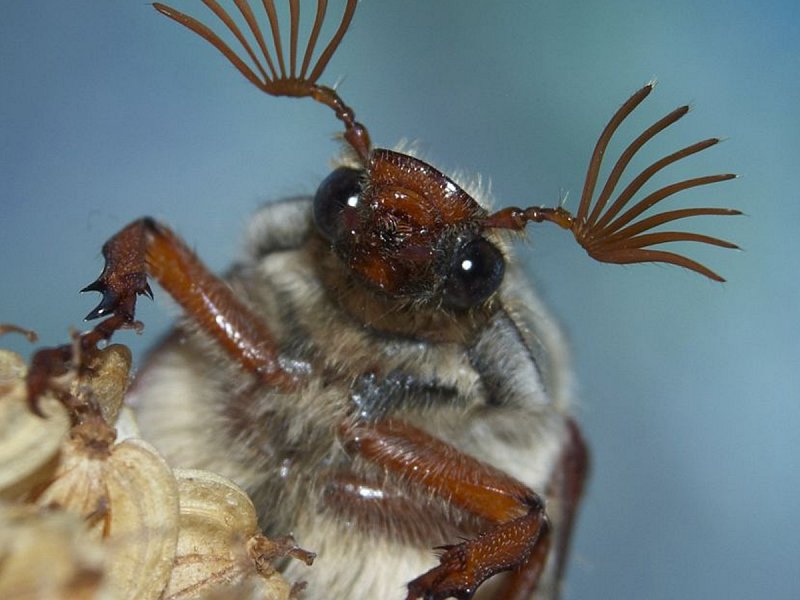
Cockchafers are powerful but ponderous fliers. Used to a life in the dark, they fly at night and are attracted to light, frequently crashing into lit windows or careering into our homes. They only live for six to eight weeks and their sole, and sometimes frantic, mission is to reproduce. Their impressive, feathery antennae are used to pick up and track down the chemical signals released by potential mates and you can tell the sexes apart by counting the “leaves” - males have seven on their antennae, whereas females have only six. After mating, each female will lay up to 80 eggs, burying them deep in the soil before bumbling off into the night.
Comments
Extremely interesting and informative. Just about all anyone needs to know. Thank you.
03 Sep 2019 16:08:00
3 were found my staff colleague at High Elms Country Park, today
01 May 2024 17:57:00
Sussex Wildlife Trust:
Great stuff
Just found out e of these on our caravan decking never seen one before, thanks for the information
27 May 2024 13:20:00
My parents who both came from the Brighton area called may bugs ‘cock horney bugs’. We lived in a sandy wooded area near Woking. I do also remember (1950s) stag beetles being very common.
17 Feb 2025 12:12:00
!8/10/2025. I found as many as 21 plus in soil that I choice to use for our strawberry cuttings, and was greatly surprized at seeing this amount of grubs.
18 Oct 2025 22:43:00