
Churr delight: Nightjar season
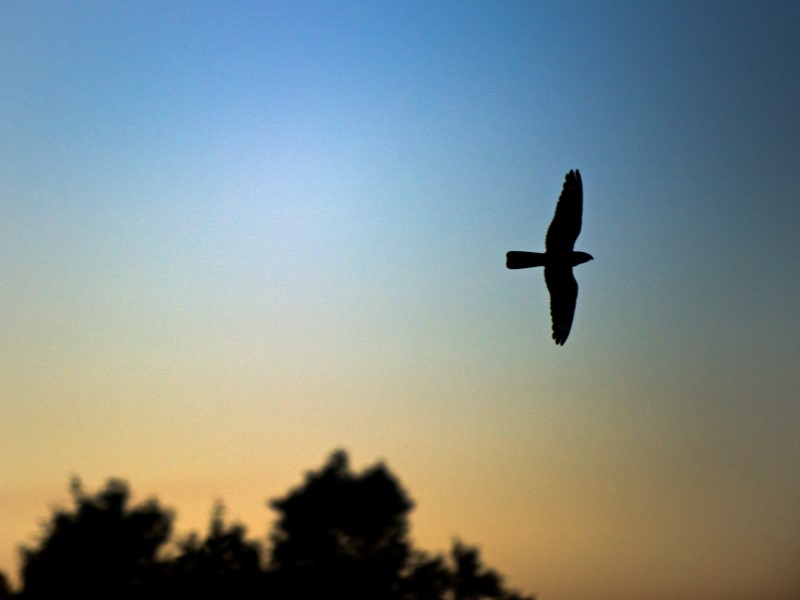
The churring of a Nightjar - more electricity substation than typical birdsong, and all the weirder when enjoyed in the dark.
We're now in the season for Nightjars, so it's time to make the most of still, warm evenings to encounter them.
The male sings once the sun’s down - a two-tone drone, switching in pitch and intensity, as if adjusted by dials. Like alien technology scanning the landscape, my 10-year-old self might have thought (and my 50-year-old self still does).
Along with that persistent churring, a couple of sharper noises - the wet-sounding kew-ick, given when they are on the wing, and a clap - the wings being smacked together.
With these audible clues, and a smear of light still on the horizon, there's the chance to catch the silhouette of their slow-winged flight as they patrol the air.
Nightjars need open areas, with a mix of low ground cover in which to rest and nest. A couple of centuries ago this would have been rather easier for them to find, in patches of common land and 'ordinary' spots, including the outskirts of towns and villages.
Since then so much of that rough, tufty habitat has been destroyed, leaving Nightjars largely restricted to what's left of our heathland, and recently-cleared woodland glades - the latter of which, by their nature, come and go.
They also require plenty of moths and other flying insects to feed on at dawn and dusk. Whisker-like bristles around the beak help them locate their prey by feel, and direct it into their wide mouths.
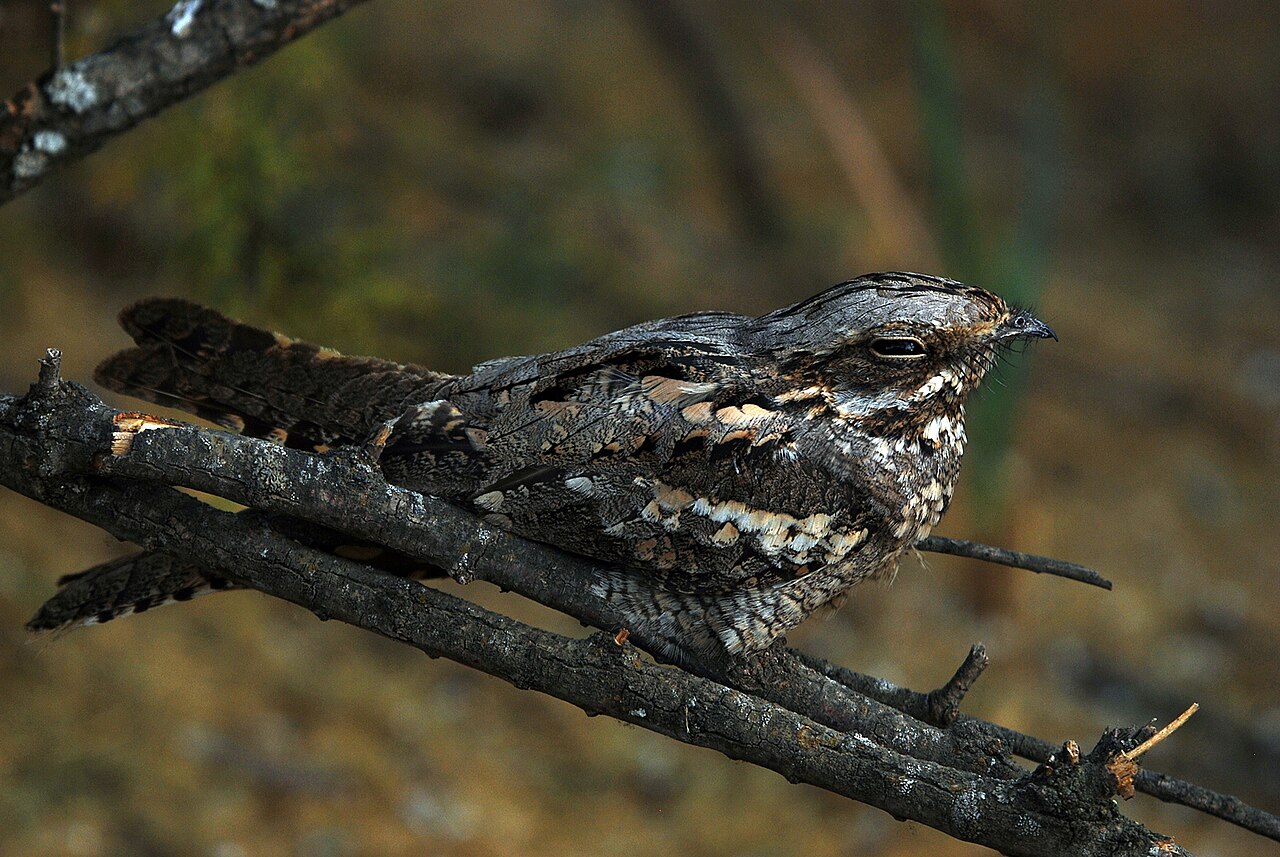
Nightjars are occasionally to be found at rest during the day, when their cryptic plumage allows them to blend in with a log, or simply remain undetectable amidst dry bracken and heather. On migration in autumn, they do turn up in random places as well. Every year the odd lucky person finds one snoozing on a bench or fencepost in their back garden.
But better not count on that kind of lightning to strike - a safer bet is to head out to their breeding haunts in summer.
They have a long season of churring, until at least the end of July, in which it's possible to spend time with their twilight manoeuvres.
A Nightjar experience has a special place in many people’s calendars, involving a seasonal visit, perhaps with a friend or two for reassurance in the dark. Try our heathland reserves in West Sussex, such as Graffham Common or Iping and Stedham Commons, or Ashdown Forest at Old Lodge. Nightjars tend to call and fly after sunset.
Comments
Such an amazing and evocative sound not heard since I took part in a guided night walk in the heaths of Suffolk many decades ago!
Thank you!
28 May 2026 18:42:00
I was privileged to see a nightjar stretched.along the branch of a tree one evening, when walking my dog with a friend in Hampden Park, Eastbourne in the late1970s/ early 1980 and never since. Hampden Park still has beautiful specimens of trees but no drifts of orchids . It just all looks neglected to me now.
28 May 2026 19:01:00
My husband passed away at the of January and hearing the sound of the Nightjars bought back memories of waiting for dusk to come at Graffham to watch them take flight and to hear their marvellous calls. It was magical.
28 May 2026 19:17:00
We heard nightjars this week at dusk close to the visitor centre at Ashdown Forest
28 May 2026 20:10:00
I have only seen a nightjar once,it was resting first thing in the morning under a chair, on the ground outside our kitchen window in Icklesham, it was on 10/8/2012
28 May 2026 20:21:00
Sussex Wildlife Trust:
What a wonderful surprise that must have been! ~ Charlie
Thank you Charlie!
Wonderful to hear and read.
Jen
28 May 2026 20:30:00
illuminating – the first ever opportunity I have experienced to hear & learn of this bird – for which I thank you. Well done!
28 May 2026 20:32:00
Incredible sound. What a shame we cannot make space for these amazing creatures. Thank you for sharing this unique sound. Amazing!
28 May 2026 21:08:00
I’ve seen and heard nightjars in the Ashdown Forest on numerous occasions. They really are most fascinating of birds.
28 May 2026 21:33:00
We were on Ashdown Forest a couple of years ago when we thought we heard a nightjar. However, we couldn’t see it and it was daytime. Maybe we were mistaken. Does anybody have any idea what it might have been?
29 May 2026 05:57:00
Sussex Wildlife Trust:
They do very occasionally churr briefly in the daytime, so it could have been... ~ Charlie
Well done! Educational. A great improvement on your usual output.
29 May 2026 06:14:00
I went Nightjar hunting with the RSPB in their now defunct reserve near Tudley Woods near Pembury in Kent. There are three sites here they come to most years.The experience is magical every time they appear, and they fly so close and appear not to be fazed by the presence of humans. A magical bird.
29 May 2026 06:28:00
May this wonderful bird always be able to find the right landscape to thrive in.
29 May 2026 06:55:00
Very informative – thank you for sharing the recording I’d never (seen or) heard a nightjar before! It’s certainly distinctive!
29 May 2026 06:55:00
I have only seen a nightjar once,it was resting first thing in the morning under a chair, on the ground outside our kitchen window in Icklesham, it was on 10/8/2012
29 May 2026 07:02:00
Very informative – thank you for sharing the recording I’d never (seen or) heard a nightjar before! It’s certainly distinctive!
29 May 2026 10:52:00
What a good recording – now I know what I should be listening out for. The bird never takes a breath, extraordinary!
29 May 2026 10:58:00
This is the Eurasian nightjar (Caprimulgus europaeus). I have seen them in Kenya from where they migrate to breed in the UK. But as they are silent in Kenya it was wonderful to hear their sound for the first time!
29 May 2026 16:31:00
Why do they have whisker like feathers near their beak?
29 May 2026 18:20:00
Sussex Wildlife Trust:
It helps them locate prey by feel as they're flying in low light ~ Charlie
What an incredible sound & really informative article. Thank you so much, I will definitely go out to see if I can catch one calling.
29 May 2026 22:56:00
Brilliant recording and photo !
Lets hammy more of these on line for lots of birds please
30 May 2026 10:47:00
Very informative – thank you for sharing the recording I’d never (seen or) heard a nightjar before! It’s certainly distinctive!
30 May 2026 16:44:00
Our conservation group used to go nightjar spotting at Stedham Common as an early summer treat
30 May 2026 21:23:00
Why can’t we stop the bloody developers?
31 May 2026 08:24:00
We are lucky enough to have nightjars in our woodland, and it’s a real pleasure to sit outside and let that electronic trill wash over you at dusk and occasionally dawn. It is now mid July and after a couple of months of long trill sessions the call is getting more limited timewise and ends with a slow-mo interval.
We are on Dartmoor in Devon and it has become an annual summer event.
14 Jul 2026 21:34:00