
Chalk streams and knuckerholes
Fran Southgate
Nature Recovery Manager
In Sussex, the incredible geology means that our porous greensand and chalk bedrock filter rainfall as it percolates into the ground, until it comes to rest in huge, natural underground reservoirs. This water then comes bubbling out of the ground as crystal clear streams and springs, which supply our wetlands with amazing water. These chalk and greensand springs are one of the key reasons that we have an amazing array of nationally and internationally rare wetland wildlife in Sussex Wildlife Trust Nature reserves and across the stunning natural landscape of the South Downs.

A chalk stream is a watercourse which flows across chalk bedrock or is influenced by chalk geology. They are usually fed by seasonal springs flowing from chalk and often have 'winterbourne' stretches in their headwaters which run dry, or partially dry in late summer to the spring (Lewes has the Winterbourne Stream running through it, for example).
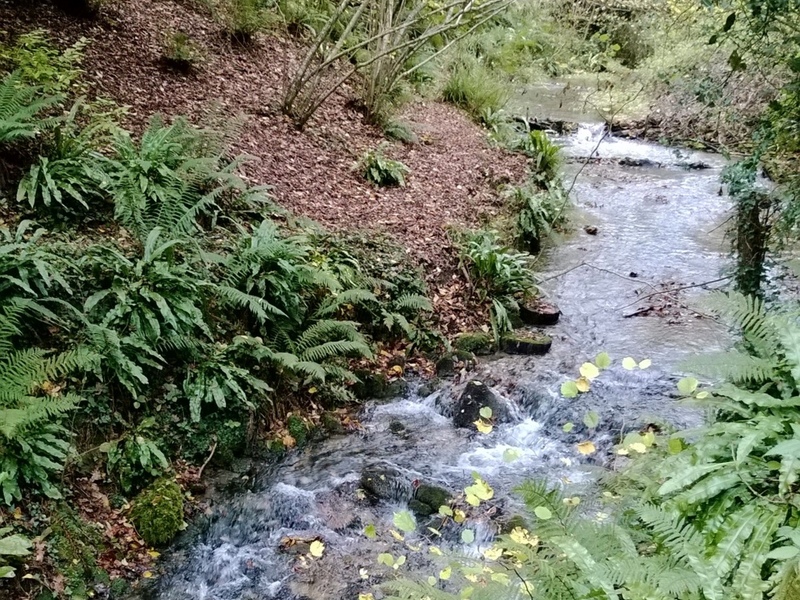
Sussex chalk streams have a unique character, with steeply sloping, fast flowing streams associated with ancient woodland and woody debris. We have ‘knuckerholes’ or deep holes which go directly down into the underlying aquifer. There are sites in Sussex where the water continually upwells from the knuckerholes, which is amazing to watch. The holes are big enough to fit cows down and there are many Sussex folklore tales of ‘dragons’ which live in knuckerholes and which pop up from the underworld to devour things!

South Downs chalk streams are different from classic chalk rivers, such as Hampshire’s River Itchen. Each chalk stream has its source much higher in the hills, and the gradient of the streams are very steep. Sussex chalk streams often occur in small gulleys, which are more wooded than other chalk rivers and streams. This results in unusual features including:
- mini chalk waterfalls which form when chalk water upwellings ‘calcify’ in the air creating an amazing little concrete-type substance called tufa
- dense shade, which means that there is naturally less vegetation cover
- a lack of typical chalk river plants like Water Crowfoot – which is more natural
- diverse stream channel because of natural flow restrictions such as tree roots
- woody debris is common in the channel and it influences the stream flow
- the substrate (stream bed) is less frequently made up of flints and mobile gravels

In the past, perennial (permanently flowing) chalk streams were incredibly important for communities and industries in Sussex. The streams drove mills which provided food and power, they provided clean drinking water and irrigation, and many were used to farm Watercress, sustain healthy fish populations and to produce other edible wetland plants. Nowadays many of them have suffered from degradation through pollution, urban and gardenisation, the introduction of invasive species, the lowering of water tables, and the creation of man-made artificial structures which block natural stream flows and fish passage.
Most chalk streams and springs have a unique community of aquatic insects and invertebrates. Their clear flowing water creates extremely good habitat for fish such as Brown Trout. The fascinating Hildenbrandia, a red encrusting alga, the moss Cratoneuron filicinum, and the liverwort Pellia endiviifolia are a sign of strong springs. Some of the characteristic plants you would expect to find in chalk winterbournes are Watercress and Water Speedwell. Some plants you might expect to find in perennial chalk streams are Blunt-fruited Water-starwort, Lesser Water-parsnip and Brook Water Crowfoot.
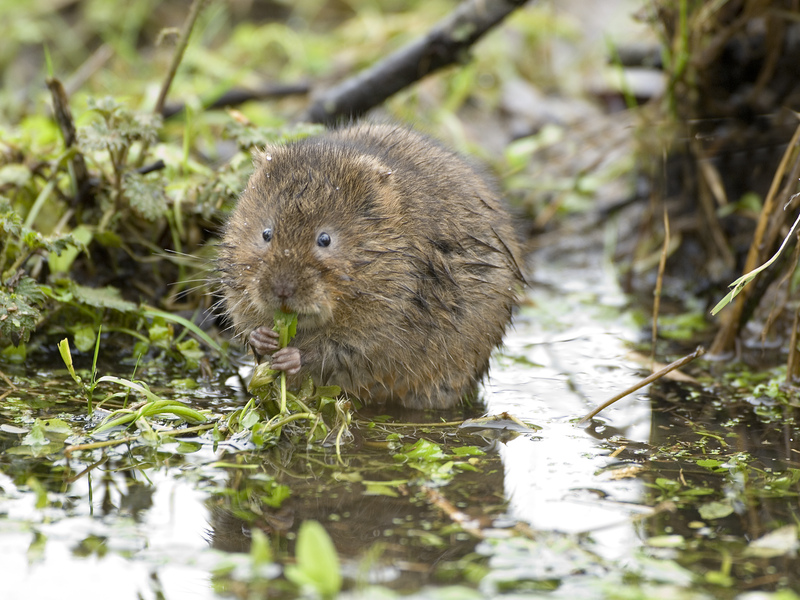
Water Voles and other birds, animals and insects thrive in these streams. They are fascinating and abundant little ecosystems about which we still know relatively little.
Comments
Hello. I’m a ‘tufa’ expert. I have old data on tufa in the Sussex chalk streams but do you have any modern sites for it? If so then please let me know.
Thanks, Allan.
ps the ‘standard work’ on tufa is my book titled ‘Travertine’ (2005) published by Springer
24 Feb 2026 08:53:00
Sussex Wildlife Trust:
Thank you. Not that we're aware of.
Wow, beautiful article and so good to hear of the knucker holes that cascade into chalk streams! I did not know this, I have only visited ‘dew pond’ knucker holes like the one at Binstead. Thank you for this vital information which is just as precious as a scientific fact, (as any serious witch would appreciate).
02 May 2026 08:57:00