
Butterflies - the black and white ones
Some of our most beautiful butterflies are the least colourful. Shying away from the garish yellow of the Brimstone and the exuberant red of the Peacock, the whites have chosen a sleek, minimalist look.
Among the commonest is the ubiquitous Cabbage White – a title applied interchangeably to the closely related, yet subtly different, Large White and Small White. Size is often the best way to tell them apart and the Large White is a much stronger flyer. Its bright white wings are tipped with black and, in the female, finished with two dark spots, whereas the Small White’s markings are paler. Their hungry caterpillars do indeed feast on cabbages – and sprouts, broccoli, radishes and rocket - earning them a terrible reputation among gardeners and allotment-holders. Of course, the butterflies existed long before we cultivated their beloved brassicas, and they will also lay their eggs on garlic mustard, wild mignonette and sea kale along the coast.
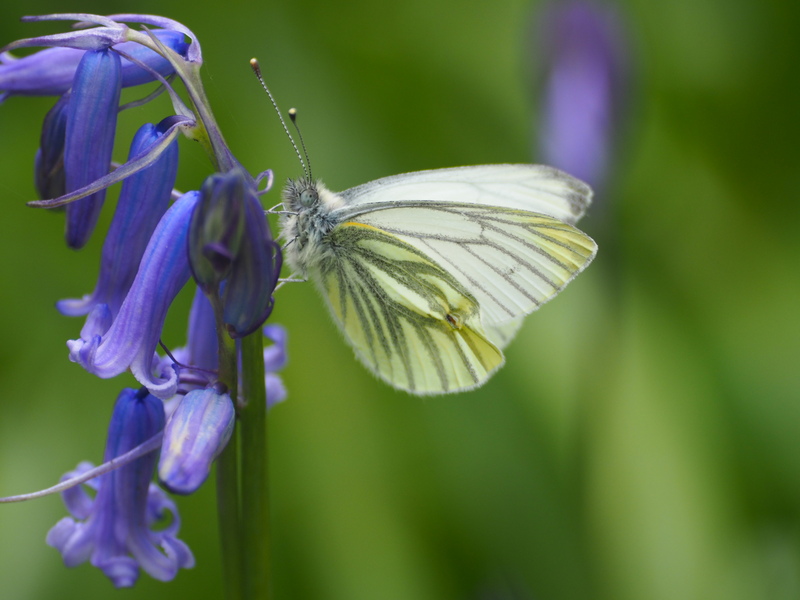
Often tarred with the same brush but completely innocent of the Cabbage Whites’ crimes is the Green-veined White. This really is a subtly beautiful butterfly, with delicate dark lines tracing its white forewings and distinctive green veins on the undersides. These are best displayed while at rest, although the green colour is an optical illusion created by black scales atop a creamy yellow background. This species prefers damp meadows and woodland rides where females seek out cuckooflower, hedge mustard and watercress.
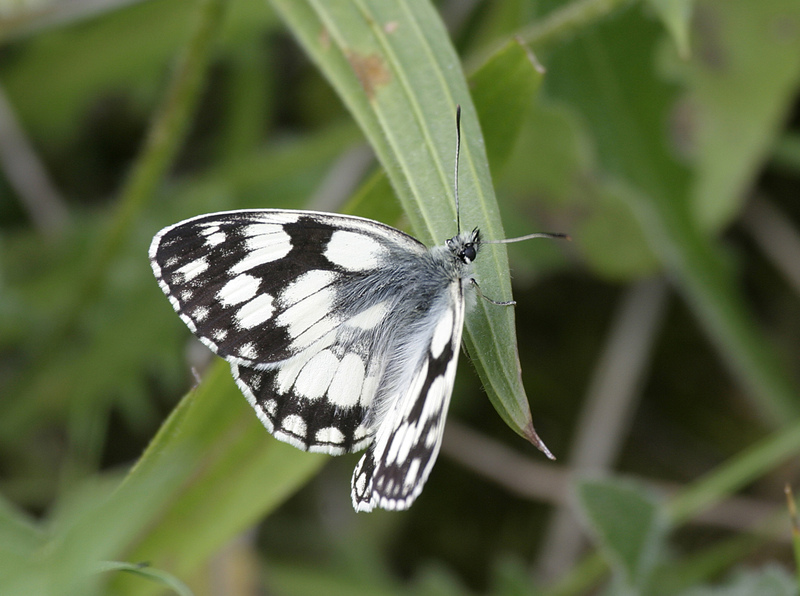
Not every white butterfly is so subtle, and the unmistakeable Marbled White sports a flamboyant chequerboard pattern. Somewhat surprisingly, it belongs to the ‘browns’ rather than the ‘whites’ and is related to the Gatekeeper, Ringlet and Meadow Brown. It shares their love of flowery grassland and has a preference for purple, from thistles and knapweeds to Field Scabious and Wild Marjoram.
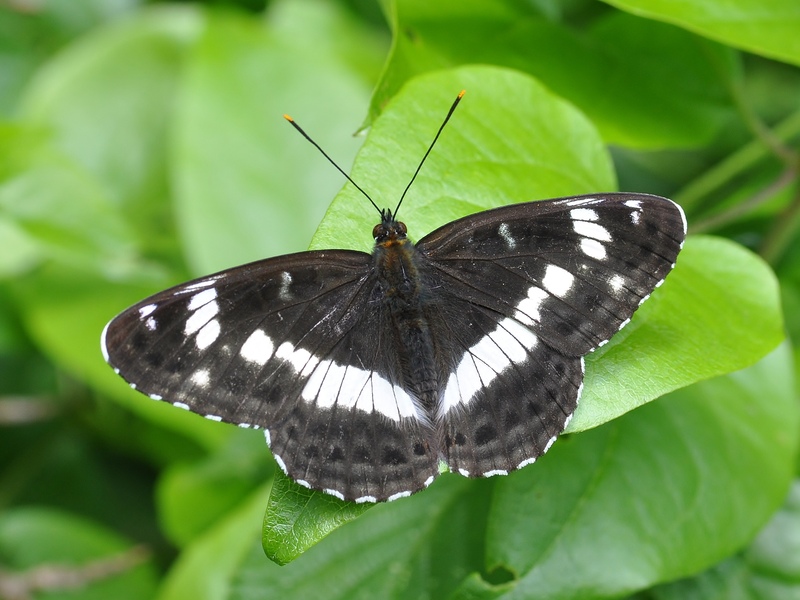
But the grandest of all must be the White Admiral, whose black velvet wings are boldly striped with white. This high-flying woodland butterfly glides gracefully around the canopy, occasionally swooping down to nectar on Bramble blossom or lay eggs on Honeysuckle. When settled, it offers a glimpse of the spectacular orange and white underwings that truly set this aristocrat apart.
Comments
My wife and I thoroughly enjoyed the butterfly identification course run by brilliant James Duncan of SWT at Wadhurst Manor and the dragonfly and damselfly one more recently. Recommended.
08 Aug 2024 11:15:00
Sussex Wildlife Trust:
Thank you so much! Delighted to hear
Nice and informative- did not know marbled whites were more related to the browns. Hopefully one day may see the return of the black veined white having recently caught up with them on the continent.No mention of wood white?
08 Aug 2024 17:11:00
Sussex Wildlife Trust:
The Wood White wouldn't really have been included a) because it's not black & white and b) because it's barely found in Sussex, other than right on the Surrey border.
Thank you for this interesting information7
01 Jul 2025 10:23:00
i enjoy reading about the butterflies and their natural habitat
01 Jul 2025 17:18:00
Black butterfly with white at very edge of wing tips. Butterfly is about 1” wide – so tiny and even smaller than blue ones. Any ideas? It flies away to fast to get a photo!
13 Jun 2026 14:57:00
Sussex Wildlife Trust:
Hi Christine, could it have been a Ringlet? Ringlet | The Wildlife Trusts