
Bryophytes - exploring the mosses and liverworts of Sussex

Sue Rubinstein and Brad Scott, county recorders for bryophytes in Sussex, share their thoughts on a little-studied plant group
What is moss?
Three hundred years ago the term ‘moss’ was used for any small plant-like thing, from lichens and non-flowering plants, through to seaweeds and other marine organisms now classed as animals. That usage still inflects popular understanding today. For modern botany, a moss is a small flowerless plant with leaves usually just one cell thick, and which reproduces by tiny spores rather than seeds. Most are in the range 1 mm to 5 cm tall.
What is its importance in the natural world?
Mosses are a fundamental part of almost all habitats in which they are found, and are often one of the first groups of species to appear after disturbance. They store large quantities of carbon, are vital for the health of soil, and some are critical in retaining water and, ultimately, limiting run-off and flooding. They also form a supremely rich and varied microhabitat in which large numbers of tiny animals and microorganisms exist, forage and hunt.
Tell us about a few different mosses and where you might find them in Sussex
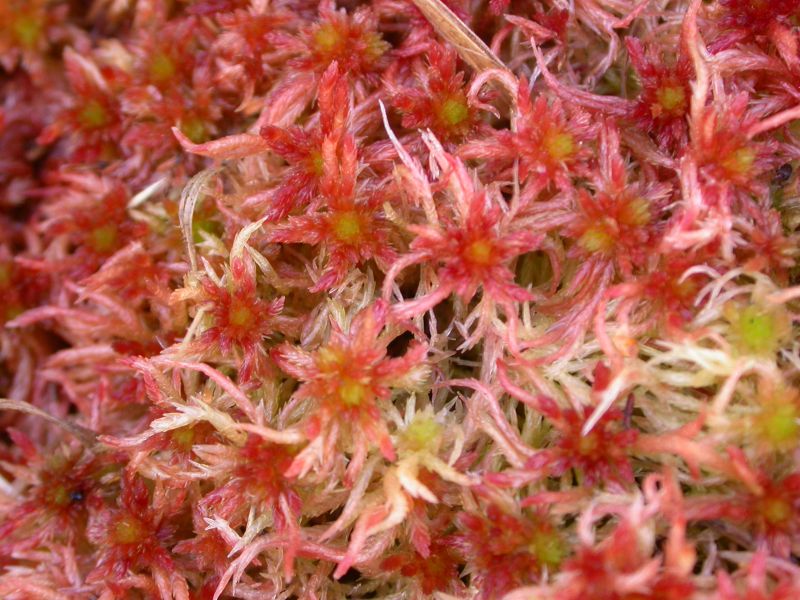
One of the many bog-mosses, Sphagnum subnitens (below) is relatively rare in Sussex, but often stands out from its close relatives when it grows in sunnier parts of wet grassland and woodland with its greenish centre and surrounding red branches. It occurs in Ashdown Forest, Broadwater Warren, Graffham Common and Iping Common.
A super-tiny moss of otherwise largely bare parts of chalk grassland and quarries, Microbryum rectum (main image) is typically just 1mm tall with a noticeable red capsule. It is a species of the South Downs along the length of the county, though it is very easy to miss! It also grows in trampled ground along the coast, in Brighton and on sea cliffs.
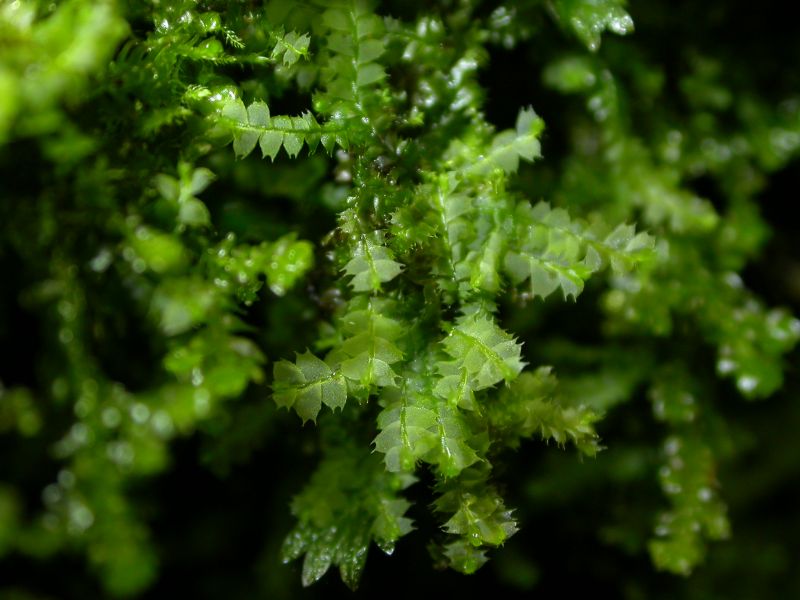
Lophocolea bidentata (below) is a common leafy liverwort with a strong musky smell. Its pale shoots with bilobed leaves grow on rotting wood in damp woodland.
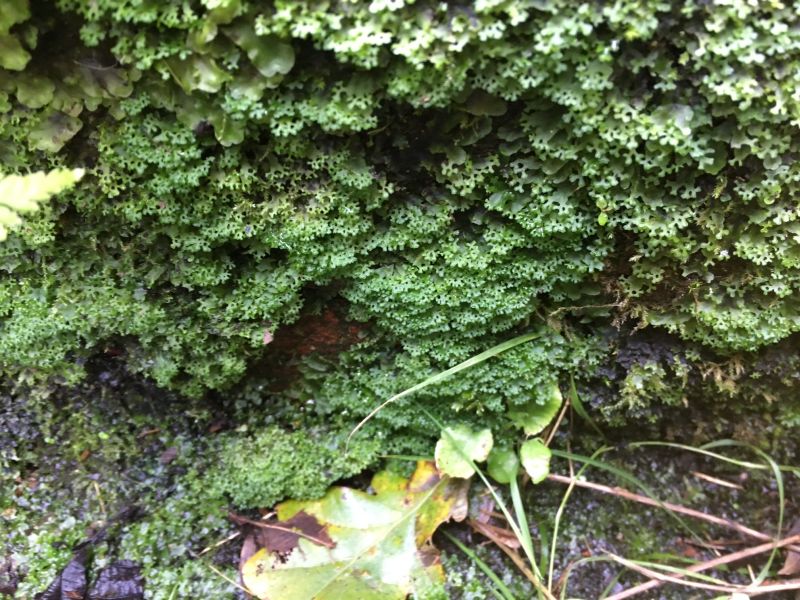
Autumn is a good time to look out for Pellia endiviifolia (below), a thallose liverwort which grows in damp, base-rich habitats such as chalk streams and old bridges. At this time of year narrow branches grow on the thallus tip giving the plant an unmistakeable frilly appearance.
Are liverworts something different?
Bryophytes include mosses, liverworts and hornworts. Liverworts are simpler plants than mosses but it can be tricky to separate as some mosses, such as Hookeria lucens, which grows in Wealden gills, look like liverworts and vice versa!
There are two different forms of liverwort: Leafy liverworts have a stem and leaves. Simpler in structure than mosses, they usually have flattened shoots and leaves one cell thick with no central nerve. Thallose liverworts have a liver-like, (hence the name), flattened thallus with no distinctive stem or leaves.
What led you both to be interested in them?
Brad: I loved looking at them while walking Dartmoor in my teens, and finally got round to attending Graeme Lyons’ brilliant introduction to bryophytes at Sussex Wildlife Trust and joining the local group of the British Bryological Society when I moved to Sussex many decades later.
Sue: After living in Brighton for many years, and missing the Welsh hills of my childhood, I decided to get to know the flowers on the South Downs and Sussex coast. I did a short course at Sussex University led by Margaret Pilkington and as the field trips were in winter, we looked at woodland mosses and I was immediately captivated by them!
Tell us something about mosses we don’t know
Their most important adaptation is their ability to withstand desiccation. They can completely dry out for a long period of time (in some cases, hundreds of years), and then start to photosynthesize remarkably quickly once they become wet again.
Here is their blog on Sussex Bryophtyes.
Comments
Very good post. Very informative. Thanks.
16 Oct 2023 14:20:00