
Bloom times: jellyfish in Sussex
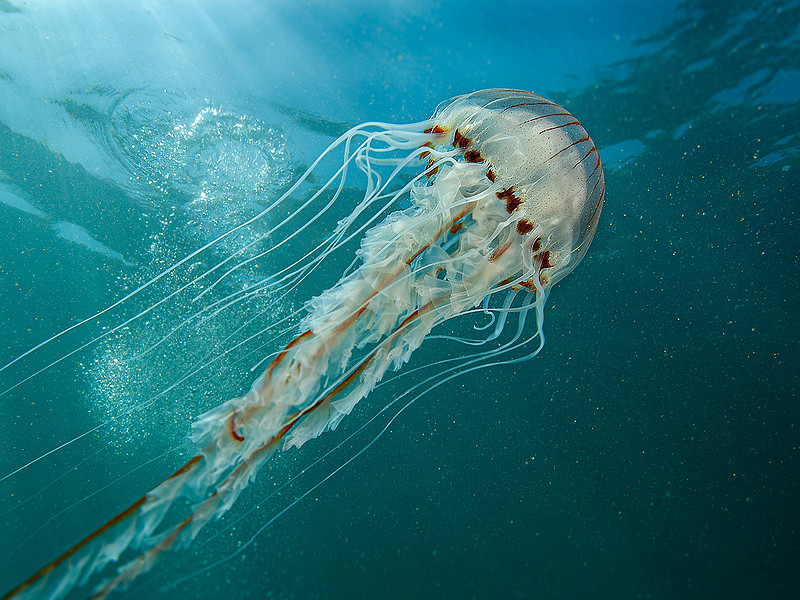
Who needs a heart, blood or brain, when you're as successful as a jellyfish?
Jellyfish don't need any of those in their perpetual pursuit of plankton. They will follow their source of food along with the ocean's currents, and can sometimes be found in large numbers when they’ve all been swept along together.
Big gatherings of jellyfish - also known as 'blooms' - often turn up in summer along the Sussex coast, with some ending up on our beaches.
But which jelly's which? There are thousands of species in the world, but only a few of them are usually spotted in Sussex waters. Here are four likely contenders:
Compass Jellyfish
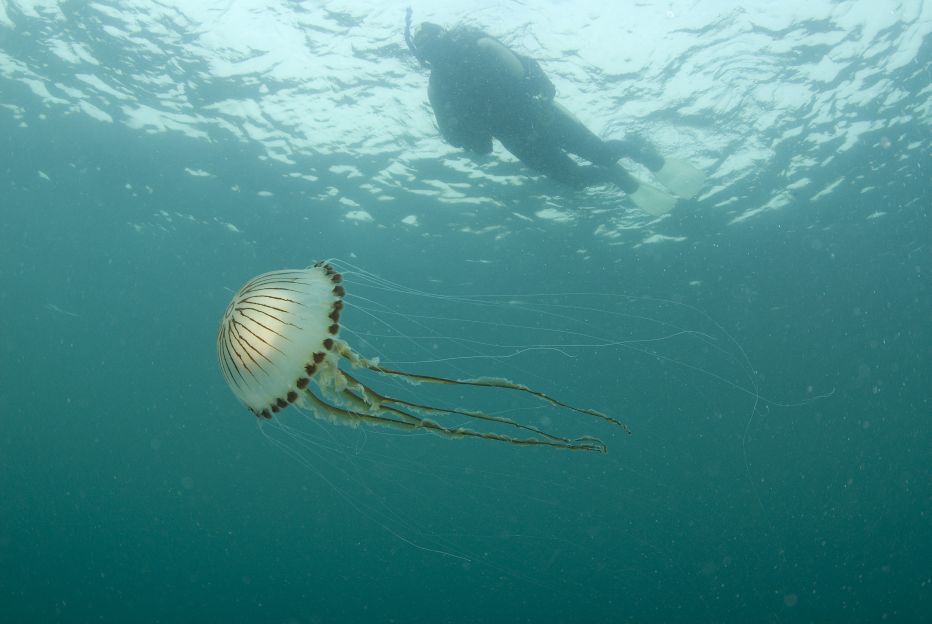
A translucent yellowish-white jellyfish, growing up to 30 cm in width. They have brown markings around the fringe and on the bell - those on the very top resemble a circular compass, with V-shaped lines radiating out from a central point.
Compass Jellies have a bunch of frilled 'oral arms' - tentacles attached to the mouthparts - trailing below the bell. They often wash ashore in summer months.
Moon Jellyfish
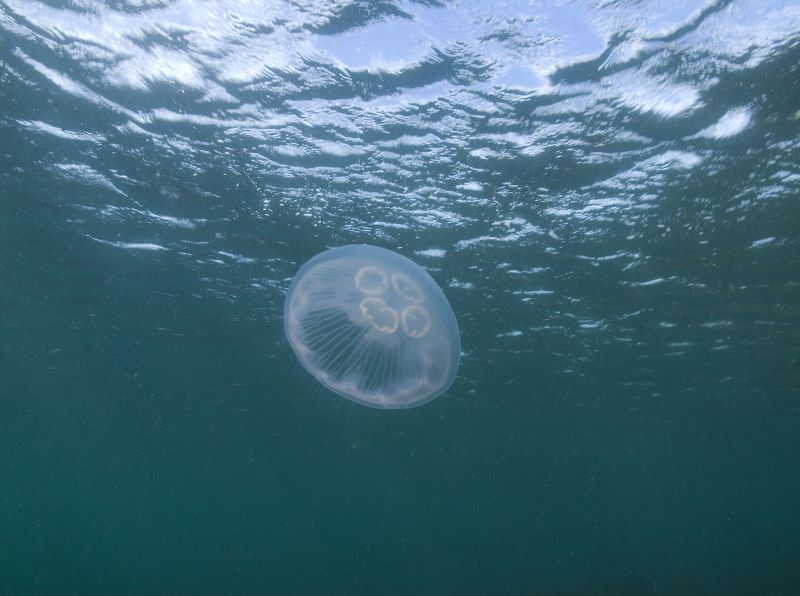
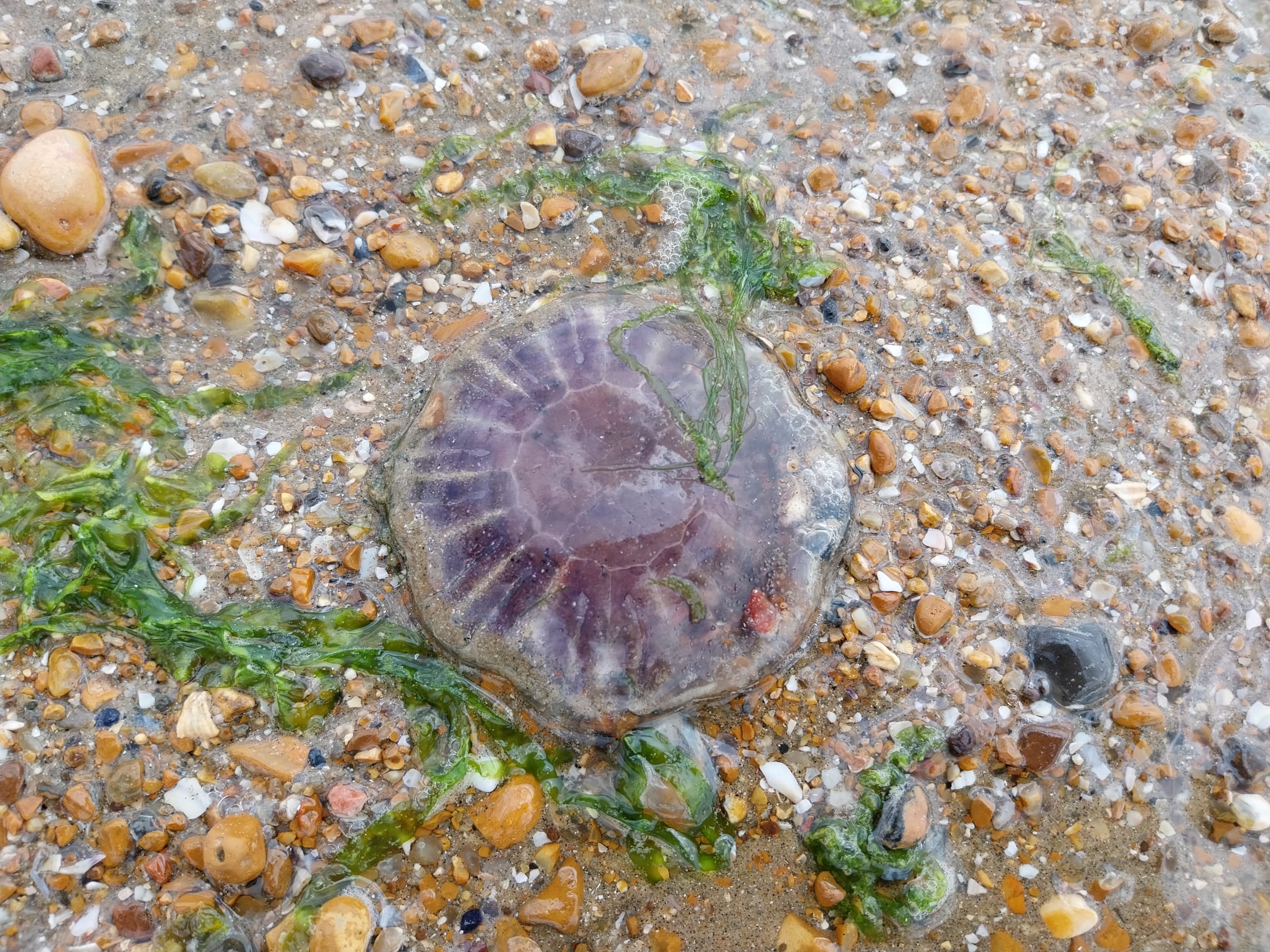
These are the most common jellyfish in UK seas and often found stranded on our beaches. Up to around the size of a dinner plate, they are recognisable by the four circles visible through the translucent white bell - these are actually their reproductive organs. The jellies are often seen floating just below the surface of the water.
Moon Jellies have short, delicate tentacles that hang down from the sides of the bell.
Barrel Jellyfish
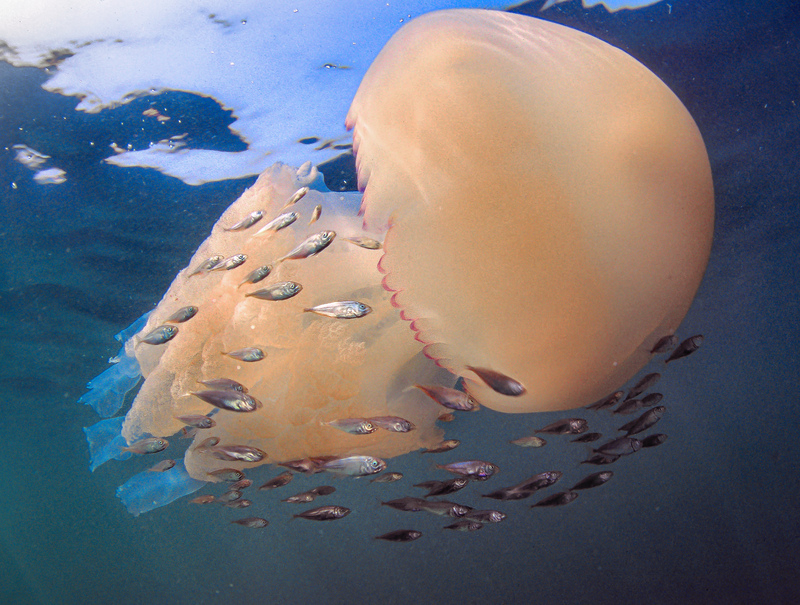
One of the largest jellyfish found in UK seas. They are translucent, with a huge mushroom-shaped bell - up to around 90cm in width with a violet-coloured fringe. Individuals can weigh up 35kg. They can be found washed up on beaches, especially in May and June.
Globally they are a favourite food of the world's largest turtle, the Leatherback Turtle.
Blue Jellyfish
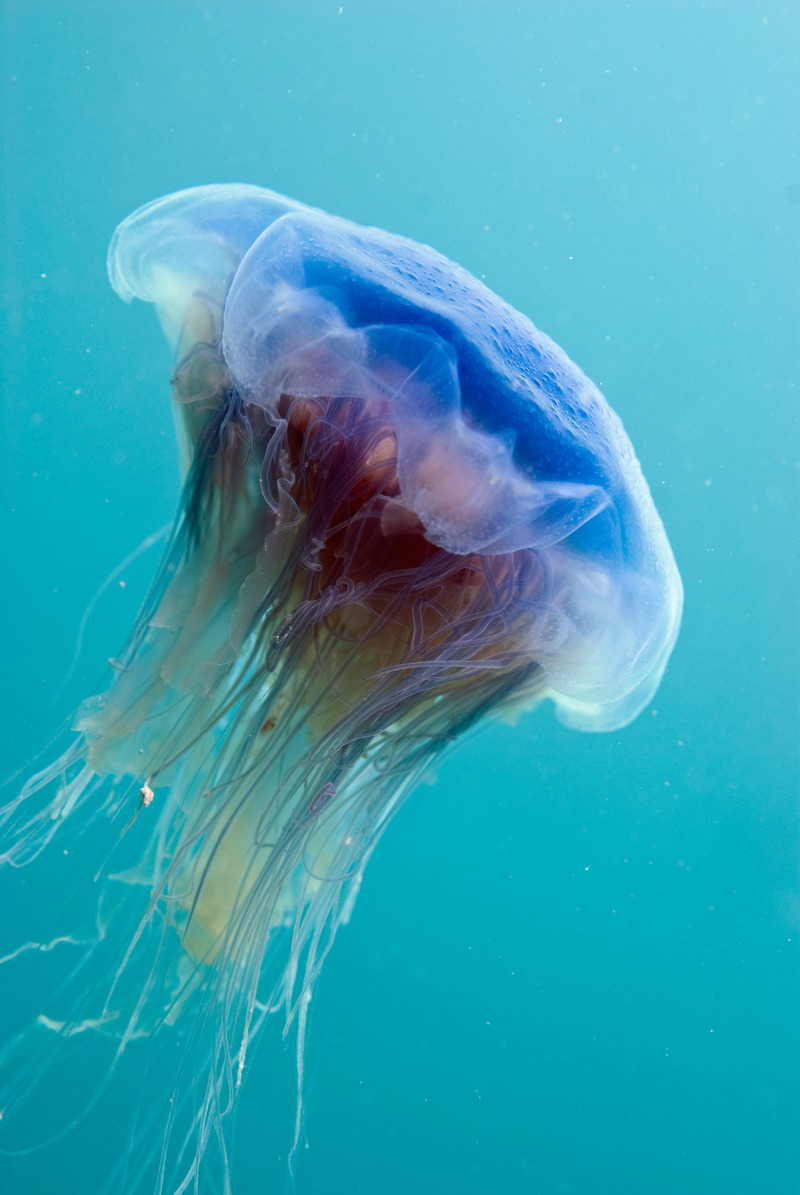
Blue Jellyfish have a typical shape, with a dome-shaped bell and stinging tentacles trailing underneath, and grow up to around 30cm in width.
The bell colour depends on maturity and can vary from pale yellow through blue to purple. Paler individuals could be confused with the larger Lion's Mane Jellyfish, but the latter is unusual in Sussex waters.
Look but don't touch
All these jellyfish are able to sting, so it's best to be cautious around them. A wetsuit will protect you from possible jellyfish stings while swimming.
If you do get stung, it's best to remove any stingers still attached (a credit card is good to use to scrape them off – avoid using your fingers as those will be stung as well) and rinse with water. If you have vinegar to hand, this will help to neutralise the sting.
For most people the pain is relatively mild (about the same as a Nettle sting for most UK species) and should subside within a few hours. Over-the-counter painkillers or antihistamines can help. If you have a severe reaction, seek medical attention.
Remember that jellyfish can still sting when they’re dead, so it’s best not to touch if you see one washed up on the beach.
Do you enjoy recording what you find along the coast? Why not help us understand our marine neighbourhood better, by joining Sussex Shoresearch?
Comments
Mostly new to me .Thanks
23 Jul 2026 17:36:00
On Worthing beach a jellyfish cane in with the tide .I thought it was dead and poked it i don’t think it was as I got tingles in my left hand and up my arm.lucky I had some antiseptic cream and the pain vanished after 5 mins.the jellyfish was orange and black .
23 Jul 2026 18:06:00
Really helpful pictures and descriptions thank you. We saw the compass jellyfish and the moon jellyfish at Bembridge on the weekend of the 18th July 2026
24 Jul 2026 10:21:00
We saw at least 30 jelly fish washed up on Three Cliffs Bay, The Gower on 29th-30th June. They varied in size and were translucent with four purple circles in the middle – Moon jellies? I wondered about popping them back in the water (with my spade). Would they survive or is it too late already?
26 Jul 2026 07:43:00
Sussex Wildlife Trust:
Best to leave them, not least because you could get stung, touching them, but also, they are dead or dying already
A very enjoyable read
Thank you
27 Jul 2026 11:54:00
A very enjoyable read
Thank you
29 Jul 2026 09:39:00
A very enjoyable read
Thank you
30 Jul 2026 14:44:00
Pretty but I will be careful should I manage to reach them
03 Aug 2026 15:57:00