
Blackthorn
By Charlotte Owen
WildCall Officer
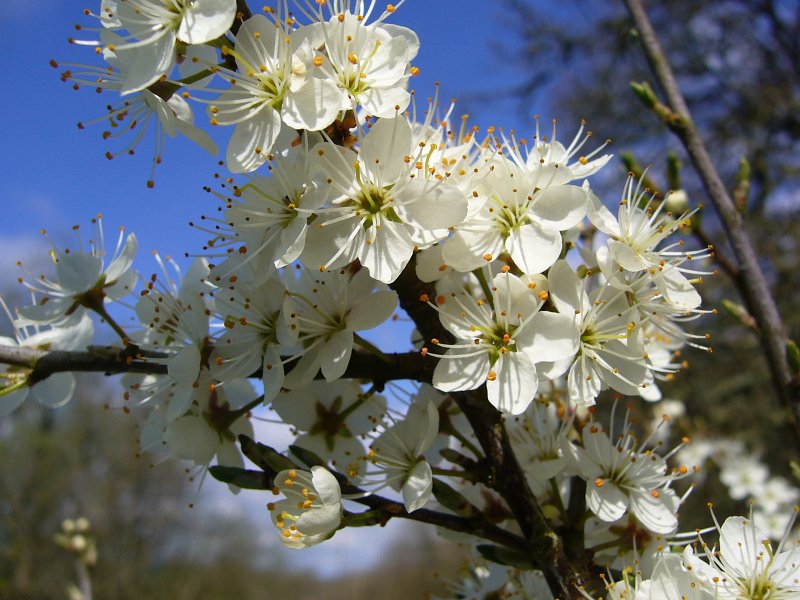
Blackthorn is easily recognised at this time of year as ‘the one with all the white blossom’. Its leafless branches can be absolutely smothered in flowers, creating an amazing visual impact with entire hedgerows apparently draped in cotton wool or lying under a heavy fall of highly-localised snow. Later, the hawthorn will follow suit with its own profusion of white flowers but hawthorn grows its leaves first, and won’t usually flower until May.
Although it can grow into a small tree, blackthorn is more often found as a hedgerow shrub where it forms a dense tangle of viciously spiny twigs. These thorny thickets become near-impenetrable barriers, perfect for keeping livestock safely contained but also providing food, shelter and nesting opportunities for a wide variety of wildlife. With such an abundance of flowers so early in the year, blackthorn provides a rich banquet of sweet nectar and protein-rich pollen for visiting bees and other spring insects, which provide a vital pollination service as they move from flower to flower. Once pollinated, the flowers will eventually develop into midnight-blue fruits known as a sloes, most commonly used these days for flavouring gin but valued in the past for dying wool. They are incredibly bitter but become slightly less so once softened by the first of the winter frosts, and while they remain too sour for most people to enjoy, thrushes and other berry-loving birds will happily gobble them up.
The blackthorn’s leaves, when they emerge, will be eaten by hungry caterpillars: the black and brown hairstreak butterflies and a plethora of moth species from the willow beauty to the brimstone, green pug and emperor. The sharp thorns provide some measure of protection for them as they feed but smaller birds can hop nimbly between the spines to gather up insects for their hungry chicks. A dense blackthorn hedge also provides plenty of nesting opportunities, well-hidden from predators and fortified with highly effective anti-intruder spikes should the nest be discovered. The nightingale often chooses to nest in blackthorn, usually proving incredibly difficult to see but pouring forth his famously beautiful song from the thorny shelter within.