
Biocontrol of Australian Swampweed at Rye Harbour
Australian Swampweed (Crassula helmsii) is an invasive non-native aquatic plant that dominates still and slow-flowing freshwater habitats across Britain.
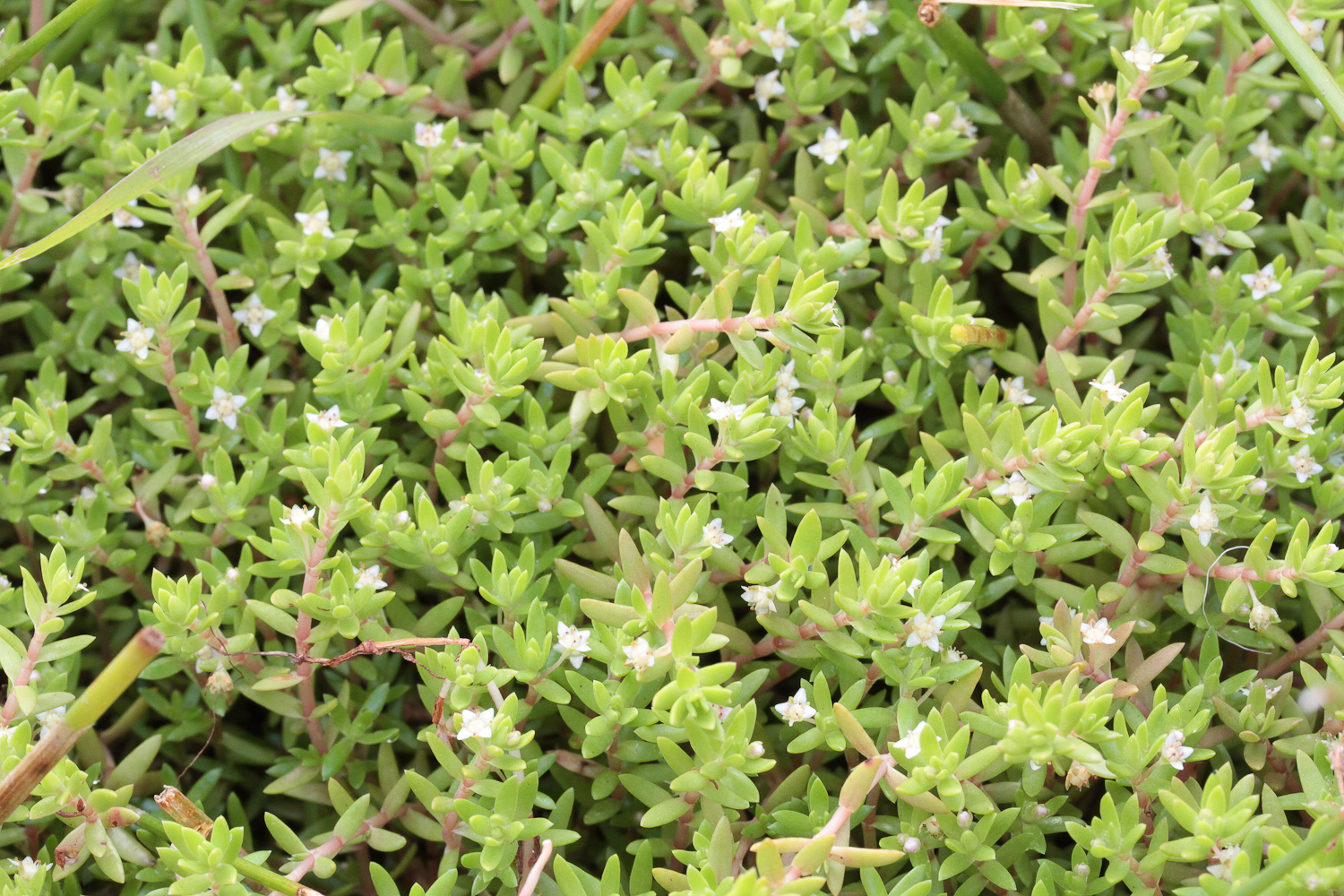
This is Crassula helmsii, which can completely shade and dominate a wetland habitat.
It was first recorded at Rye Harbour Nature Reserve in 2002 at Castle Water, but has since spread through the reedbeds there, along Castle Farm ditches and even into some of the ponds and scrapes of Rye Harbour Farm. It has degraded our wetland for some of our rarest wildlife: Lesser Water Plantain, Spangled Button Beetle and breeding Lapwing, Redshank and Bittern. It grows across the damp drawdown zone and in the shallows and in the reedbeds, it shades out many of our wetland plants like Water Mint, Water Forget-me-not and Marsh Pennywort and it covers the bare damp ground loved by so many invertebrates and the birds feeding on them.
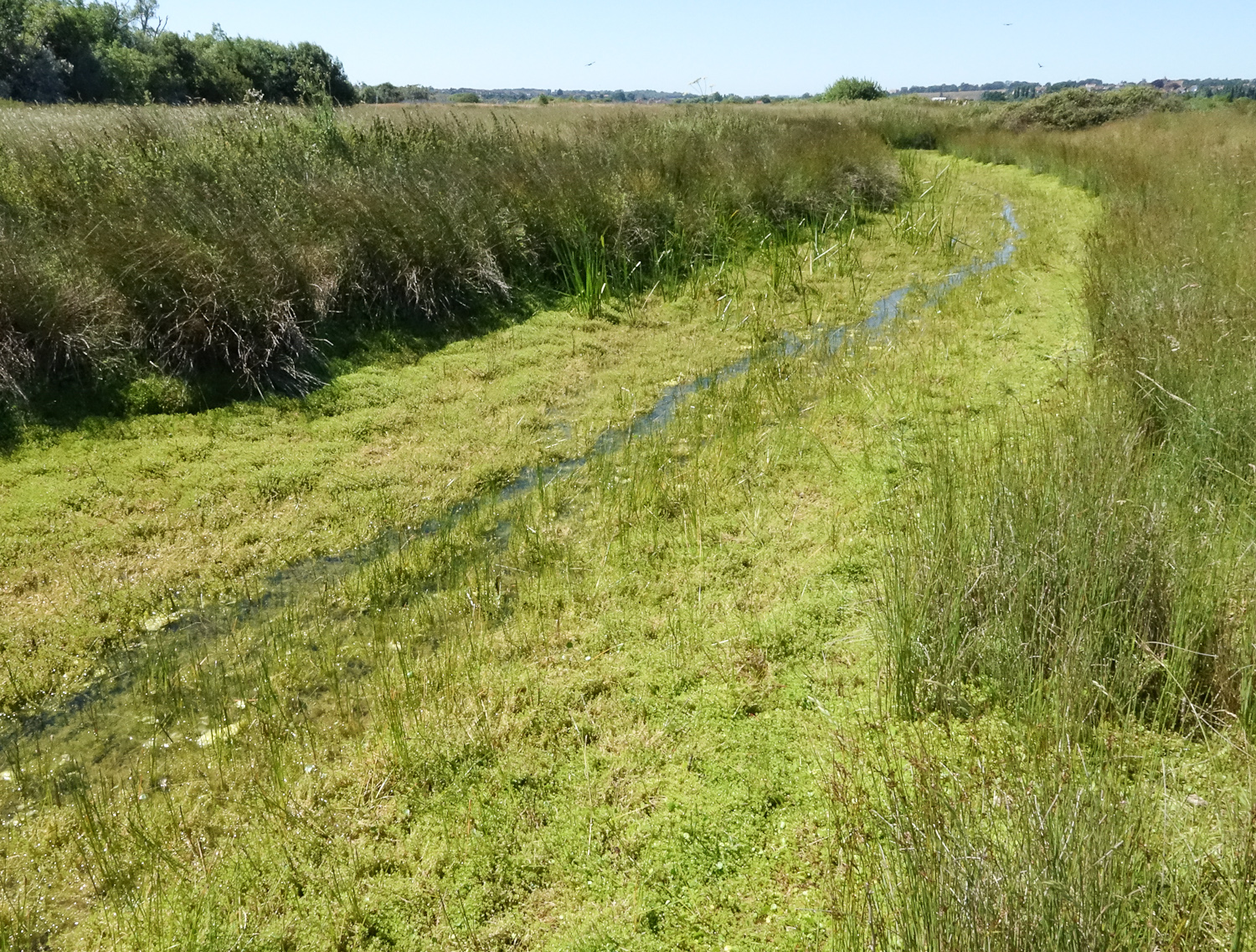
A ditch at Castle Water dominated by Crassula helmsii
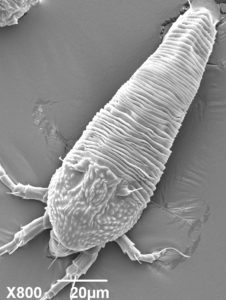
But CABI is coming to the rescue - CABI is an international, inter-governmental organisation and has laboratories working on invasive species and so in 2010 a team started a search for some biocontrol agent - read the story here The careful study has identified a small mite, Aculus crassulae to be the most suitable agent. Mite feeding causes the growing shoots of the terrestrial and emergent growth forms of Crassula helmsii to develop red galls or swellings, significantly reducing growth.
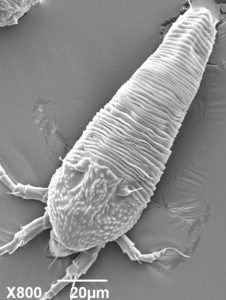
Aculus crassulae (Credit: Radmila Petanović)
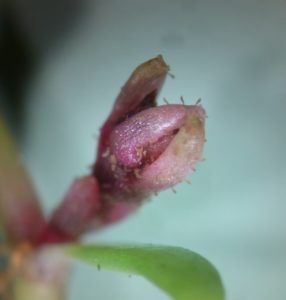
Aculus crassulae on Crassula bud - the mites are the tiny projections off the bud
The exciting news is that this week staff from CABI released some of the tiny mites into a small area of Crassula at Castle Water. In there background there has been much discussion and agreement that this is the best way of improving these wetland habitats for wildlife and consents have been given by CABI, Natural England and Sussex Wildlife Trust.
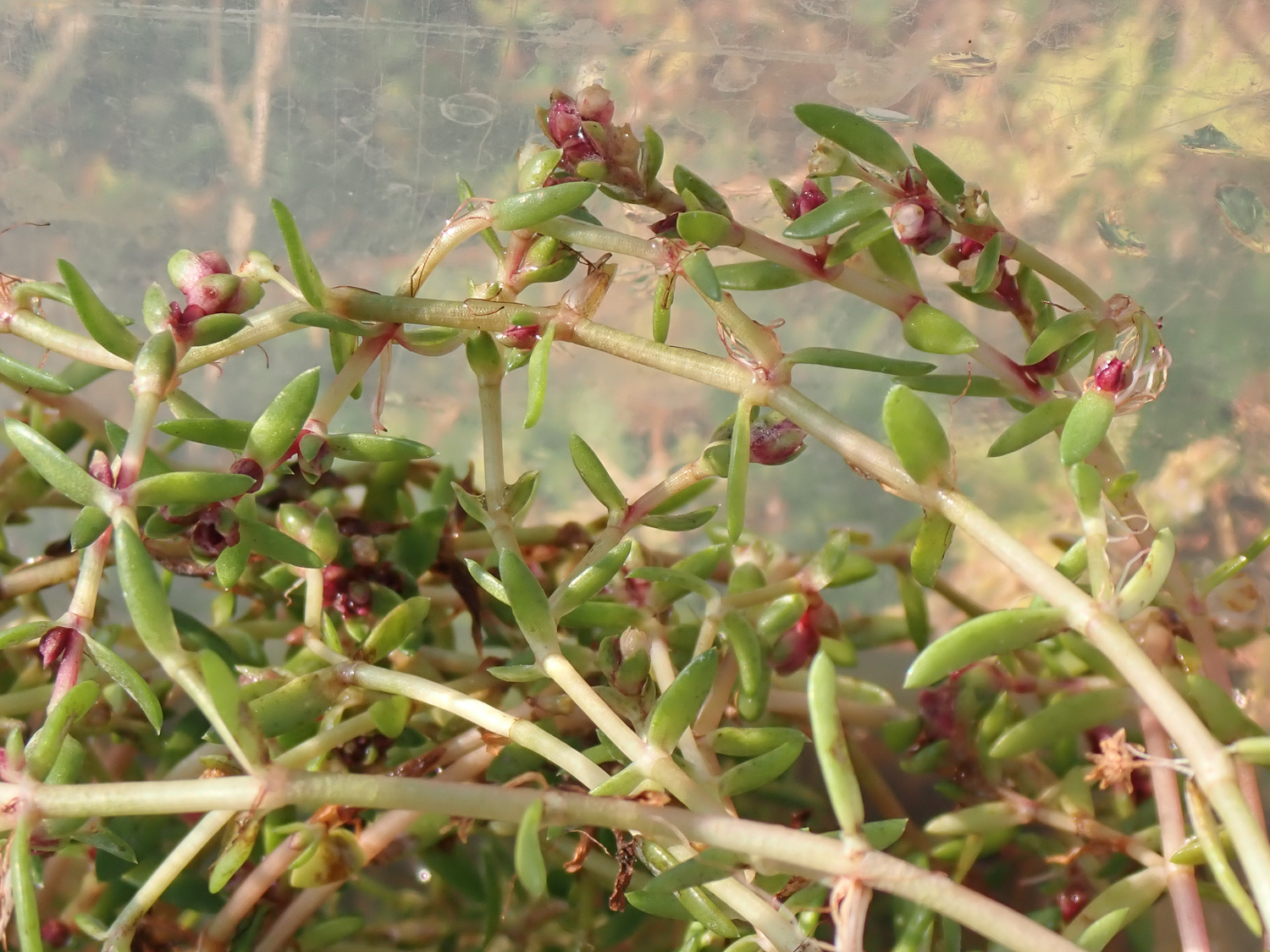
The mite infected Crassula with red galls, ready for planting at Castle Water.
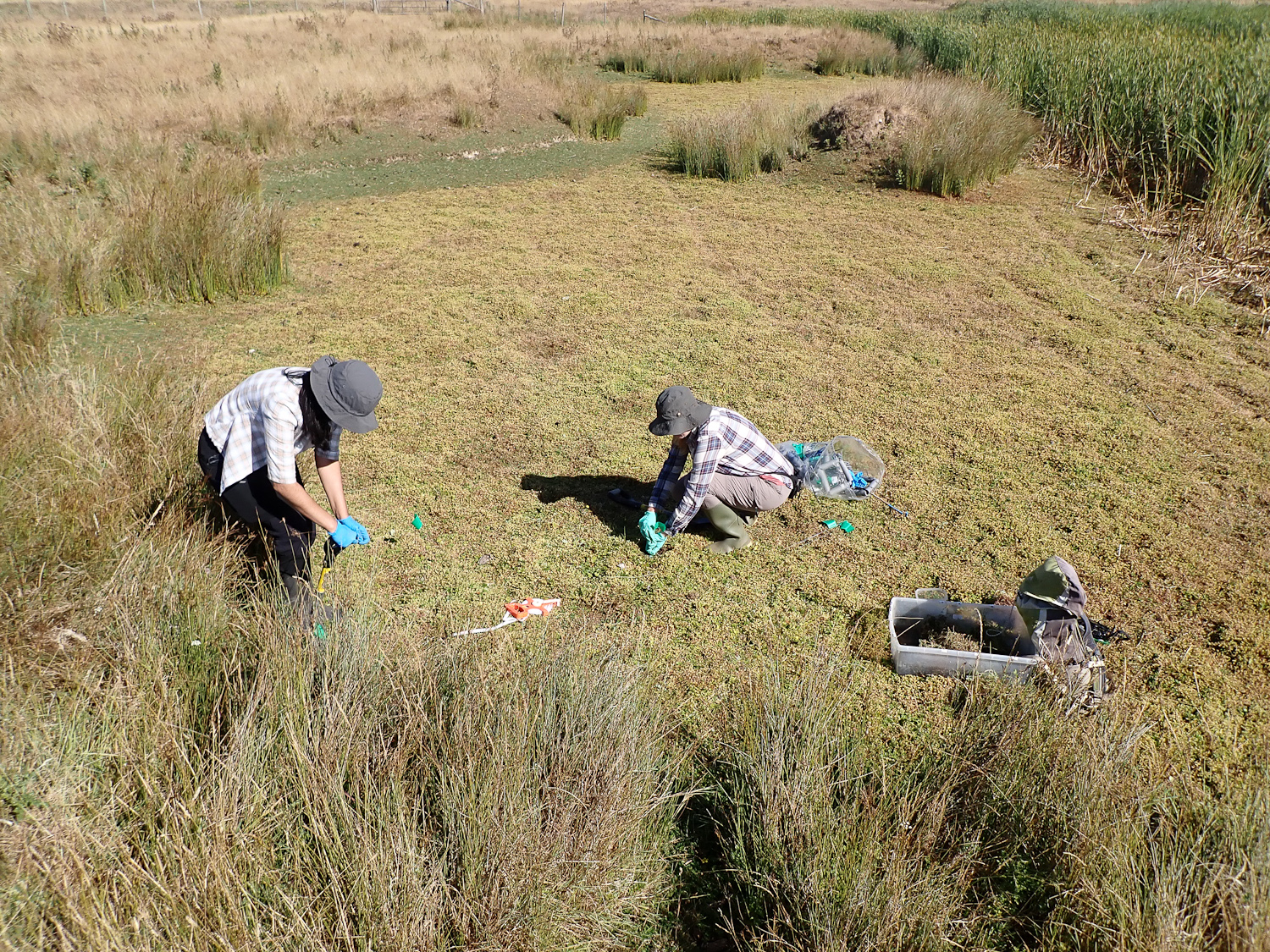
The CABI team planting out the Crassula with the mites.
This is the start of a long process including further introductions and monitoring that we hope will improve the health of our freshwater wetlands. In time this method can be used throughout the Rye Bay area where Crassula is locally abundant.
Henri Brocklebank – Director of Conservation at Sussex Wildlife Trust said – Crassula is a problem for so many wetland managers and the impact on our native wildlife is devastating. We very much look forward to seeing the impact of this mite over time and will be monitoring this closely. We will be sharing everything we learn from this experience with other wetland landowners.
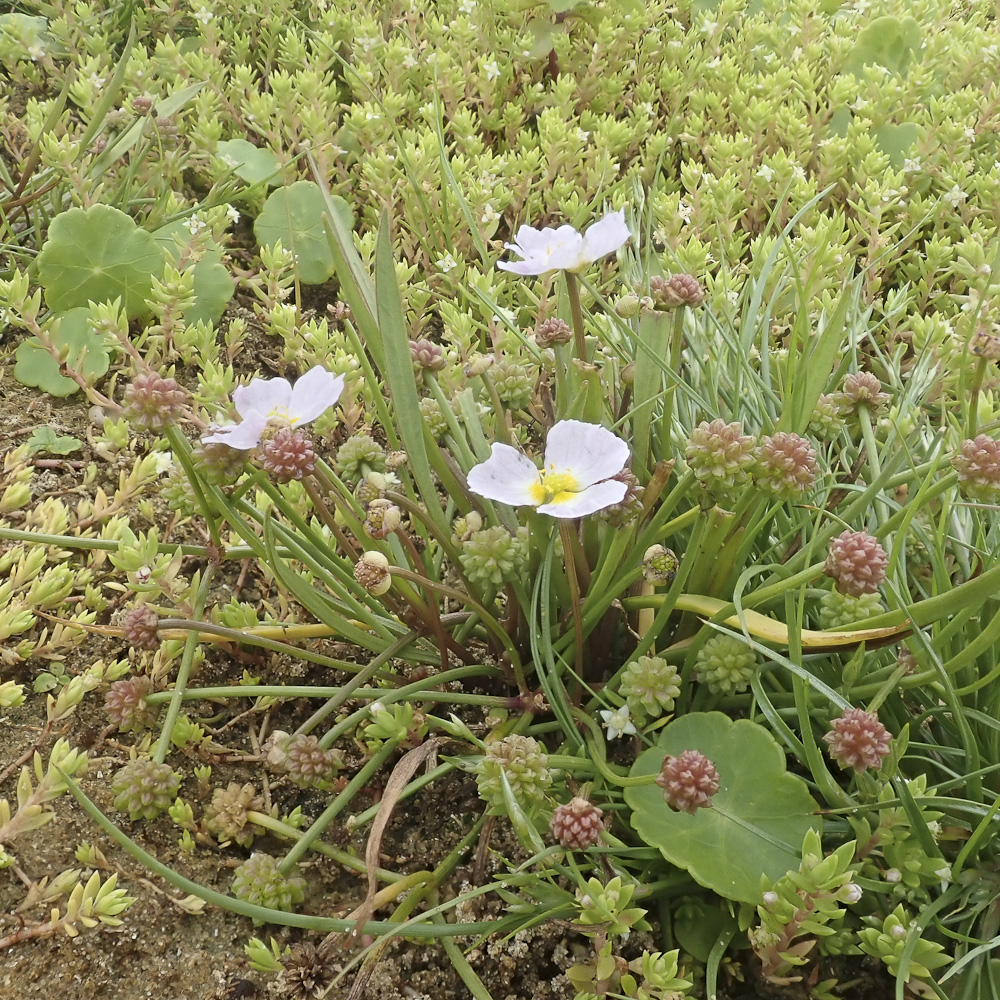
This is one of our few Lesser Water Plantain plants just surviving being swamped by Crassula helmsii. Castle Water is the only site in East Sussex!
Comments
Hello, I am part of a project in the village of Morston in north Norfolk, trying to eradicate Crassula from our village pond. I read the article about the mite and was keen to find out how the experiment was going and if there were any side effects to introducing such a creature. You’ll see from our website that we have been looking at a variety of ways to deal with the issue here – mainly excavating and burial of Crassula but are keen to find alternative solutions (if they exist) which don’t harm the environment – we have see a great increase in the amount of biodiversity since we began in 2022 and don’t want to set that back! I look forward to hearing from you.
Rehards,
Richard
05 Oct 2025 09:17:00
Sussex Wildlife Trust:
Unfortunately, the trial of the biocontrol agent, the gall-forming mite Aculus crassulae, has so far not proved successful, and we are considering alternative mechanical options such as physical removal and burial.
Further information may be available by contacting CABI who are leading on the trial: Finding a biocontrol agent for Crassula - CABI.org.
A review by Conservation Evidence found no evidence and could therefore not make an assessment of the effectiveness of using herbivores to control Crassula: Crassula helmsii: Biological control using herbivores - Conservation Evidence